Snip playdough snakes
FINE MOTOR SKILLS • PEDIATRIC OT
FINE MOTOR SKILLS
Scissor Skills
Follow the path from snipping to cutting lines and simple shapes safely.
Scissor use is a two-hand task: one hand opens and closes the scissors while the other turns and stabilizes the paper. Children usually begin with snipping before following lines and cutting shapes.
Why this skill matters
Why this skill matters
Cutting supports bilateral coordination, hand strength, visual tracking, planning, and preschool participation. Safe tool choice and direct adult supervision are essential.
Play ideas to try at home
Play ideas to try at home
Cut fringe on cardstock
Follow a wide straight line
Cut around a large simple shape
Related practical articles
Scissor Skills
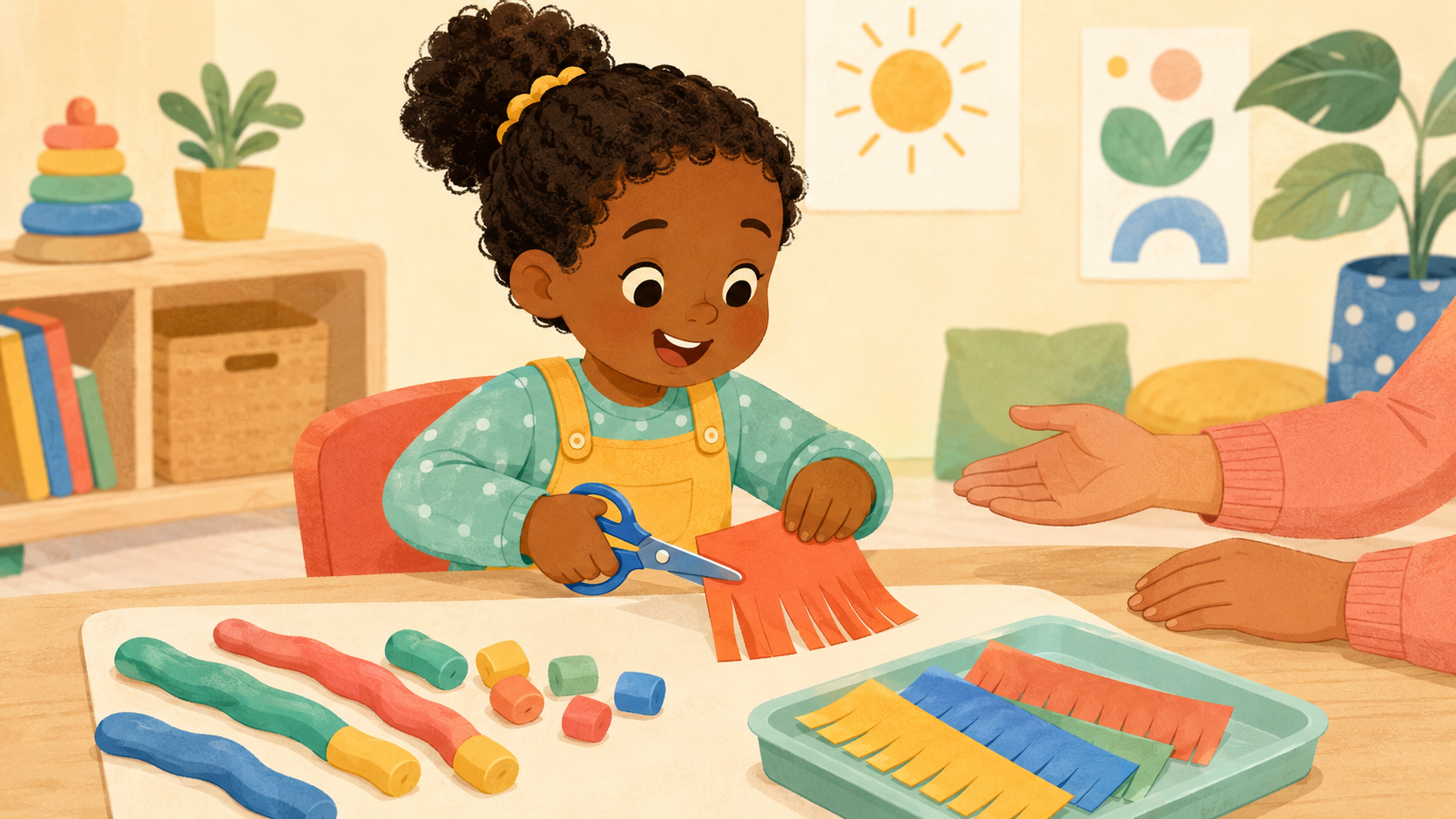
Fine motor
5 Easy Scissor Activities for Preschoolers
Playful, low-pressure activities that build the hand strength and coordination children need for cutting.
Read article →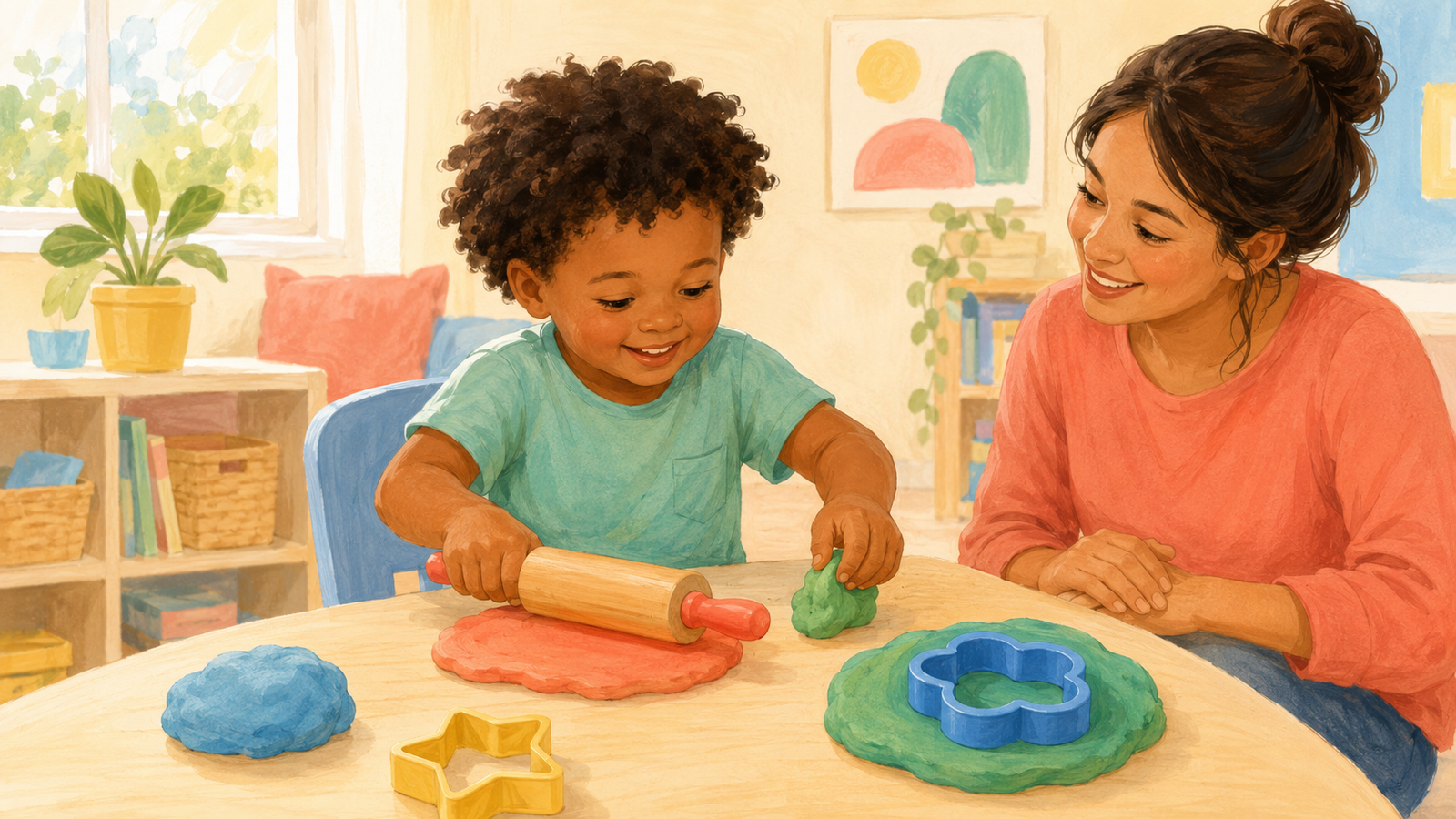
Fine motor
7 Playdough Games That Build Hand Strength for Pre-Writing
Simple, playful ways to strengthen little hands and support early pencil skills without worksheets.
Read article →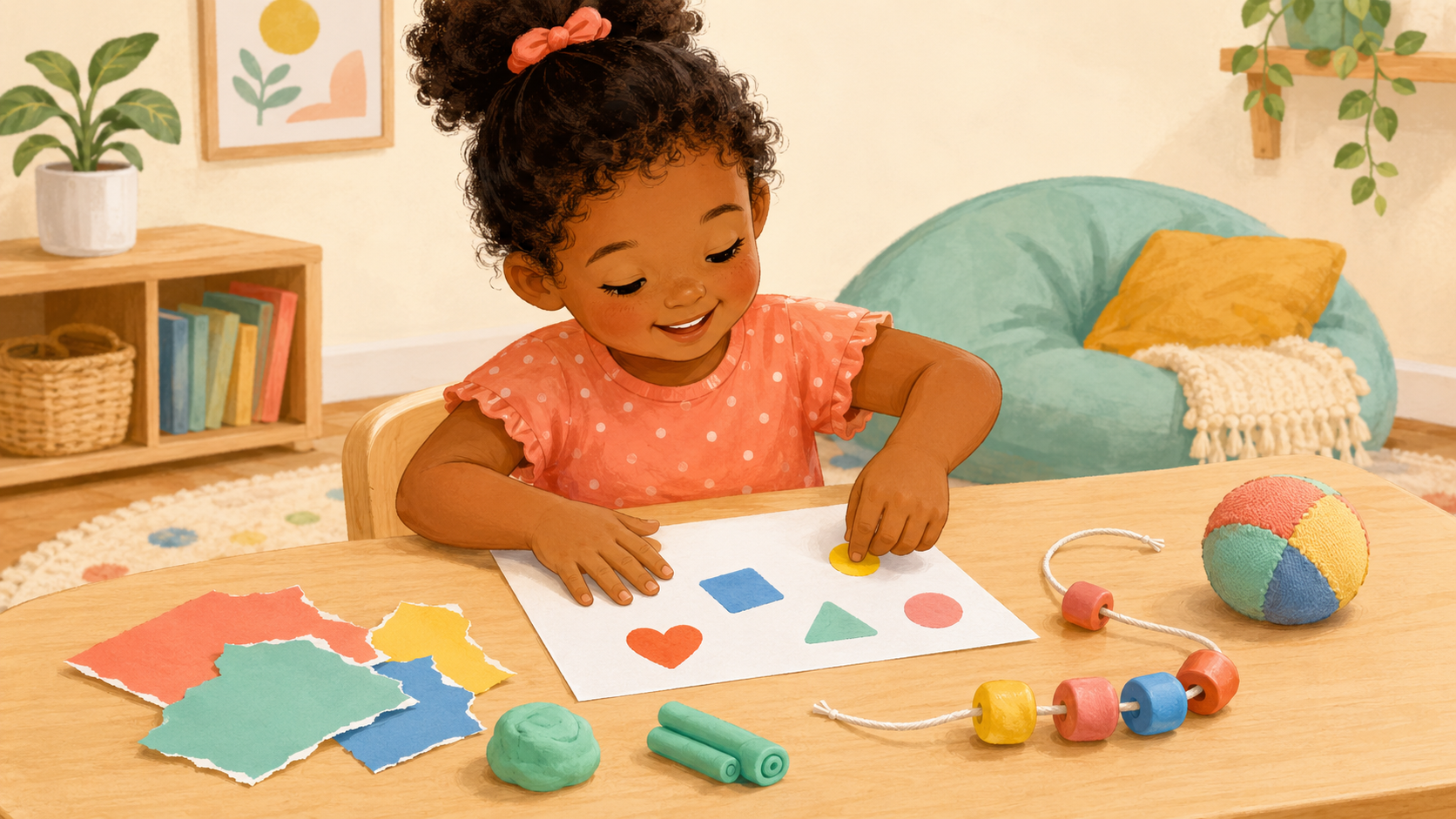
Fine motor & play
7 Two-Handed Play Activities That Build Bilateral Coordination
Easy everyday games that help preschoolers use both hands together for dressing, cutting, drawing, and play.
Read article →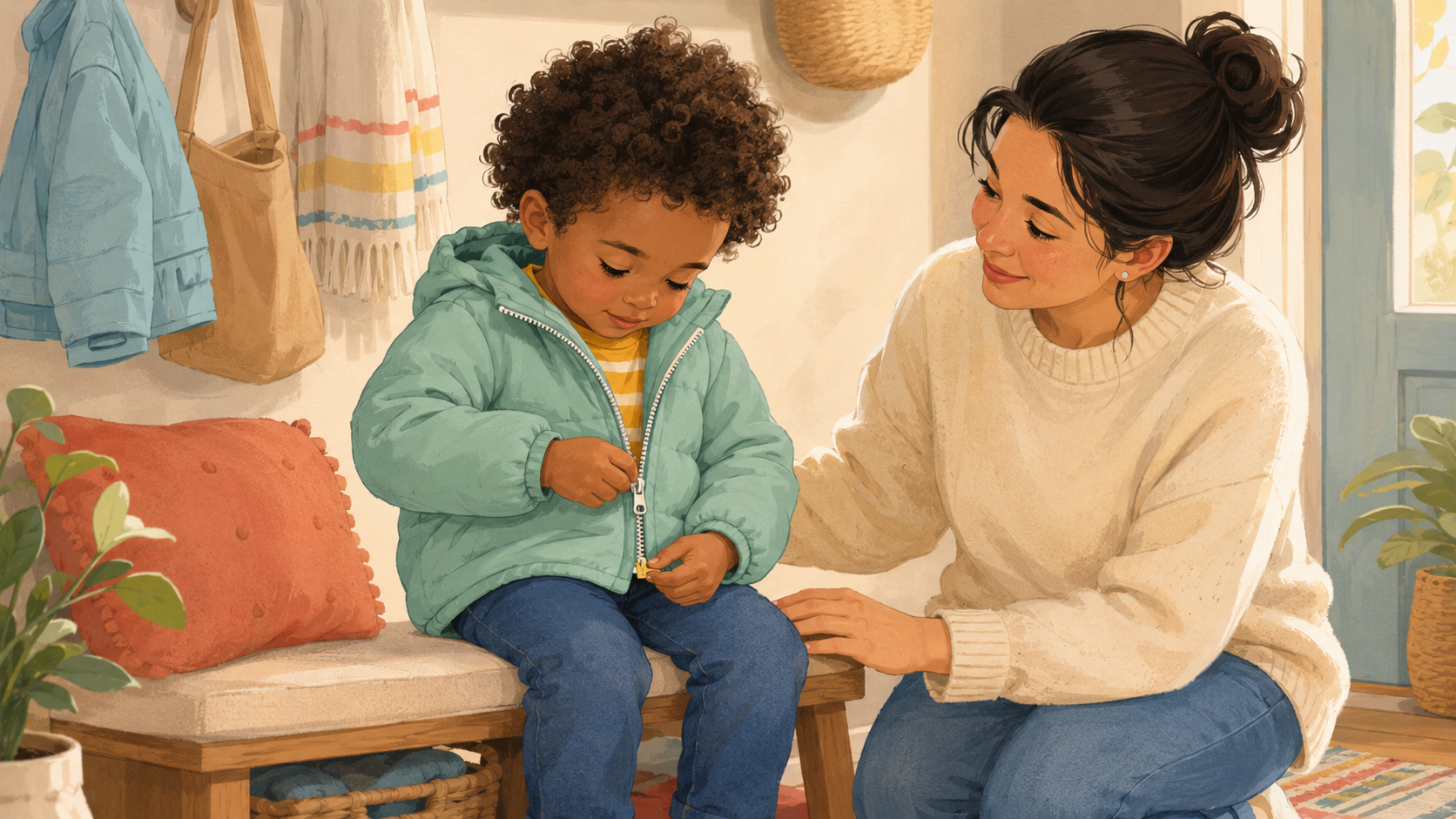
Fine motor & self-care
How to Teach Your Preschooler to Use a Zipper Independently
A calm, OT-informed way to teach the two-handed steps of starting and pulling a jacket zipper, with playful practice, sensory support, and safety guidance.
Read article →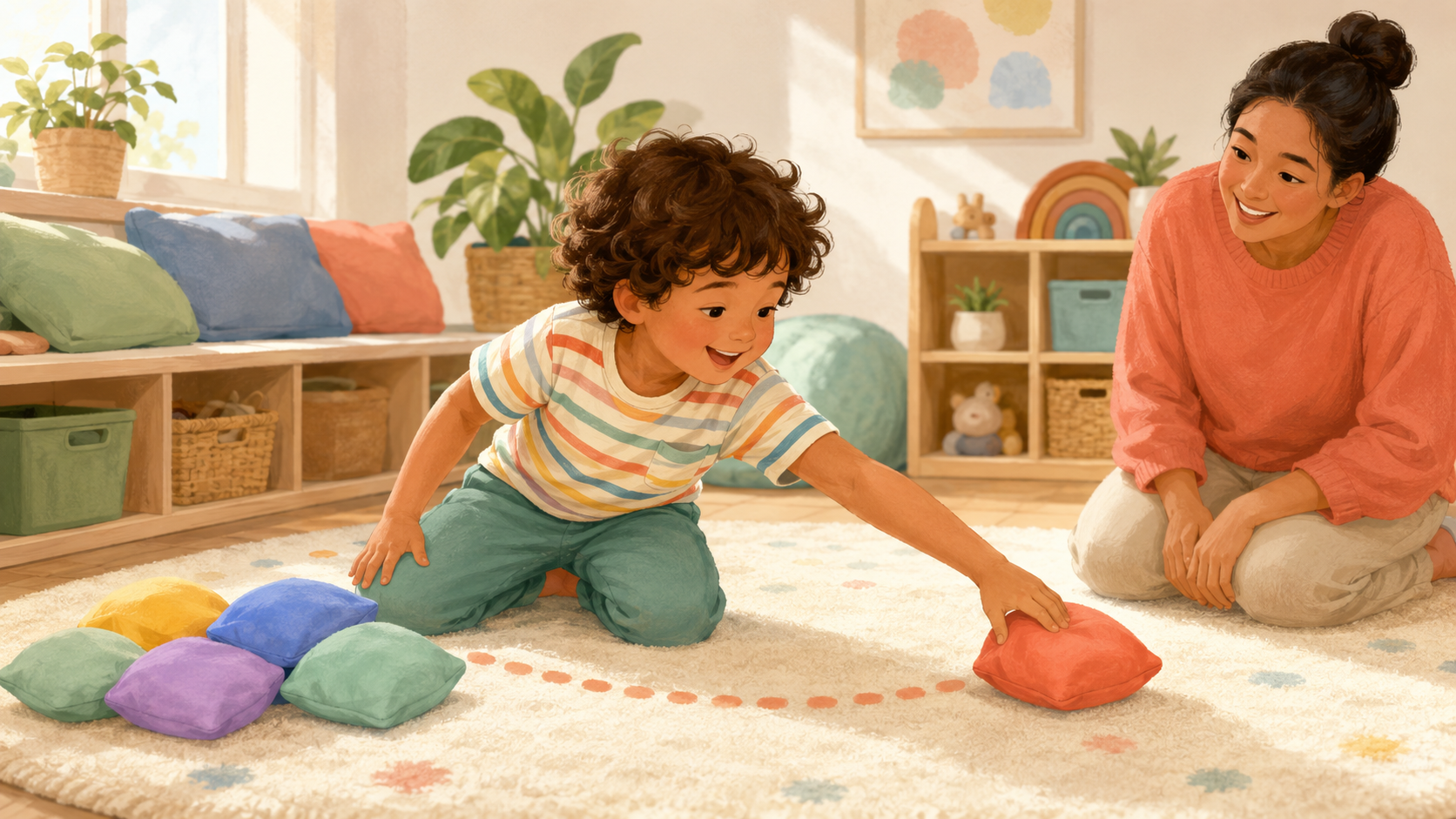
Movement & fine motor
7 Crossing-the-Midline Games for Preschoolers
Seven playful, OT-informed activities that help preschoolers reach across their bodies during drawing, dressing, play, and everyday routines.
Read article →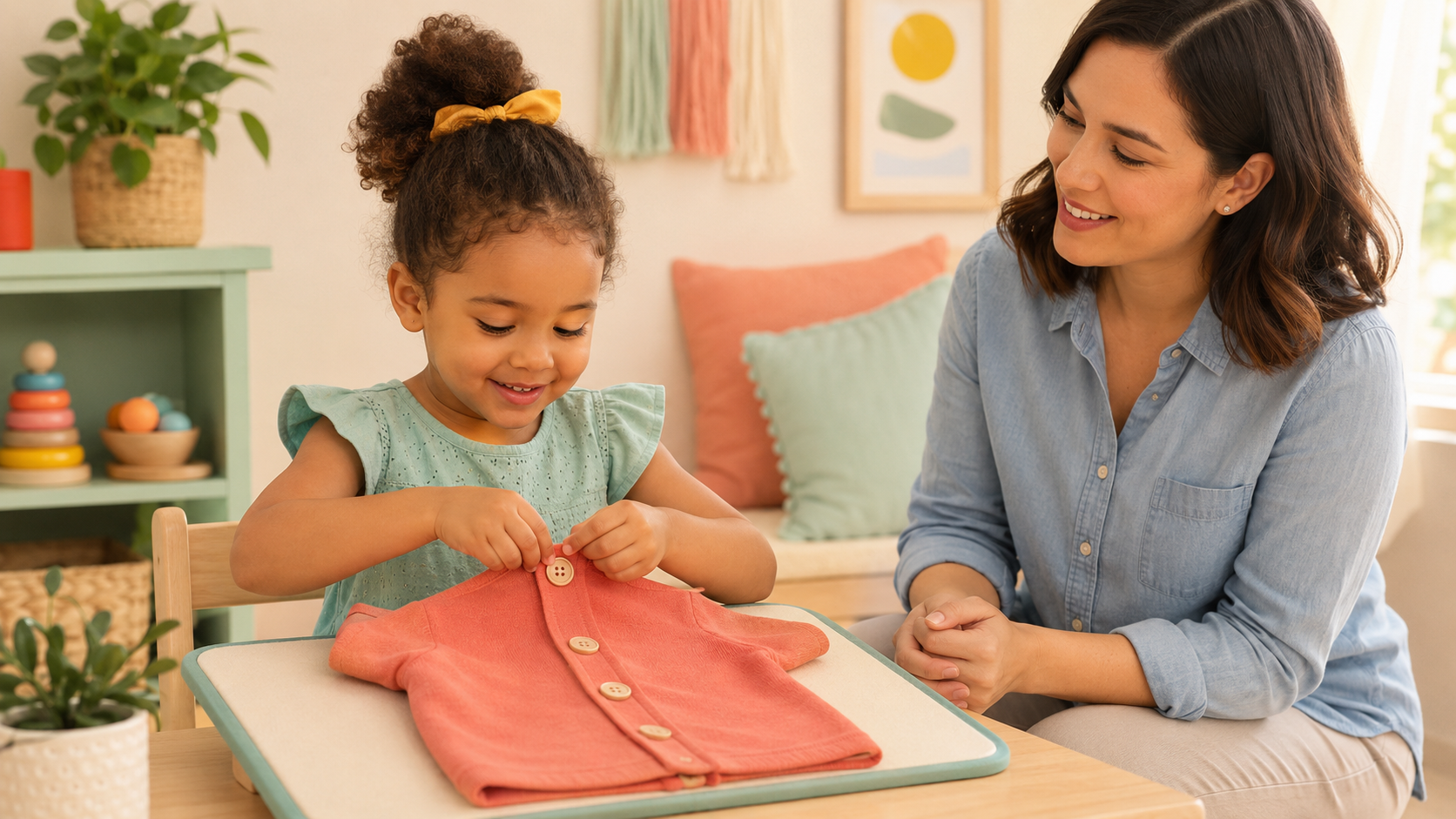
Fine motor & self-care
How to Teach Your Preschooler to Manage Buttons Independently
A calm, OT-informed way to teach unbuttoning and buttoning through stable positioning, backward chaining, playful hand practice, and safe clothing choices.
Read article →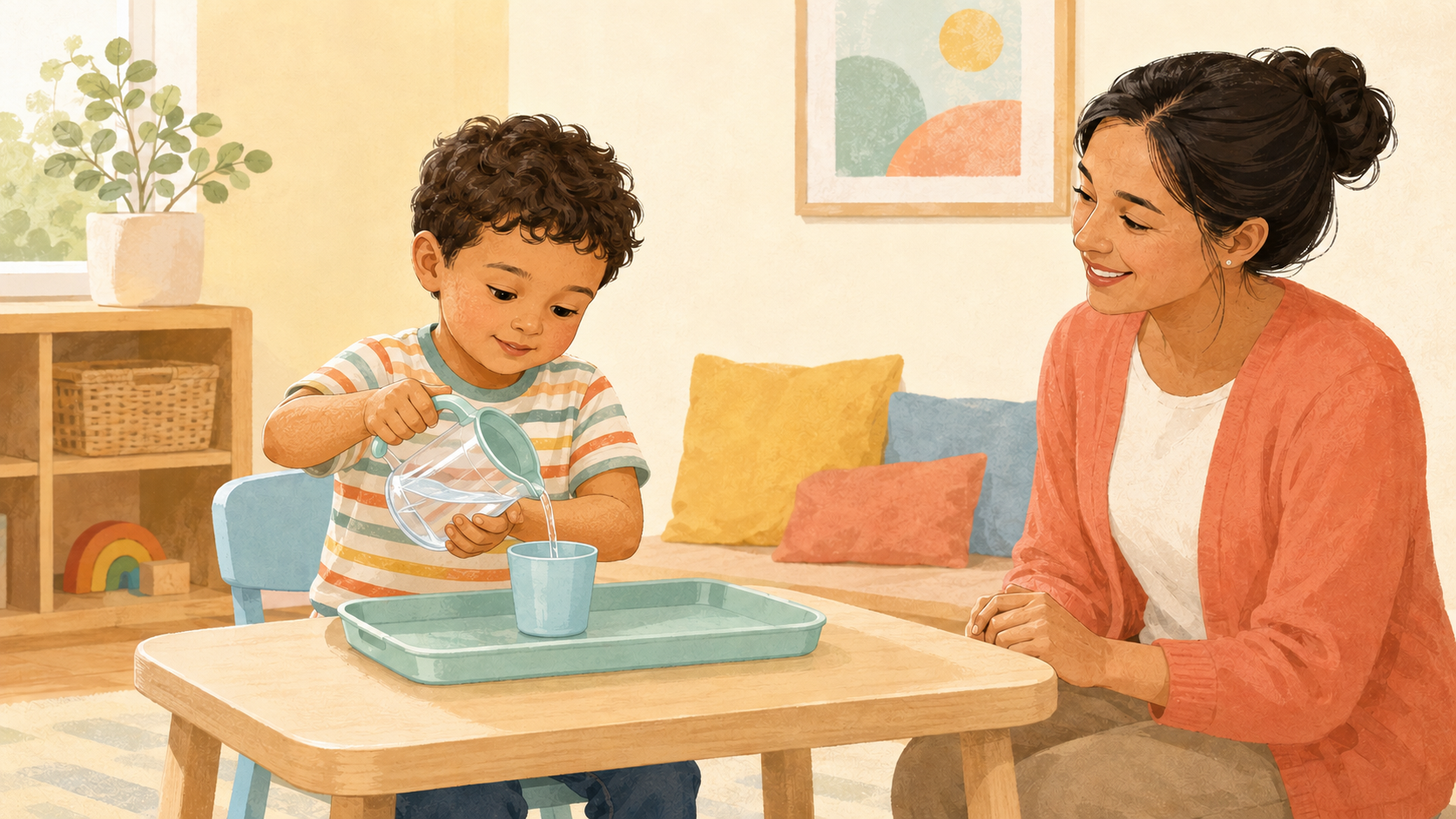
Self-care & bilateral coordination
How to Teach Your Preschooler to Pour a Drink Independently
A calm, OT-informed way to teach children ages 2–5 to pour from a small pitcher using two hands, graded control, and spill-friendly practice.
Read article →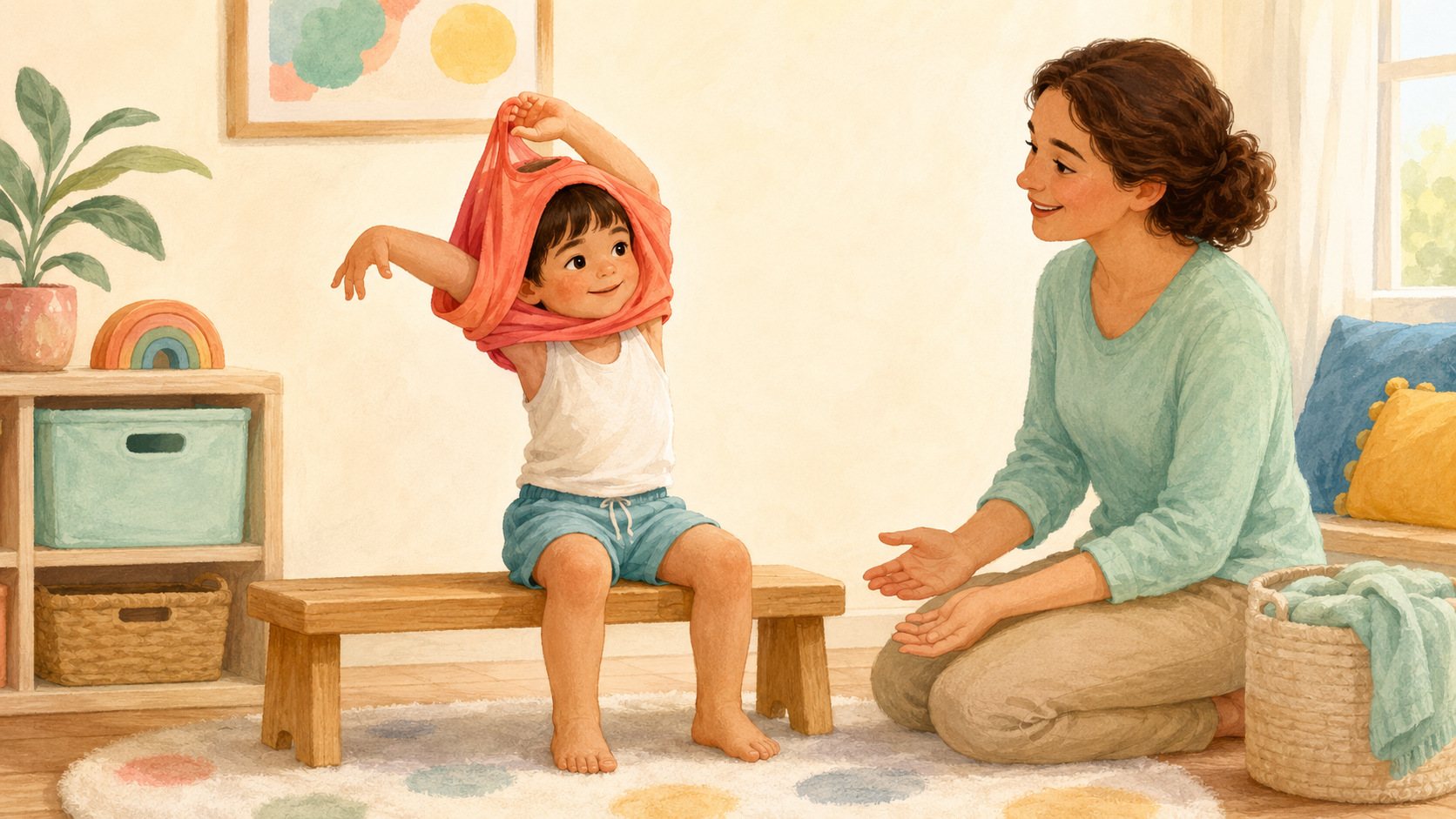
Dressing & bilateral coordination
How to Teach Your Preschooler to Take Off a Pullover Shirt Independently
A calm, OT-informed way to help children ages 2–5 take off a T-shirt or sweatshirt using stable positioning, a simple sequence, and graded practice.
Read article →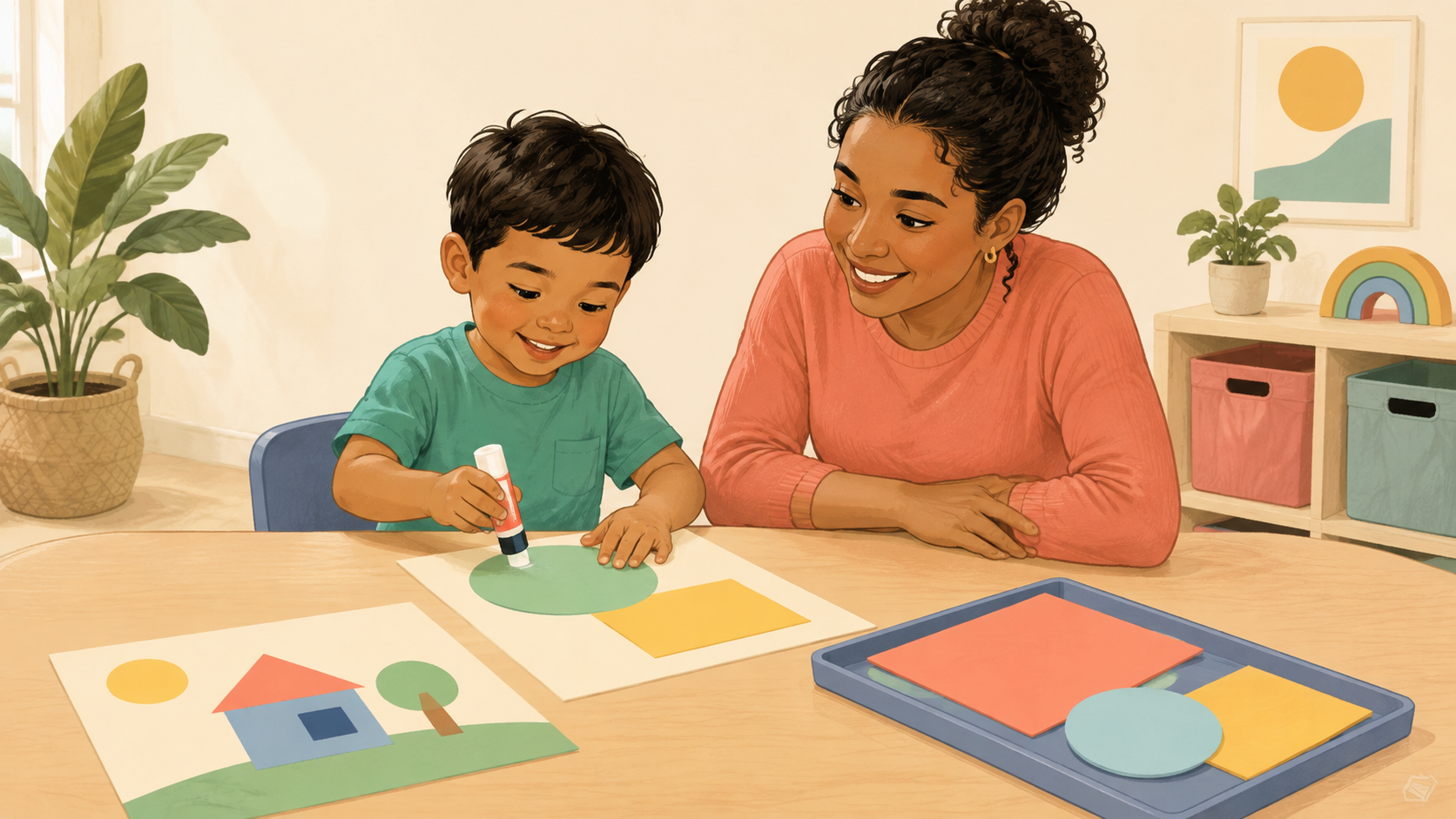
Fine motor & preschool readiness
How to Teach Your Preschooler to Use a Glue Stick Safely and Independently
An OT-informed craft routine for children ages 2–5 using a stable setup, two-hand coordination, simple visual steps, and close adult supervision.
Read article →When to ask for support
Consider talking with your child’s pediatrician or a pediatric occupational therapist when difficulty is persistent, causes pain or distress, leads to loss of skills, or regularly limits play, self-care, meals, or preschool participation.
Educational information only. Development varies, and this page does not diagnose a condition or replace an individualized evaluation.