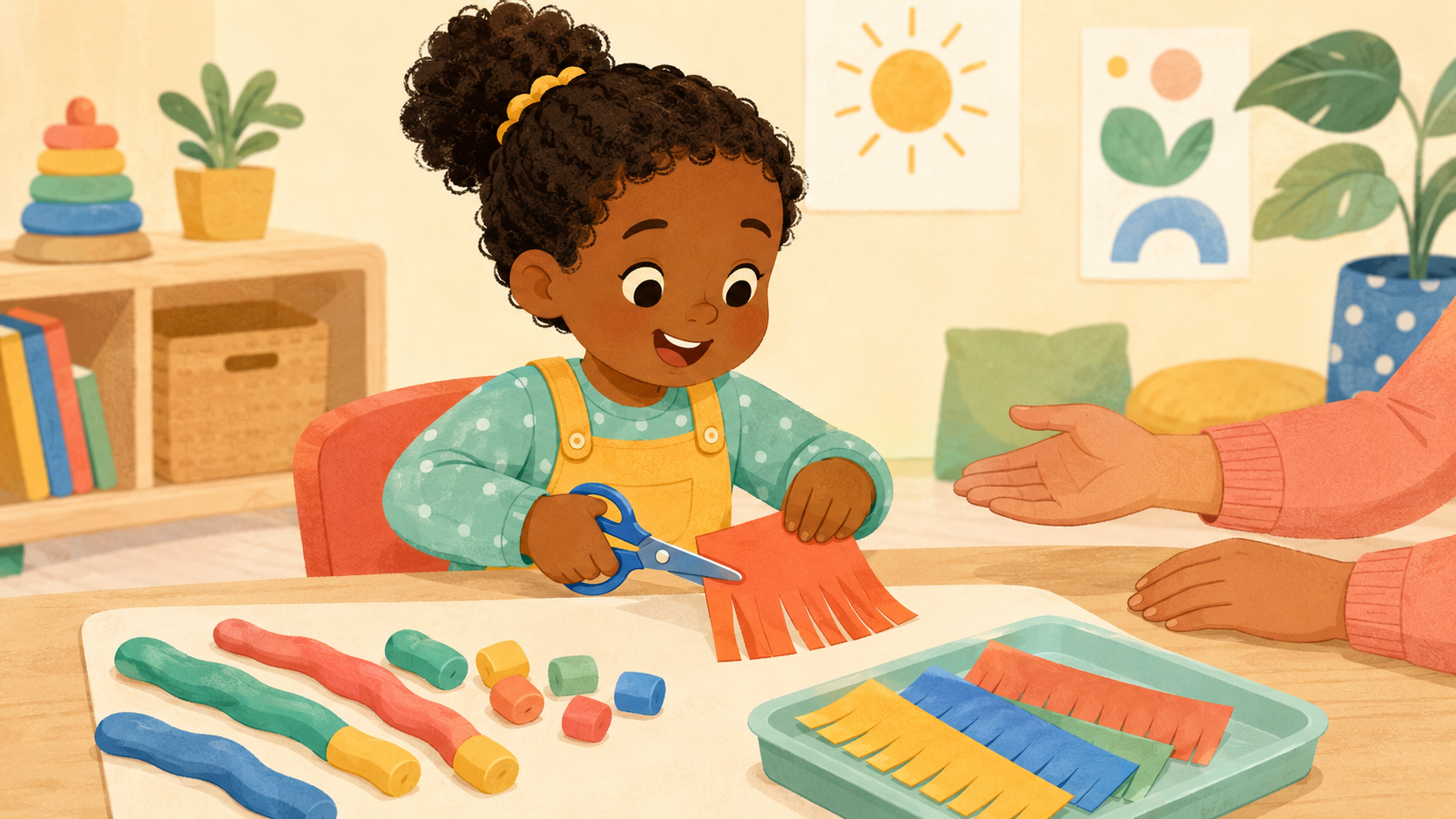
Using scissors is a complex skill. A child has to stabilize the paper with one hand, open and close the scissors with the other, watch the line, and coordinate both sides of the body. The best way to learn is to begin with playful materials that offer quick success—not perfect worksheets.
Before you begin
Choose child-size scissors that open easily and fit your child’s hand. Seat your child with feet supported when possible, keep the paper near the middle of the body, and model “thumbs up” for both the cutting hand and the helping hand.
1. Snip playdough snakes
Roll playdough into short, thick snakes. Invite your child to cut them into “tiny food” for a toy animal. The resistance of playdough slows the scissors down and gives strong sensory feedback.
- Start with two or three snips
- Use a fun story: soup, pet food, or birthday sprinkles
- Let your child squeeze and roll the dough first to warm up the hands
2. Cut paper fringe
Use a sturdy strip of index card or construction paper. Draw short stopping lines from the edge, about one inch long. Your child can make grass, a lion’s mane, silly hair, or octopus legs.
3. Snip drinking straws
Hold a paper straw over a tray and snip it into small pieces. The pieces may pop, which many children find delightfully motivating. Use the pieces for supervised threading or a collage.
- Use paper straws rather than hard plastic
- Keep small pieces away from children who mouth objects
- Try thicker ribbon or strips of painter’s tape as alternatives
4. Make a sticker road
Place small stickers along a wide, straight paper strip. Ask your child to move the scissors forward to “visit” each sticker. Begin with a strip narrow enough to cut across in one snip, then gradually make it wider.
5. Cut and feed
Draw or print simple food pictures on small cards. After your child cuts between the foods, feed them to a puppet, box monster, or favorite stuffed animal. Purposeful play often keeps practice going longer than repeated lines.
What progress can look like
Development is gradual. Children may first use two hands on the scissors, then learn to snip, cut across paper, stay near a straight line, turn corners, and eventually cut simple shapes. Celebrate smoother opening and closing, better paper control, and willingness to try—not only accuracy.
This article is for education and does not replace individualized medical or therapy advice. Stop any activity that causes pain or distress, and consult your child’s qualified provider when you have concerns.