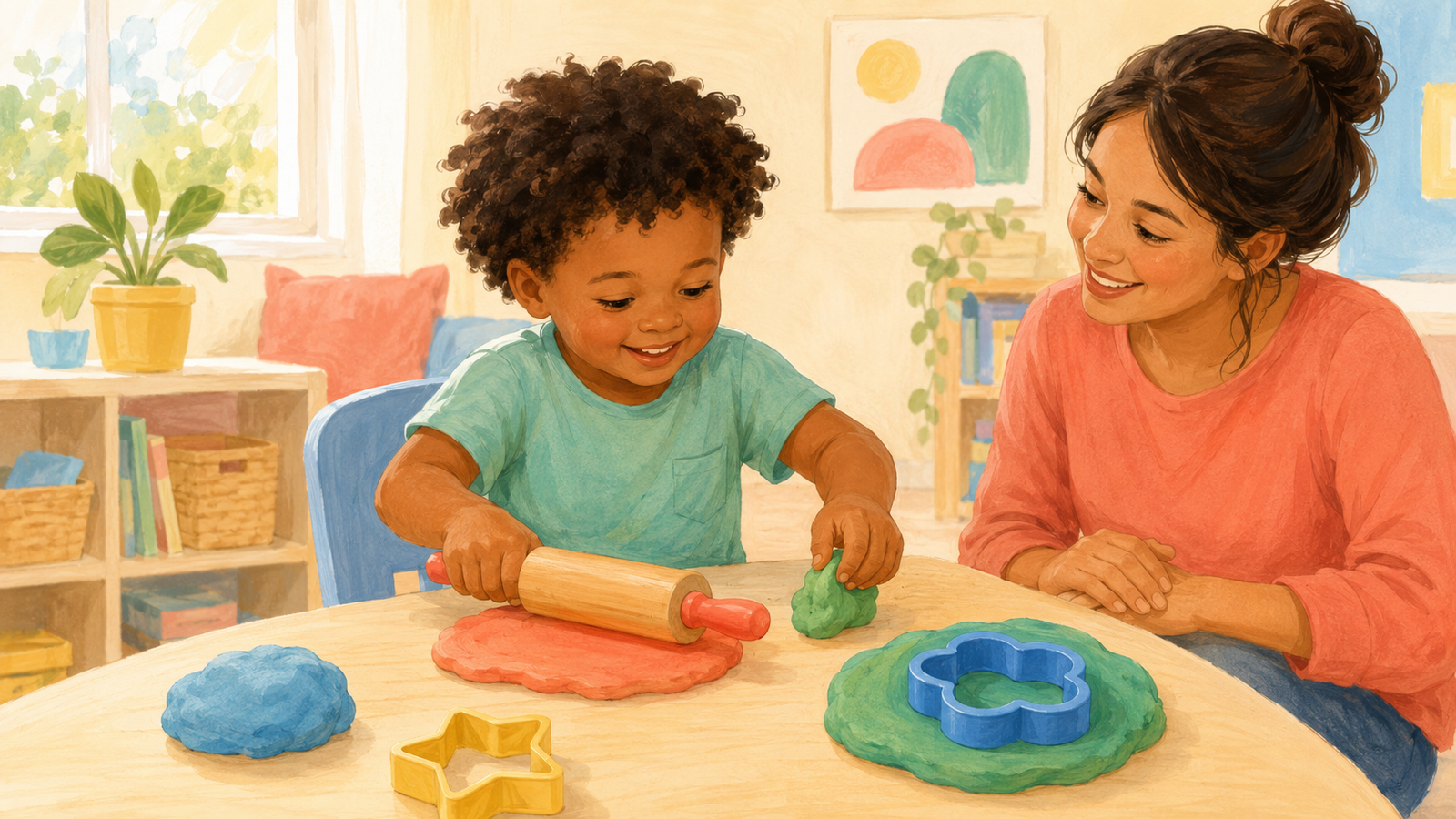
Before children can control crayons and pencils, their hands need many chances to squeeze, roll, pinch, press, and use both sides of the body together. Playdough offers this practice in a forgiving way: there is no single correct picture, mistakes can be reshaped, and the resistance can be adjusted. These seven games are designed for short, joyful practice with children ages 2–5.
Why playdough supports pre-writing
Pre-writing readiness is not only about holding a pencil. Children also need shoulder and wrist stability, hand strength, finger isolation, two-hand coordination, visual attention, and enough endurance to stay with a tabletop activity. Playdough can support these foundations while still feeling like open-ended play.
1. Wake up the hands: squeeze and flatten
Give your child one soft ball of playdough. Invite them to squeeze it with both hands, press it between their palms, and flatten it on the table. Make pretend pancakes, stepping stones, or animal beds.
- Squeeze five times with both hands
- Press down with an open palm
- Push with one hand while the other keeps the dough still
- Stack two flat shapes and press them together
2. Roll long snakes
Rolling asks the hands to move forward and backward together while grading pressure. Start with a thick log and gradually make it longer. Turn the snakes into roads, spirals, circles, or the outlines of simple shapes.
- Roll with both palms on the table
- Try one hand at a time while the helper hand steadies the dough
- Make a short, long, thick, and thin snake
- Copy a circle, cross, or square made by an adult
3. Pinch tiny bites
Roll a thick playdough snake and let your child pinch off small pieces using the thumb and index finger. The pieces can become pretend berries, buttons for a dough person, spots on a ladybug, or food for a toy animal.
- Pinch slowly with the fingertips
- Move the small piece from palm to fingertips
- Use each hand for a few turns
- Count or sort the finished pieces by size
4. Make thumbprints and finger paths
Flatten a large piece of dough and press one fingertip at a time into the surface. Make a row of dots, a winding path, a circle of prints, or pretend footprints. Naming the finger that is working encourages finger awareness and isolation.
- Press with the index finger
- Make two thumbprints side by side
- Alternate right and left hands
- Follow a wide line drawn by an adult in the dough
5. Build and cut pretend food
Make simple pretend foods such as tortillas, fruit slices, cookies, or sandwiches. Use a child-safe blunt dough knife or large cutter to divide the dough. One hand holds the dough while the other presses or cuts, which practices bilateral coordination.
- Roll a ball and flatten it
- Hold the dough with the helper hand
- Press the tool straight down
- Move the pieces onto a pretend plate
6. Hide and rescue large objects
Partly cover a large, washable, age-appropriate object in the dough and invite your child to pull, peel, and dig it out. Large plastic animals, chunky blocks, or oversized lids work well. Then let the child hide the object for you.
- Pull the dough apart with both hands
- Peel dough from around the object
- Turn the object while the other hand works
- Press it back in to make a print
7. Create a playdough story
Combine the movements into a short pretend-play story. Make a garden with rolled stems and pinched flowers, a bakery with flattened cookies, or a construction site with dough roads. Let your child choose the idea and use short prompts rather than correcting the final product.
- What should we make first?
- Can you roll a road for the truck?
- How can we make three flowers?
- Which hand will hold while the other presses?
Keep practice short and successful
Five to ten minutes is enough for many preschoolers. Offer one or two games at a time, place feet on a stable surface when possible, and stop before the hands are exhausted. Progress may look like using both hands together, pinching with fingertips, pressing with less effort, staying engaged longer, or asking for help calmly.
Safety and when to seek support
Check the dough label for age guidance and allergens, especially wheat. Use nontoxic dough, wash hands before and after play, cover cuts, and keep dough away from the mouth, eyes, pets, and food-preparation surfaces. Homemade dough also requires supervision and safe storage.
If hand difficulties regularly limit eating, dressing, drawing, using classroom tools, or play—or if your child has pain, loss of skills, marked weakness, persistent one-handed use, or unusual fatigue—consider discussing the concern with your pediatrician or a pediatric occupational therapist.
This article is for education and does not replace individualized medical or therapy advice. Stop any activity that causes pain or distress, and consult your child’s qualified provider when you have concerns.