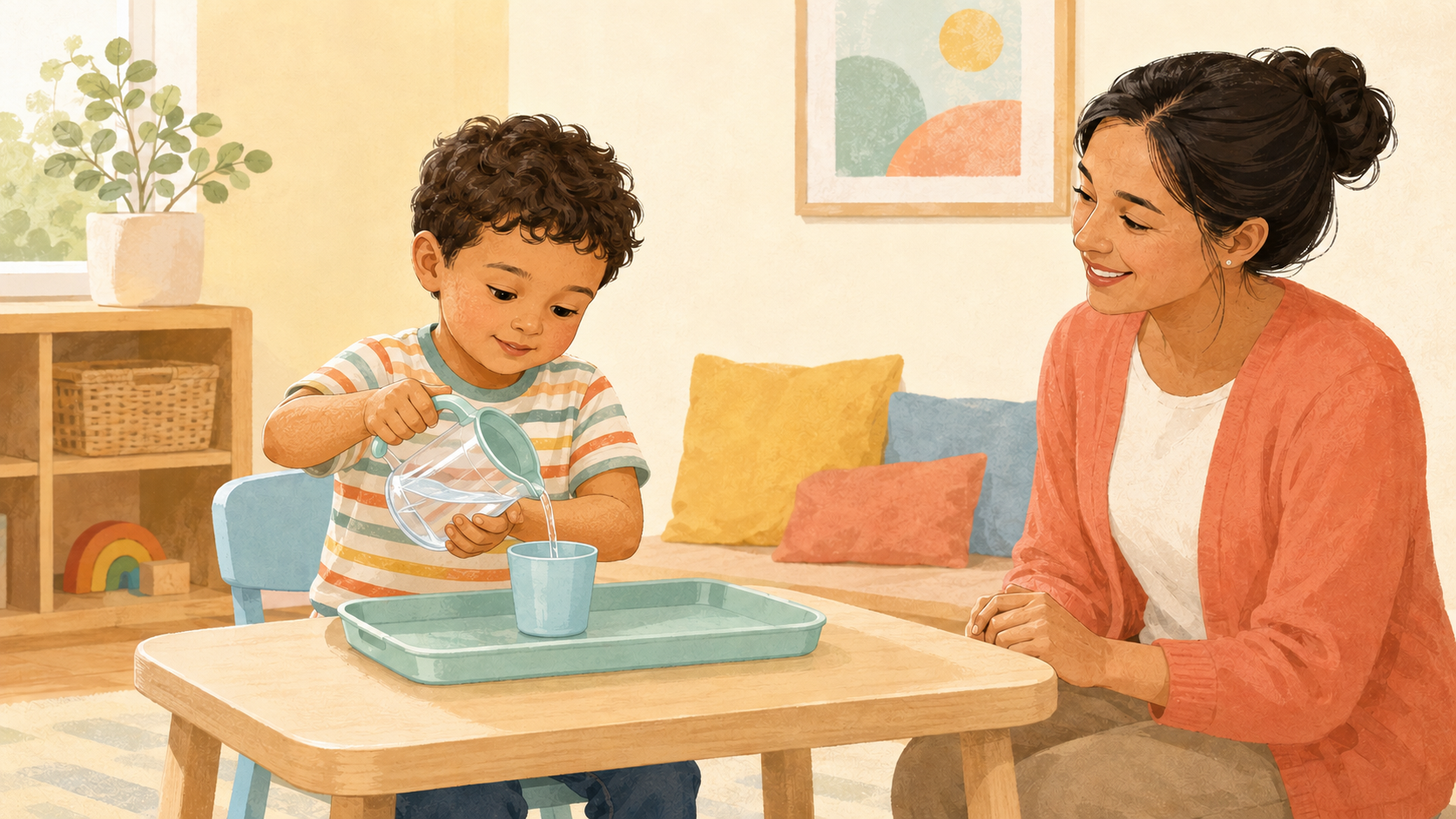
Pouring a drink asks a preschooler to hold one container steady, lift and tilt another, watch a moving liquid, grade force, and stop at the right moment. It combines two-handed coordination, visual attention, wrist control, motor planning, and patience. Begin with a child-sized setup and a very small amount so the child can learn the movement without a large spill.
Choose a setup that makes success possible
Use a small, lightweight pitcher with a comfortable handle and a short spout. Pair it with a wide, stable cup that contrasts with the table. Place both on a rimmed tray or washable mat so a spill stays contained.
Seat your child upright with feet supported and bring the tray close to the body. Start when there is no rush and the child is calm enough to watch the liquid.
- Use an unbreakable child-sized pitcher
- Fill it only one-quarter full
- Choose a wide cup that does not tip easily
- Place the cup near the middle of the tray
- Keep a small cloth within reach
Practice the movement before adding liquid
Begin with an empty pitcher or a few large dry items such as chunky blocks. Let the child pick up the pitcher with one hand on the handle and the other supporting the side or bottom. Tip toward the cup, pause, and return upright.
Dry practice makes the sequence visible and removes the surprise of moving water. When the child understands the path, add a tablespoon or two of water.
- Handle hand holds
- Helper hand supports
- Spout points over the cup
- Pitcher tips slowly
- Pitcher returns upright
Teach four short cues
Use the same brief words each time. Demonstrate slowly from beside the child so the direction matches what they see. Pause after each cue instead of moving the child’s hands through the whole task.
- Two hands — one on the handle and one supporting
- Spout over — move the spout above the cup
- Tip and watch — tilt slowly while watching the level
- Stop and down — return upright and place the pitcher down
Use backward chaining for an early success
Backward chaining means the adult completes the beginning and the child finishes the last step. Hold and tip the pitcher together, then let the child return it upright and place it on the tray. Next, let the child control the final part of the pour, and gradually give over the earlier steps.
Keep the amount small enough that every attempt can end successfully, even if some water lands on the tray.
- Adult pours; child stops and puts down
- Adult positions spout; child tips, stops, and puts down
- Adult fills pitcher; child completes the pour
- Child fills a cup from a prepared small pitcher
- Fade cues when the sequence becomes familiar
Teach how much and how fast
Young children need concrete information about when to stop. Add a removable line or simple picture on the outside of a clear cup, or ask the child to pour only enough to cover the bottom. Increase the amount gradually.
A slow tilt makes the stream easier to control. If water rushes out, reduce the amount in the pitcher, use a smaller spout, or practice a smaller tipping angle.
- Start with one or two tablespoons
- Watch the cup, not the adult
- Pour to a visible line
- Count ‘one, two, stop’
- Return the pitcher upright before moving it
Build the skill through everyday play
Practice the same motor plan in low-pressure routines. Let the child water a plant with a tiny watering can, pour bath water between cups under close supervision, or serve pretend tea with empty containers.
Use real mealtime practice only after the movement is familiar. One small pour at breakfast is enough.
- Pour water into a flowerpot outdoors
- Move water between two cups at the sink
- Fill a pet’s bowl with adult help
- Pour dry socks or blocks from one container to another
- Serve a small drink to a stuffed animal, then to self
Respond calmly to spills and sensory discomfort
Spills are information, not misbehavior. Say what happened in a neutral voice, keep the child away from a slippery floor, and invite one simple cleanup job such as blotting the tray. Avoid shame or repeated warnings.
Some children dislike splashes, wet sleeves, cold liquid, or the sound of water hitting the cup. Roll sleeves up, use room-temperature water, reduce the amount, and let the child watch before trying.
- Keep practice on a tray
- Use one short cleanup routine
- Offer a dry towel right away
- Warn before helping the child’s hands
- End after a successful small step
Safety and when to seek support
Use only unbreakable containers and liquids at a safe temperature. Keep hot drinks, glass, heavy pitchers, sharp spouts, electrical items, and choking hazards out of reach. Wipe floor spills immediately and supervise every practice. Use only beverages and consistencies your child already drinks safely.
Consider speaking with a pediatrician or pediatric occupational therapist when pouring or similar two-handed tasks regularly limit eating, dressing, preschool participation, or family routines; when there is pain, marked weakness, tremor, unusual stiffness, frequent one-sided use, repeated falls, or loss of a skill. An OT can consider posture, strength, coordination, vision, sensory needs, motor planning, and the environment.
This article is for education and does not replace individualized medical or therapy advice. Stop any activity that causes pain or distress, and consult your child’s qualified provider when you have concerns.