Stack and connect blocks
FINE MOTOR SKILLS • PEDIATRIC OT
FINE MOTOR SKILLS
Fine Motor Skills by Age
See how hand skills typically grow from toddler play to preschool tools.
Fine motor development is a gradual process. Children first reach, grasp, release, poke, and turn objects; later they coordinate two hands, manipulate small pieces, draw, fasten clothing, and use classroom tools. Age ranges are guides—not pass-or-fail tests.
Why this skill matters
Why this skill matters
Looking at skills by age helps families choose activities that are challenging enough without becoming frustrating. The most useful question is how the child participates in real play, self-care, meals, and preschool routines.
Play ideas to try at home
Play ideas to try at home
Post large objects into containers
Turn board-book pages
Draw, peel stickers, and play with dough
Related practical articles
Fine Motor Skills by Age
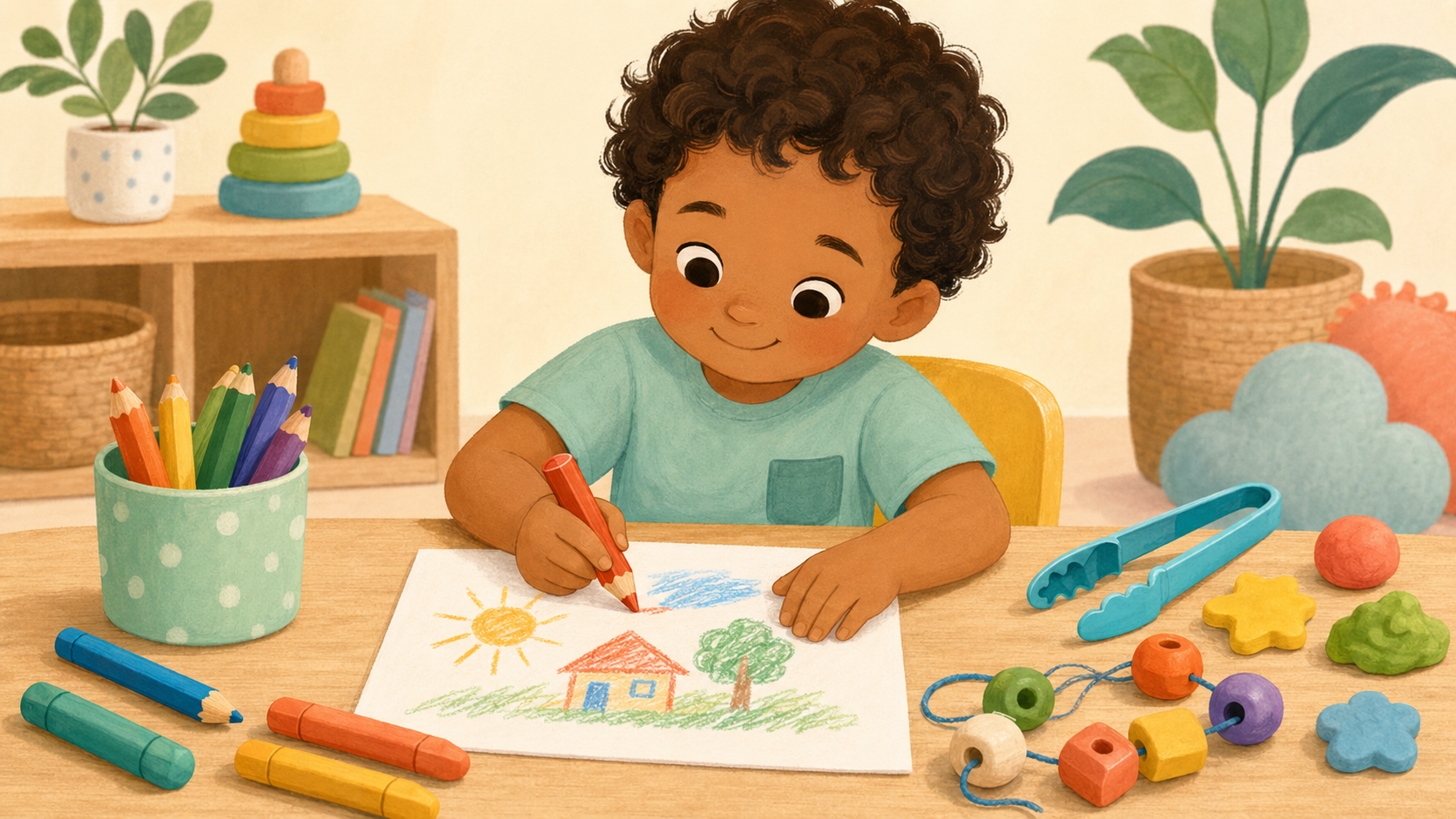
Handwriting
When Should My Child Use a Mature Pencil Grasp?
What pencil grasp development really looks like—and what helps more than repeatedly correcting fingers.
Read article →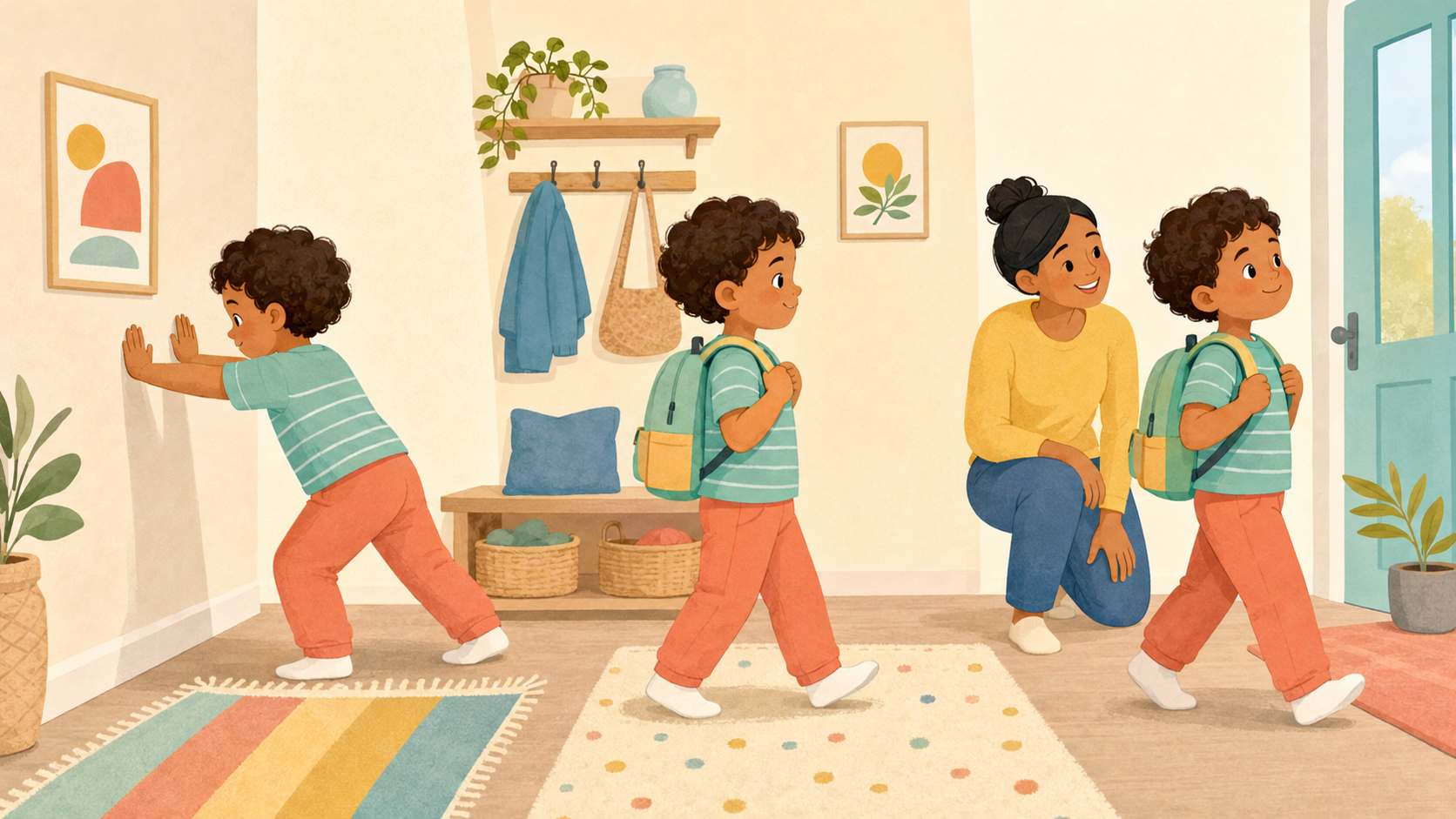
Sensory
A Calmer Morning Sensory Routine
A realistic 10-minute routine to help children feel organized and ready before preschool or school.
Read article →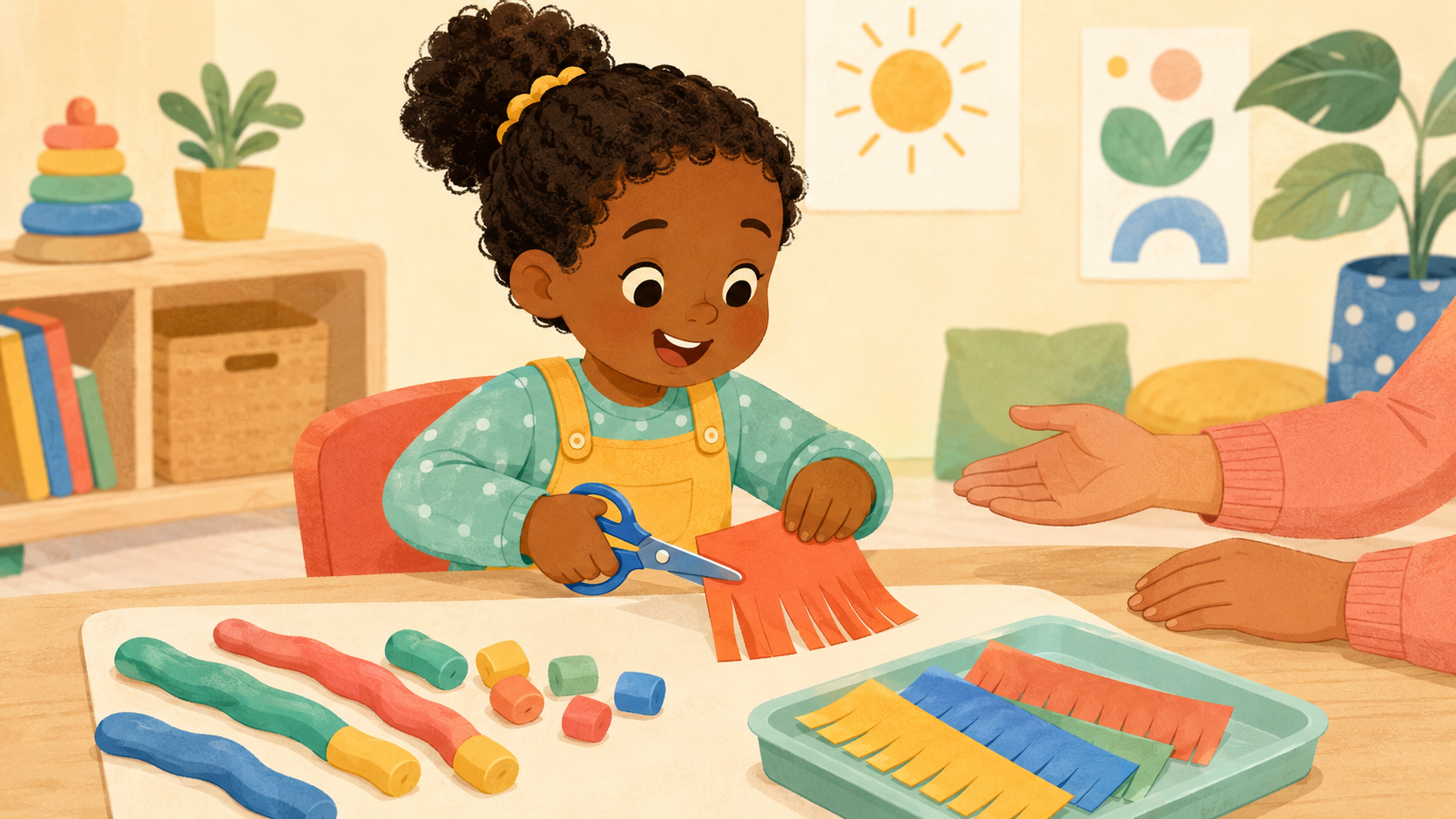
Fine motor
5 Easy Scissor Activities for Preschoolers
Playful, low-pressure activities that build the hand strength and coordination children need for cutting.
Read article →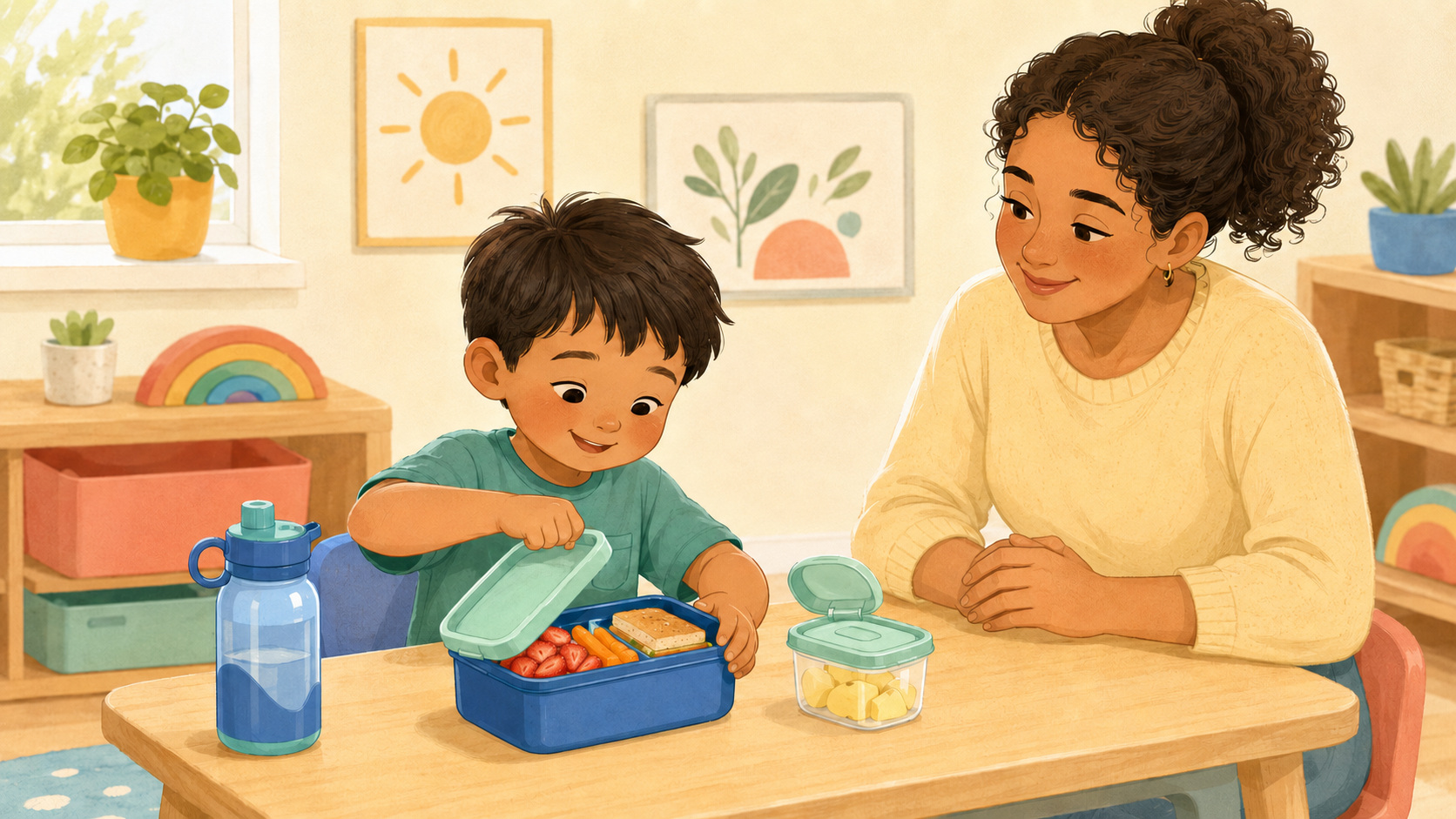
Self-care
How to Help Your Preschooler Open Lunch Containers Independently
Simple OT-informed ways to practice lunchbox zippers, lids, pouches, and containers before preschool.
Read article →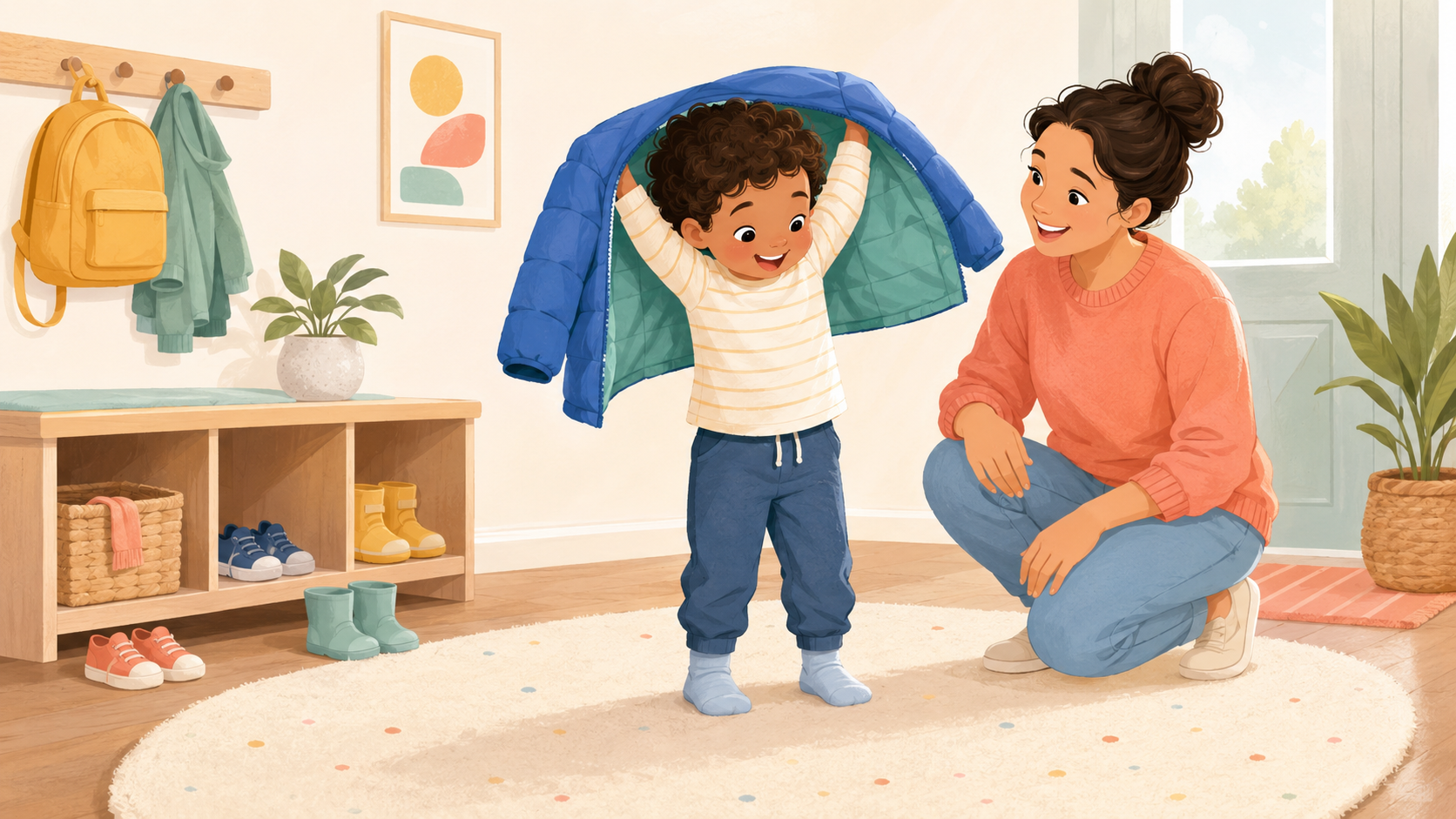
Self-care
The Coat Flip: Help Your Preschooler Put On a Jacket Independently
A playful, step-by-step way to teach the coat-flip method and make getting dressed easier for children ages 2–5.
Read article →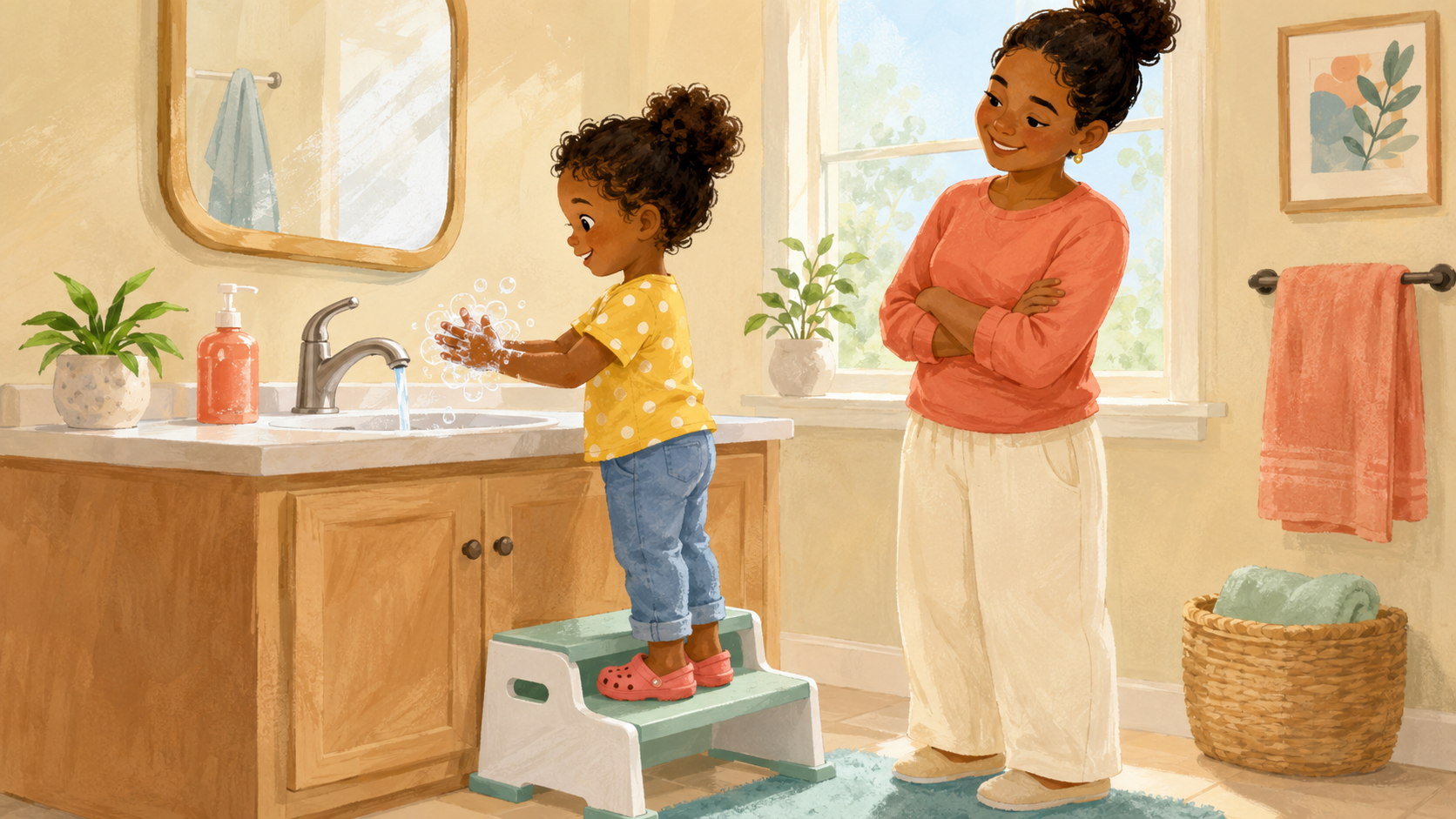
Self-care
Teach Your Preschooler to Wash Hands Independently
A simple six-step handwashing routine with playful OT-informed practice ideas for children ages 2–5.
Read article →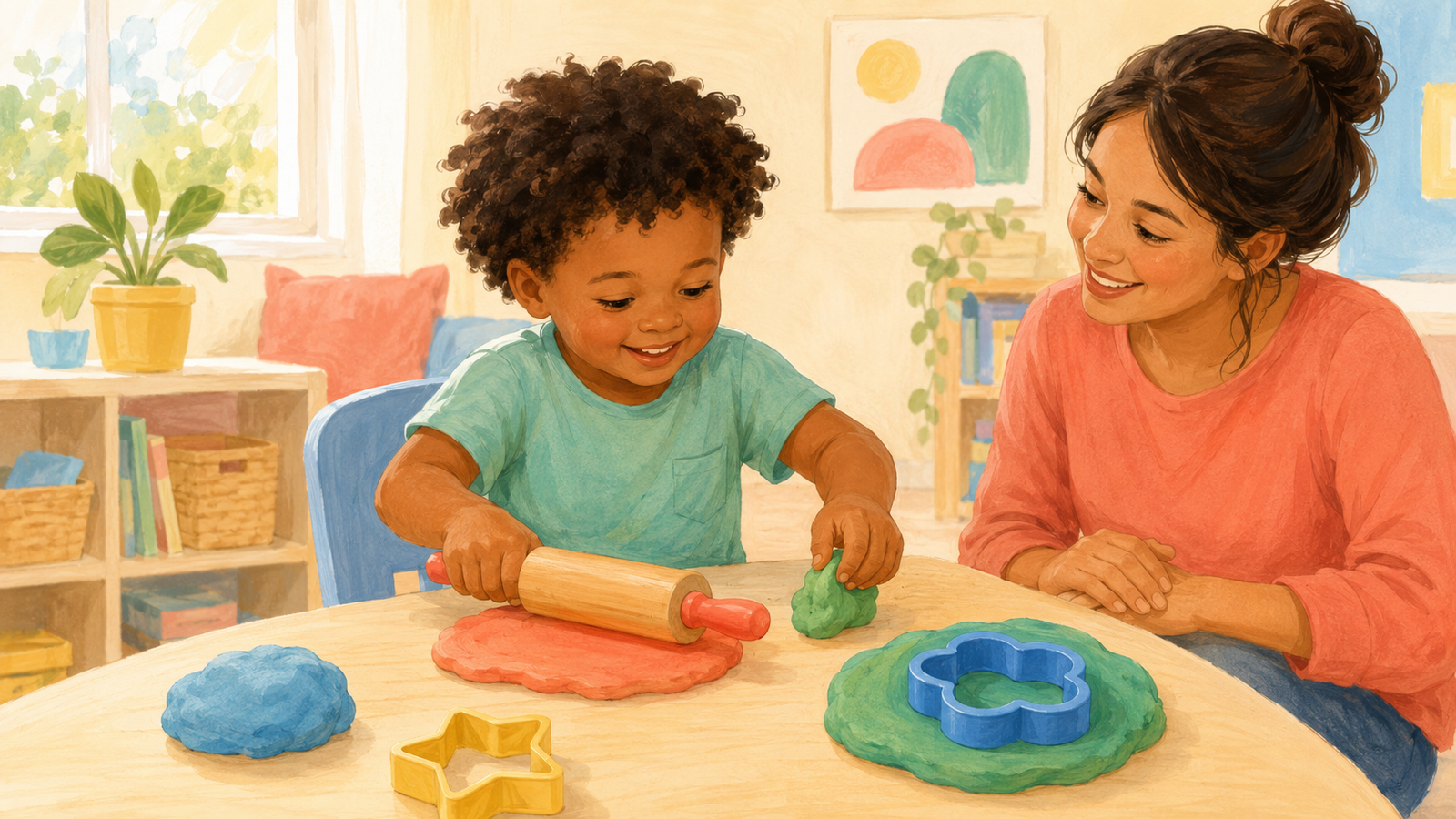
Fine motor
7 Playdough Games That Build Hand Strength for Pre-Writing
Simple, playful ways to strengthen little hands and support early pencil skills without worksheets.
Read article →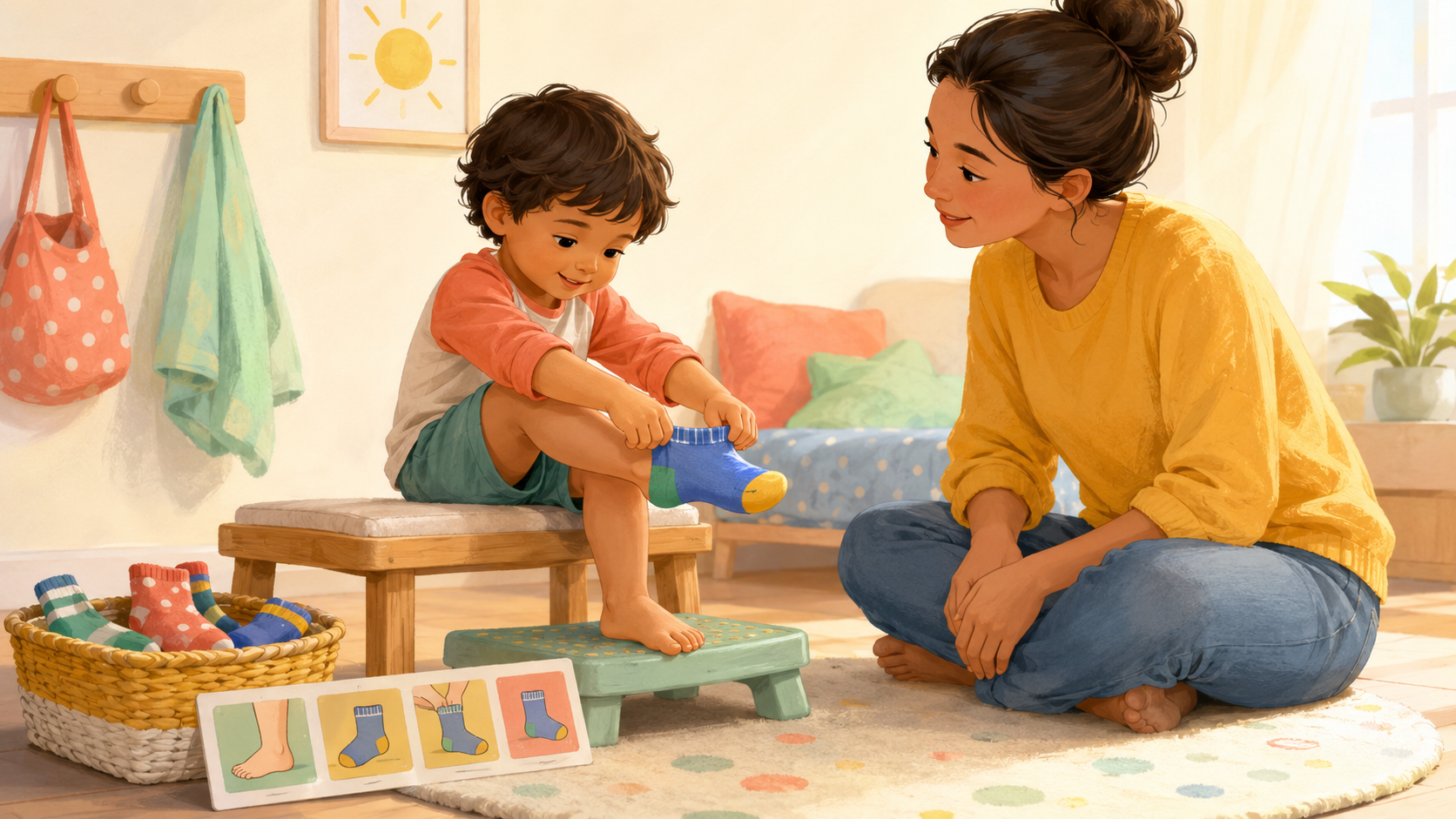
Self-care
How to Help Your Preschooler Put On Socks Independently
A simple OT-informed way to teach sock dressing through setup, backward chaining, and playful two-hand practice.
Read article →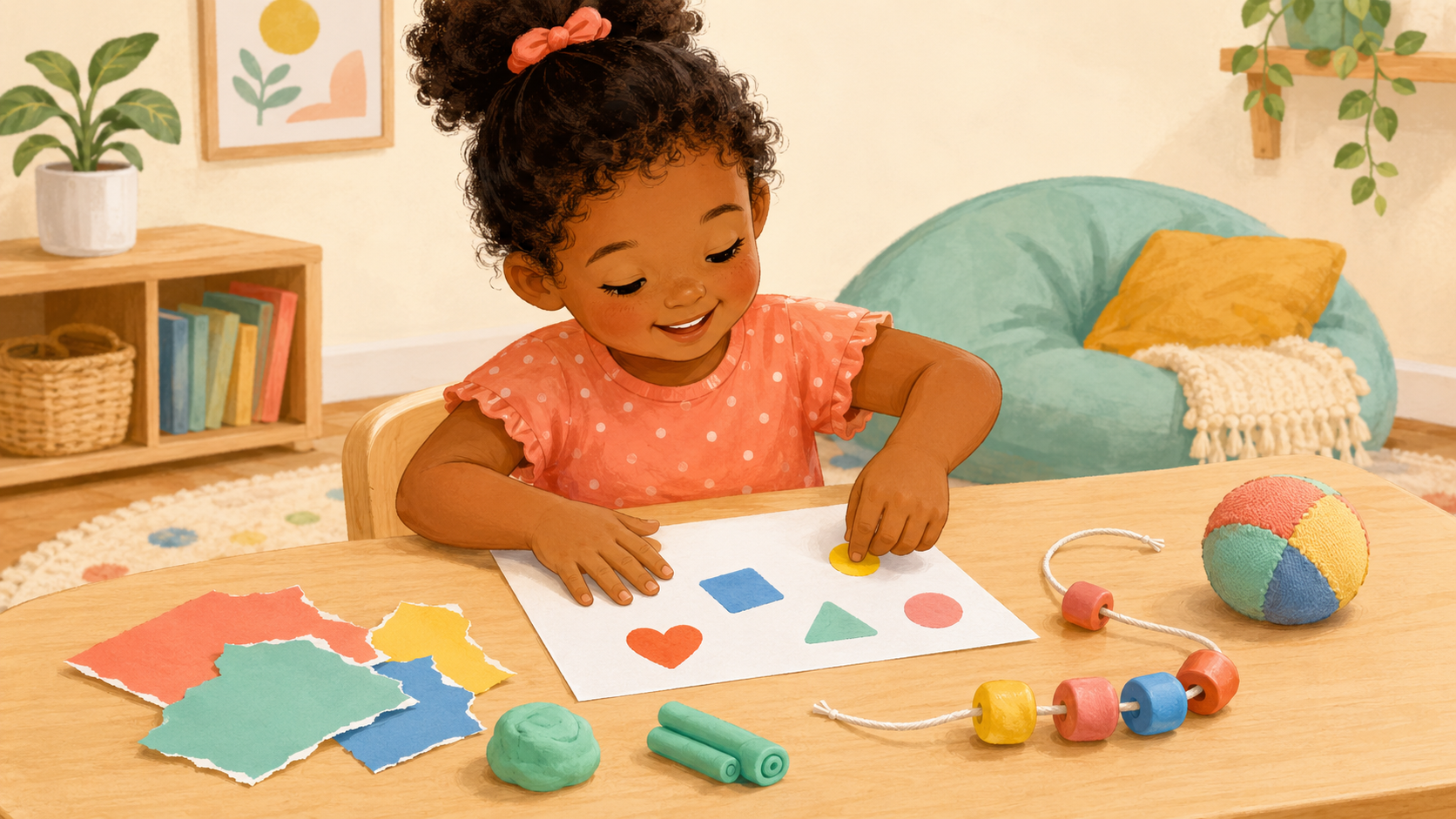
Fine motor & play
7 Two-Handed Play Activities That Build Bilateral Coordination
Easy everyday games that help preschoolers use both hands together for dressing, cutting, drawing, and play.
Read article →When to ask for support
Consider talking with your child’s pediatrician or a pediatric occupational therapist when difficulty is persistent, causes pain or distress, leads to loss of skills, or regularly limits play, self-care, meals, or preschool participation.
Educational information only. Development varies, and this page does not diagnose a condition or replace an individualized evaluation.