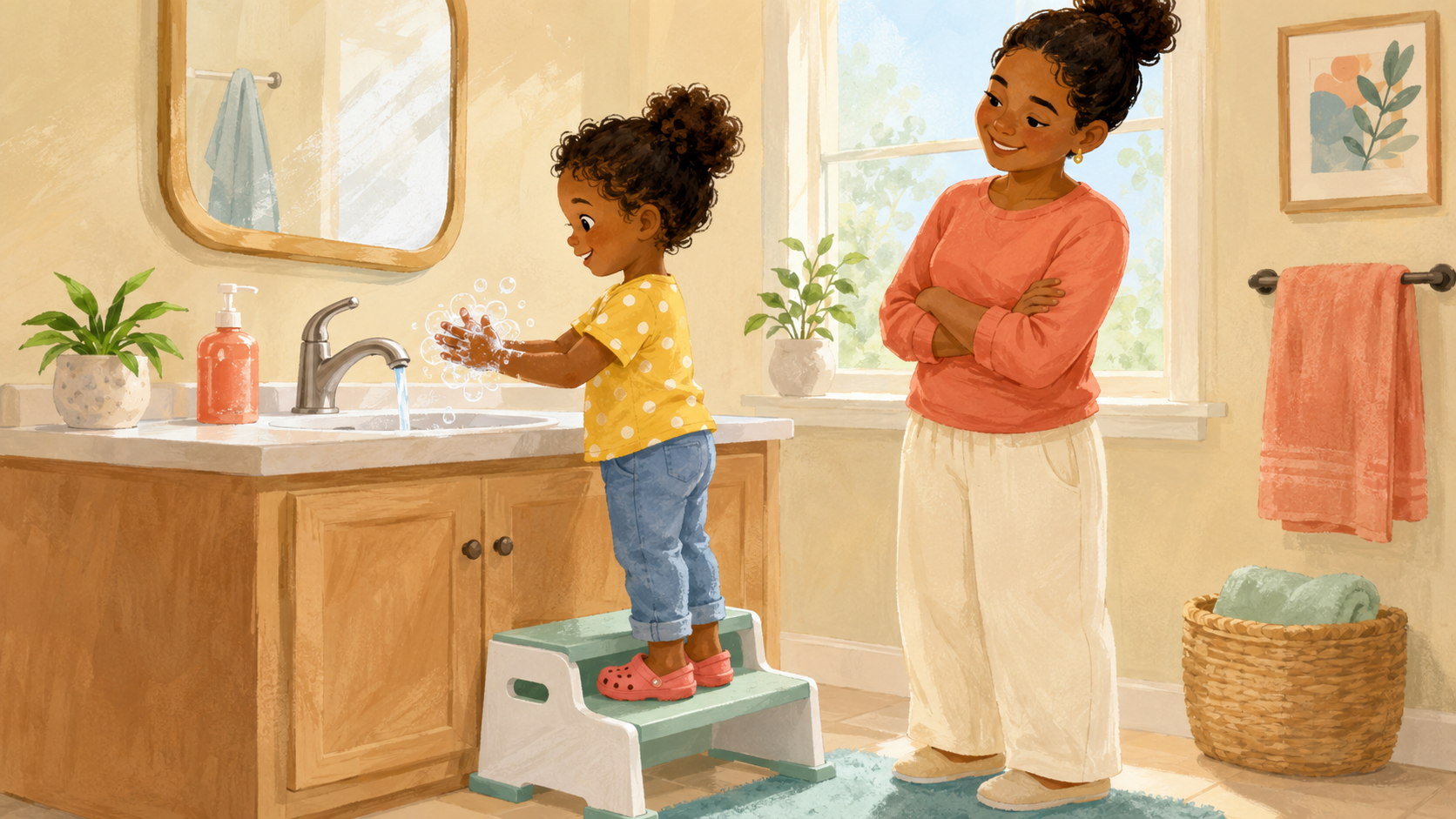
Handwashing is a short routine with many hidden skills. A child has to reach the sink, manage water and soap, coordinate both hands, remember a sequence, tolerate wet sensations, and know when the job is finished. Breaking the routine into predictable steps helps preschoolers participate more independently without turning the bathroom into a daily struggle.
Start with a child-friendly setup
Before teaching the sequence, make sure the environment allows your child to succeed. If the sink, soap, or towel is hard to reach, the routine becomes a balance challenge instead of a self-care lesson.
- Use a stable, nonslip step stool with adult supervision
- Keep liquid soap in an easy-to-press pump
- Place the towel where the child can reach it without climbing
- Use a nonslip mat if the floor becomes wet
- Choose comfortably warm—not hot—water
Teach the same six steps every time
Use short, consistent words and model the routine slowly. A small picture sequence near the sink can reduce repeated adult reminders.
- Water on — turn on the tap with help as needed
- Hands wet — place both hands under the water
- Soap — use one pump
- Scrub — rub palms, backs of hands, between fingers, and fingertips
- Rinse — wash away all the bubbles
- Water off and dry — turn off the tap and dry both hands
Make scrubbing time concrete
“Wash well” is too abstract for many preschoolers. Give the scrubbing step a clear beginning and end. Sing one short familiar song, count slowly to 20, or use a visual timer that stays outside the splash zone.
Focus first on keeping both hands together and moving. Detailed cleaning of every surface develops with practice.
- Pretend the soap bubbles are painting every finger
- Rub palms like warming cold hands
- Make each thumb take a turn inside the other hand
- Tap fingertips gently into the opposite palm
Practice the difficult parts through play
If one step causes most of the difficulty, practice that movement separately when there is no rush.
- Pump practice: press an empty clean soap dispenser during water play
- Two-hand practice: wring a small washcloth over the sink
- Finger practice: rub washable paint or shaving foam between fingers during supervised play
- Sequence practice: arrange six picture cards in order
- Drying practice: wrap and squeeze each hand with a small towel
Use the least help that works
Pause for a few seconds before helping. If support is needed, begin with a gesture or one short cue, then point to the picture, demonstrate beside the child, or help with only the difficult step. Reduce physical help as soon as the child understands.
Instead of repeating the whole direction, ask: “What comes next?” If the child completes four of six steps, let that count as meaningful participation.
Support sensory comfort without skipping hygiene
Some children dislike splashing, running-water sounds, strong soap scents, sticky residue, or wet sleeves. Notice the specific discomfort and adjust what you can while keeping the routine effective.
- Roll sleeves up before approaching the sink
- Try an unscented soap if fragrance is bothersome
- Use a gentle water flow to reduce splashing and noise
- Let the child choose between two soft towels
- Dry the sink edge and floor promptly so the space feels predictable
Safety and hygiene guidance
Stay close to prevent falls and burns. Check that the stool is stable, keep electrical items away from water, clean spills promptly, and never leave a young child alone near a filled sink or bathtub. Follow current public-health guidance for when and how to wash hands, including after toileting, before eating, after outdoor play, and after coughing or wiping the nose.
If skin becomes cracked, painful, or persistently irritated, discuss products and care with your child’s healthcare provider. Hand sanitizer requires direct adult supervision and should be stored out of reach; soap and water are preferable when hands are visibly dirty.
When extra support may help
Consider discussing concerns with a pediatrician or pediatric occupational therapist when handwashing difficulties regularly limit toileting, preschool participation, eating routines, or community activities; when the child has pain, loss of skills, marked weakness, frequent falls, or intense distress; or when similar challenges affect dressing, feeding, and play.
An OT can look at the complete routine—the child’s motor skills, sensory responses, understanding, environment, and the amount of help needed—and build support around daily participation rather than a single isolated step.
This article is for education and does not replace individualized medical or therapy advice. Stop any activity that causes pain or distress, and consult your child’s qualified provider when you have concerns.