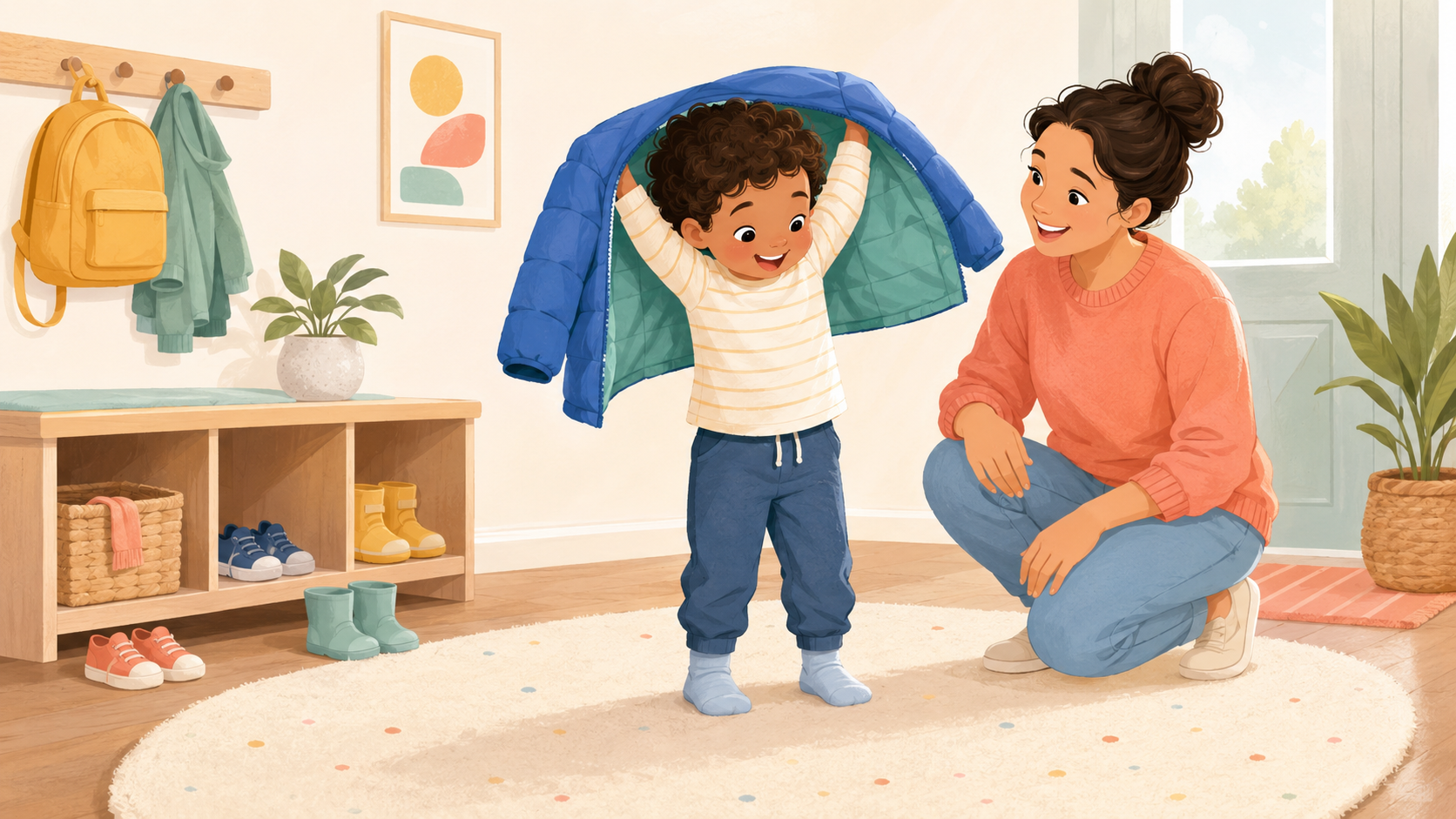
Putting on a jacket is a small daily task with a lot happening underneath. A child has to find the correct opening, remember a sequence, coordinate both arms, move the coat around the body, and stay balanced. The coat-flip method turns those steps into a predictable movement that many preschoolers can learn through short, playful practice.
What is the coat-flip method?
The child places an open jacket on the floor with the inside facing up, the collar near their toes, and the hood or top of the jacket pointing toward them. The child slides both hands into the sleeves, lifts the jacket overhead, and lets it fall behind the shoulders.
This method reduces the need to reach behind the body and search for a second sleeve. It gives the child a clear visual starting point and allows both arms to work together.
First, check that the jacket is a good match
Children learn more easily when the clothing itself is manageable. A stiff, tight, oversized, or twisted jacket can make the movement unnecessarily difficult.
- Choose a lightweight jacket with roomy sleeves for early practice
- Open the zipper fully and smooth the jacket flat
- Make sure cuffs are not folded inward
- Remove backpacks, bulky mittens, and hats that block the movement
- Practice when there is no rush to leave
Teach the four-step sequence
Use the same short words each time so your child can connect the language with the movement. Model once, then invite your child to try.
- Lay it down — inside facing up, collar by your toes
- Hands in — slide one hand into each sleeve opening
- Up and over — lift both arms toward the ceiling and over the head
- Push through — straighten the elbows and let the jacket settle on the shoulders
Turn practice into a quick game
Keep practice brief and successful. One or two repetitions before outdoor play may be enough. You can pretend the jacket is a superhero cape, a butterfly’s wings, or a tent that travels up and over.
If your child enjoys imitation, take turns with two jackets. Say each step aloud while you do it together. Children often learn a new motor sequence more easily when they can watch and move at the same time.
- Race the jacket—not another child—to keep pressure low
- Hide a large sticker inside near each sleeve opening as a hand target
- Practice with a loose cardigan or costume cape before a heavier coat
- Celebrate the step completed, such as finding both sleeves, rather than expecting the whole task
Use the least help that works
Pause before helping so your child has time to plan. If support is needed, begin with a gesture or one short cue. Next, point to the sleeve openings or help arrange the jacket. Physical guidance should be gentle and reduced as soon as the child understands the movement.
Try not to complete the entire task after one difficult step. If you help the child find the first sleeve, pause again and let the child attempt the lift and flip.
If the coat flip is still difficult
The task may be challenging for different reasons. Watch where the sequence breaks down. A child who cannot keep the jacket flat may need a clearer setup. A child who misses the sleeves may benefit from larger visual targets. A child who loses balance may do better sitting for the first steps or practicing beside a wall with adult supervision.
- Difficulty finding the top and bottom: add a removable picture near the collar
- Difficulty using both hands together: practice lifting a scarf or towel overhead
- Difficulty pushing through sleeves: try a roomier jacket and check for bunched clothing
- Difficulty remembering the order: use the same four words and a visual sequence
- Sensitivity to fabric or tags: respect discomfort and try a preferred, familiar layer
Safety and comfort come first
Practice in a clear space away from stairs, furniture corners, hooks, and other children. An adult should stay close because the jacket briefly passes over the child’s head and may affect vision or balance. Never force the movement, pull a child’s arms, or continue if the child reports pain, becomes frightened, or has difficulty breathing.
Choose clothing appropriate for the weather and supervise fasteners, drawstrings, and loose accessories. The coat flip may not be appropriate for every child, including some children with shoulder limitations, balance concerns, medical precautions, or strong distress when clothing moves near the face.
What progress can look like
Independence develops in small steps. Progress may mean placing the jacket in the correct direction, finding both sleeves, completing the flip with one reminder, adjusting the collar, or calmly asking for help. Practice the part your child is ready to learn and let adults handle the rest when time is short.
If dressing difficulties regularly affect preschool participation, outdoor play, comfort, or family routines—or if your child has pain, loss of skills, unusual weakness, or frequent falls—consider discussing the concern with your pediatrician or a pediatric occupational therapist. An OT can look at the child, the clothing, the environment, and the entire dressing routine together.
This article is for education and does not replace individualized medical or therapy advice. Stop any activity that causes pain or distress, and consult your child’s qualified provider when you have concerns.