Use short crayons or chalk
FINE MOTOR SKILLS • PEDIATRIC OT
FINE MOTOR SKILLS
Pencil Grasp
Understand how grasp changes and when a different grasp is still functional.
Young children usually move from whole-hand grasps toward finger-led grasps as strength, stability, and control develop. There is no single perfect grasp for every child. Comfort, endurance, control, and participation matter more than appearance alone.
Why this skill matters
Why this skill matters
A functional grasp lets a child make marks with reasonable control and without pain or rapid fatigue. Posture, paper position, tool size, shoulder stability, and practice all influence the grasp.
Play ideas to try at home
Play ideas to try at home
Draw on an easel
Make tiny dough balls
Use tongs and stickers
Related practical articles
Pencil Grasp
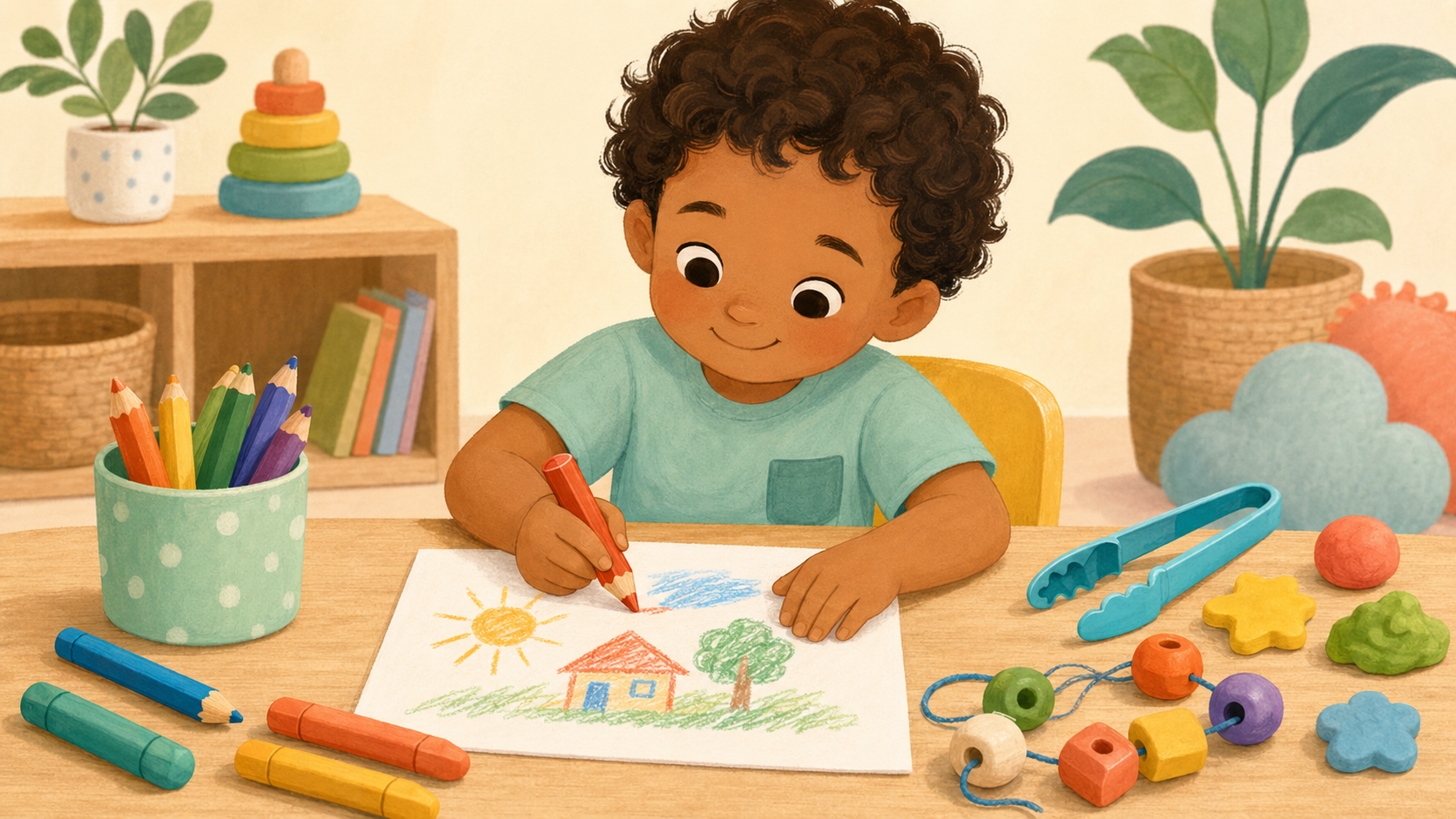
Handwriting
When Should My Child Use a Mature Pencil Grasp?
What pencil grasp development really looks like—and what helps more than repeatedly correcting fingers.
Read article →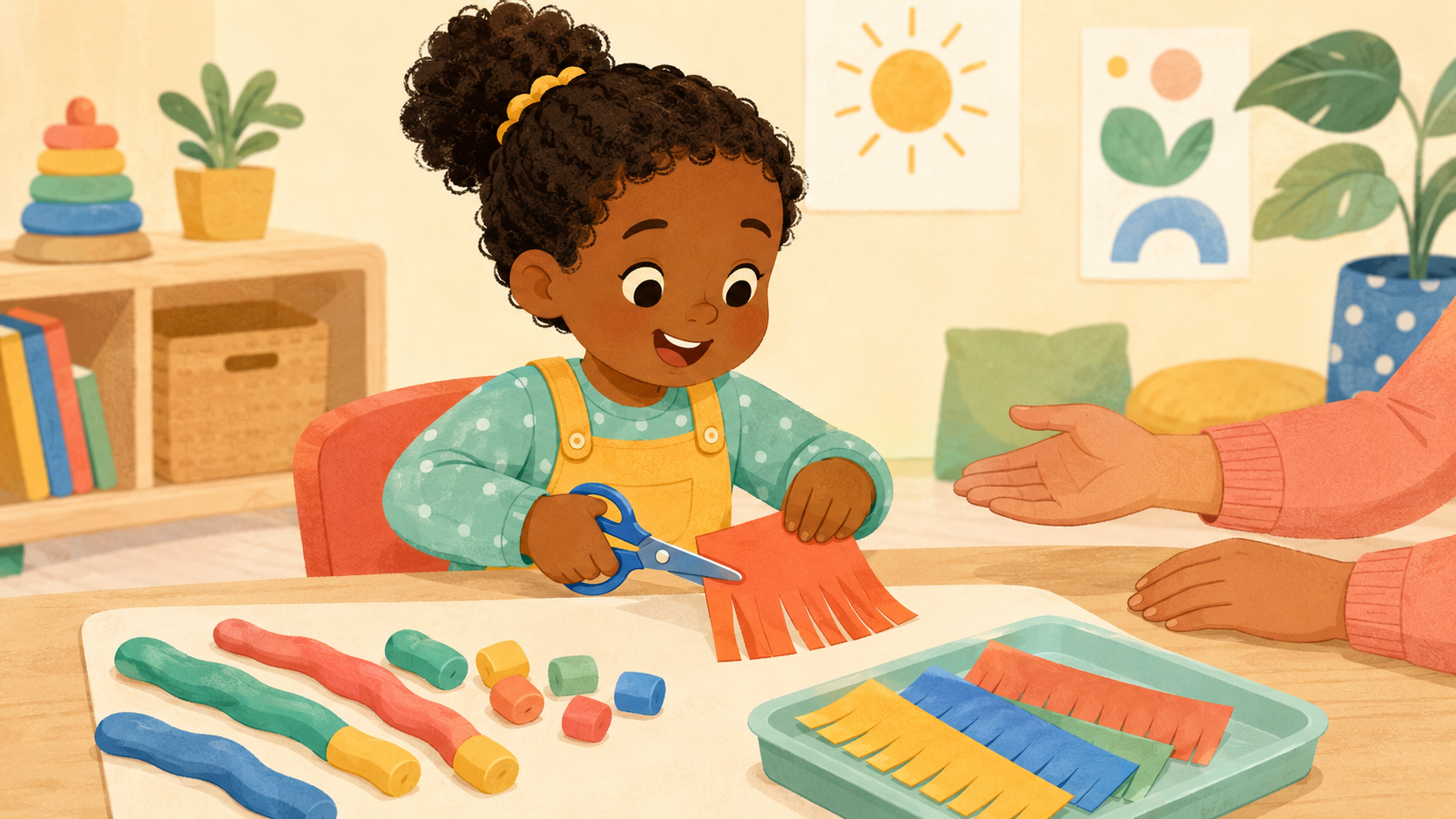
Fine motor
5 Easy Scissor Activities for Preschoolers
Playful, low-pressure activities that build the hand strength and coordination children need for cutting.
Read article →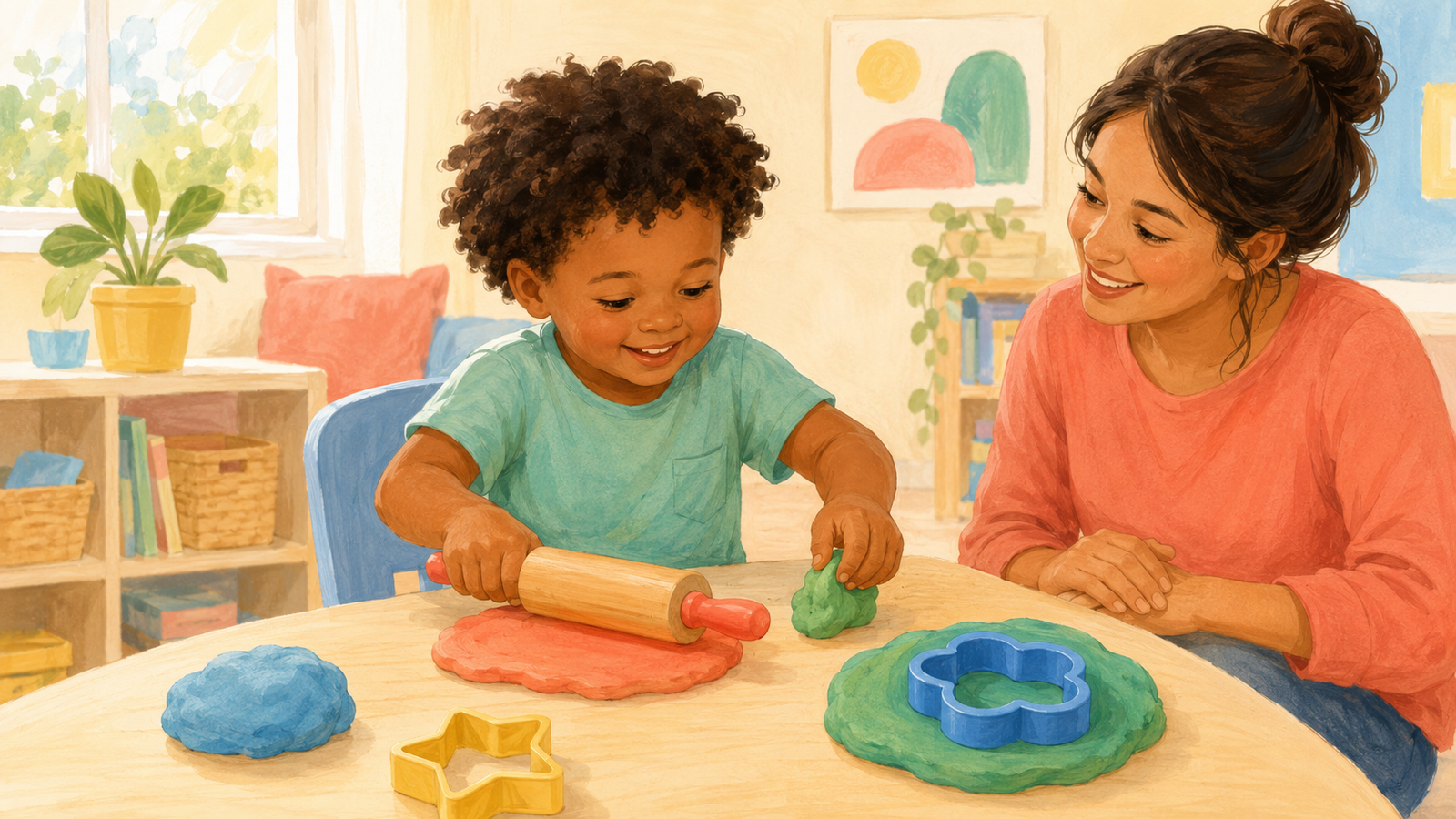
Fine motor
7 Playdough Games That Build Hand Strength for Pre-Writing
Simple, playful ways to strengthen little hands and support early pencil skills without worksheets.
Read article →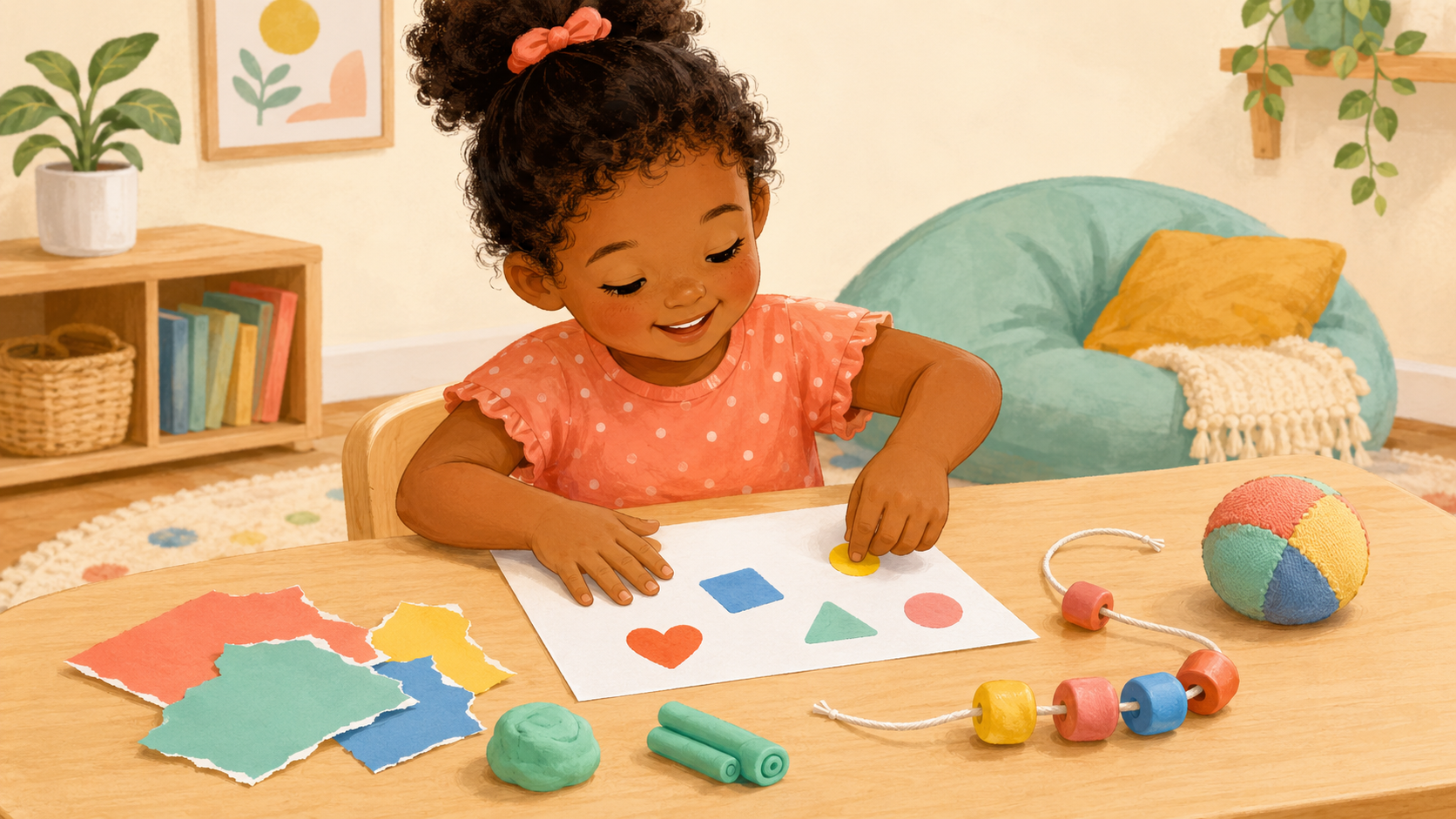
Fine motor & play
7 Two-Handed Play Activities That Build Bilateral Coordination
Easy everyday games that help preschoolers use both hands together for dressing, cutting, drawing, and play.
Read article →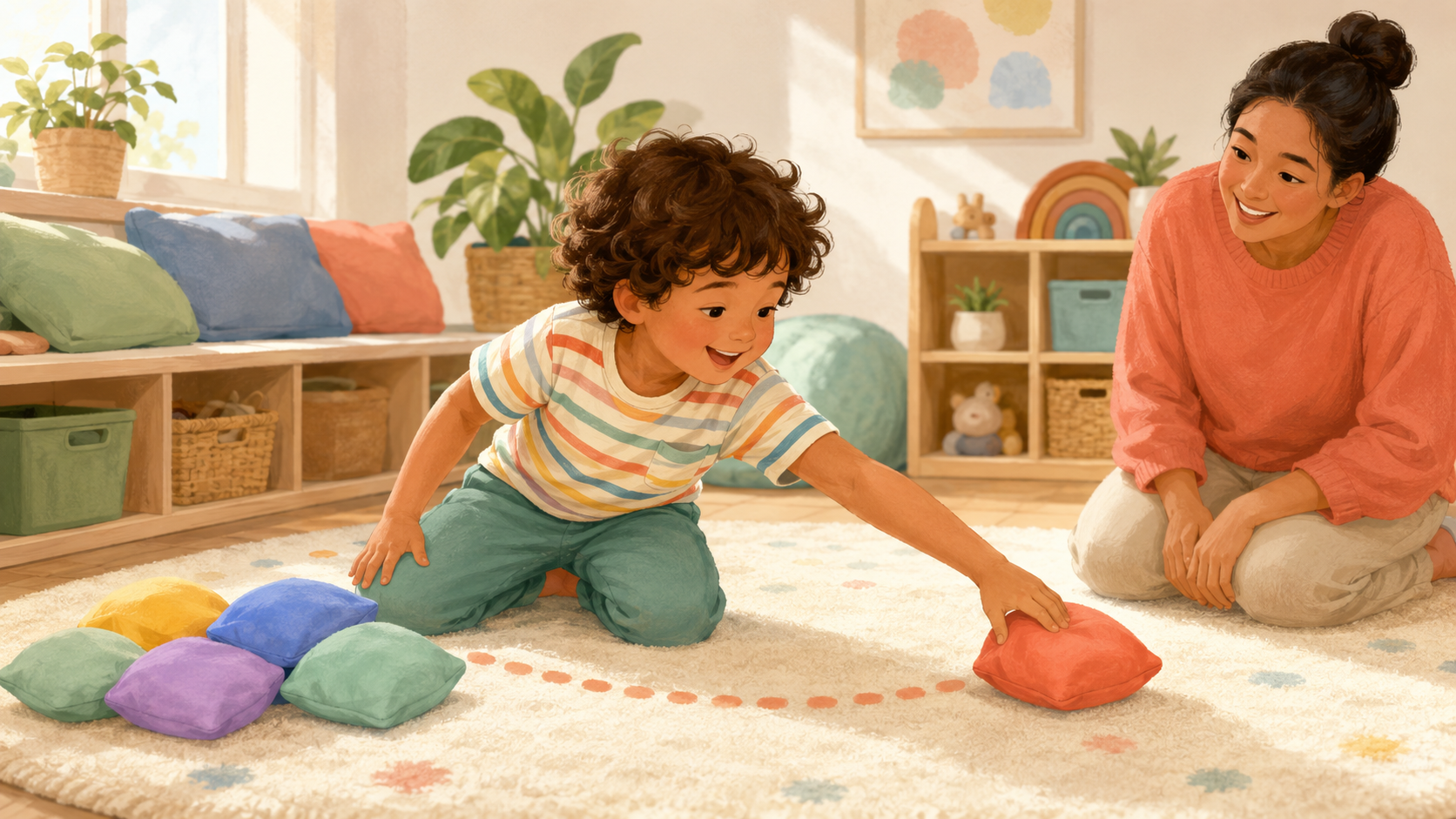
Movement & fine motor
7 Crossing-the-Midline Games for Preschoolers
Seven playful, OT-informed activities that help preschoolers reach across their bodies during drawing, dressing, play, and everyday routines.
Read article →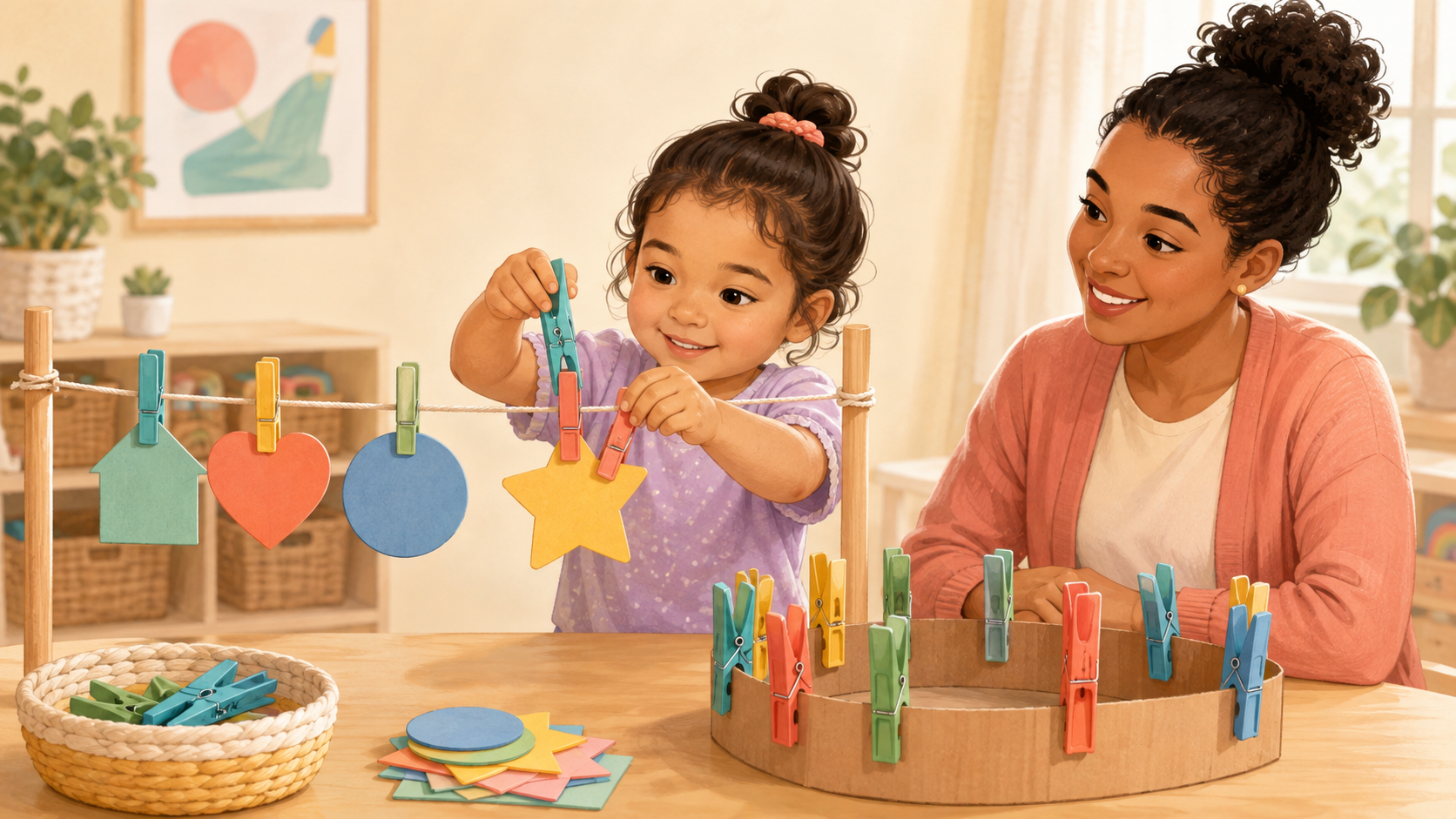
Fine motor & bilateral coordination
7 Clothespin Games That Build Hand Strength and Bilateral Coordination
Seven playful, OT-informed clothespin activities for preschoolers that support hand strength, pincer grasp, visual-motor skills, and two-hand coordination.
Read article →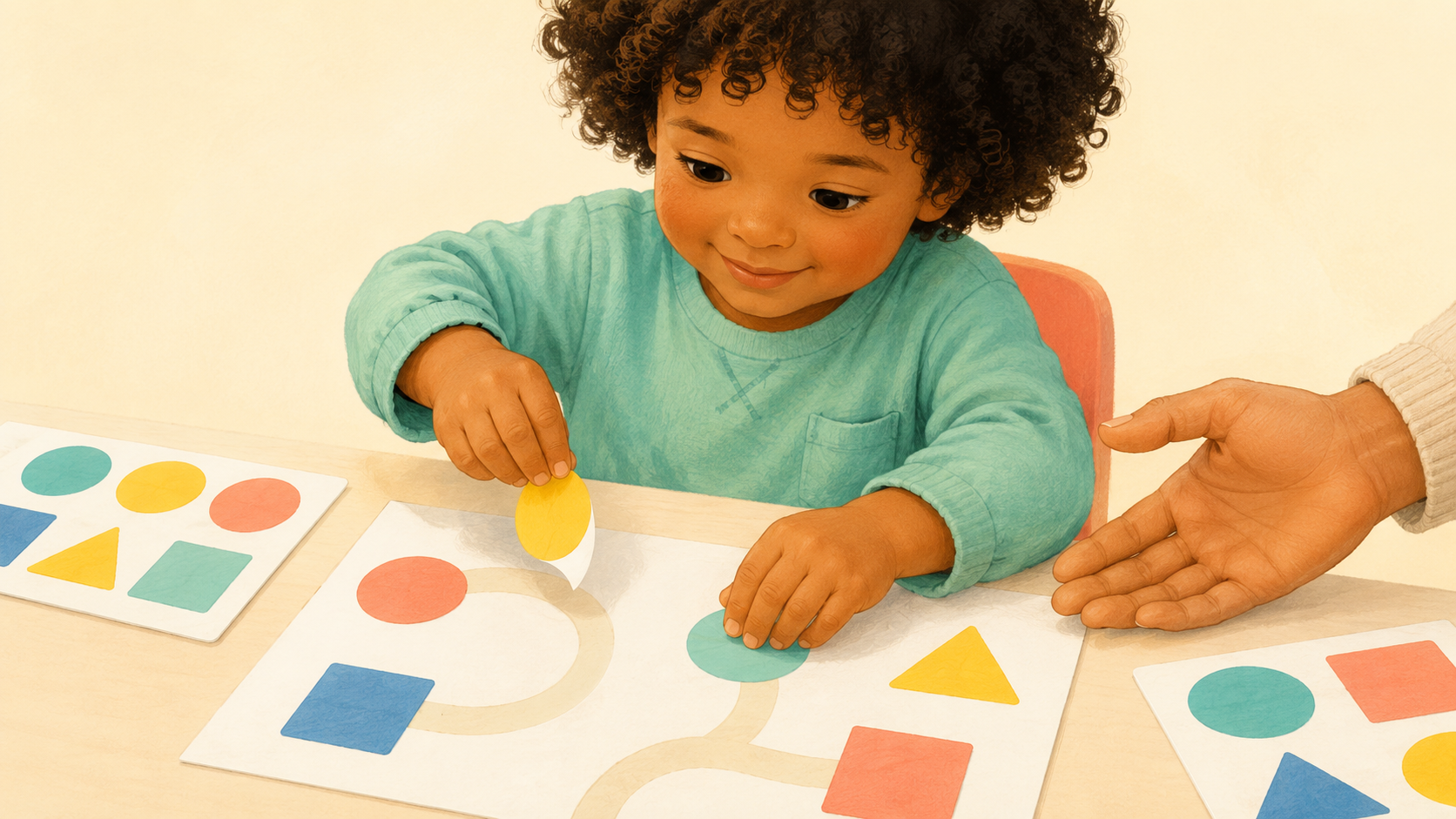
Fine motor & pre-writing readiness
Sticker Play for Little Hands: 7 Easy Fine Motor Activities for Preschoolers
Seven playful, OT-informed sticker activities for children ages 2–5 that support pincer grasp, bilateral coordination, visual-motor skills, and preschool independence.
Read article →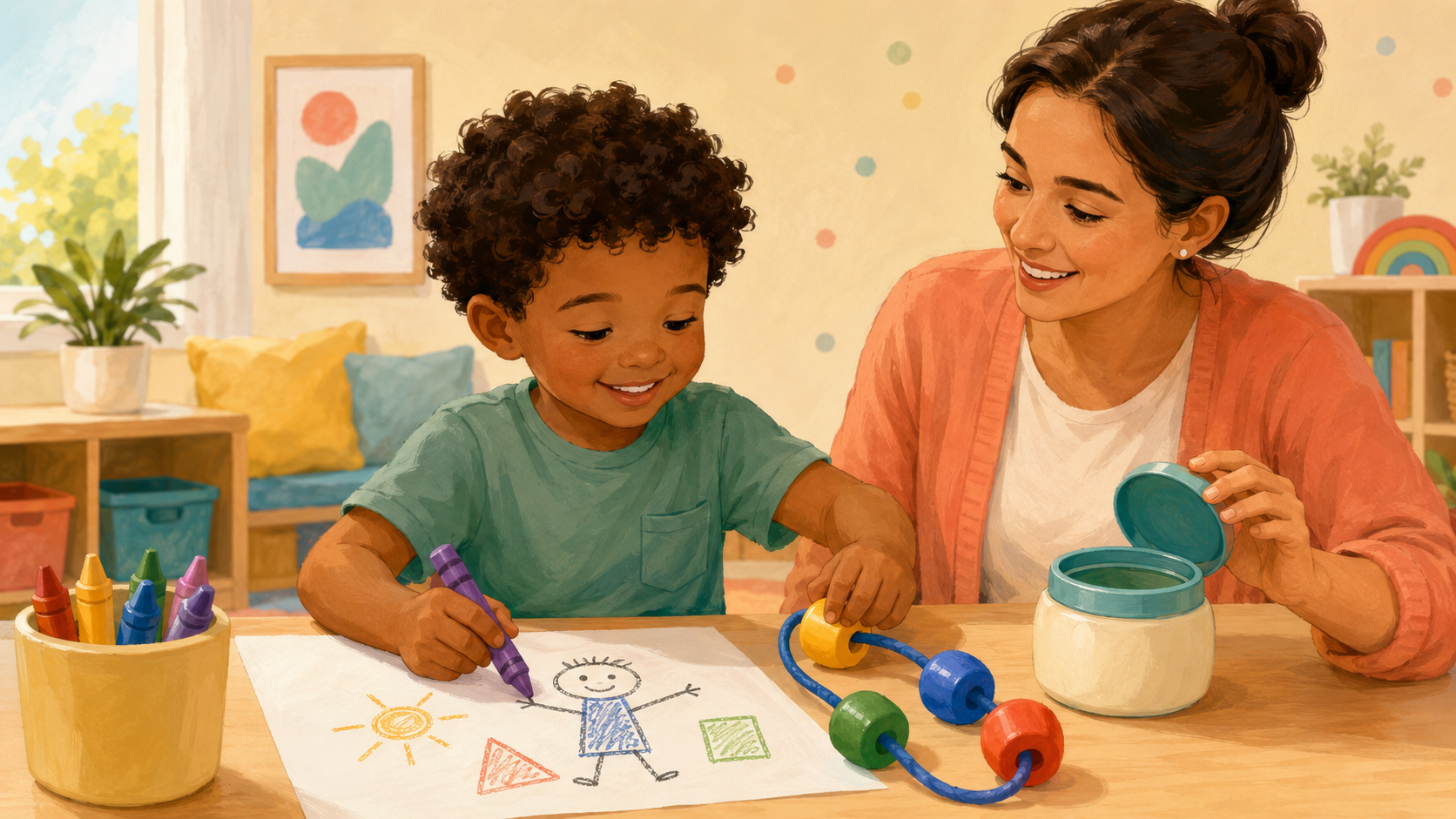
Fine motor development
Fine Motor Skills for 4-Year-Olds: Everyday Milestones and Play Ideas
Understand common fine motor skills around age 4 and use simple play to support drawing, tools, fasteners, and two-handed coordination.
Read article →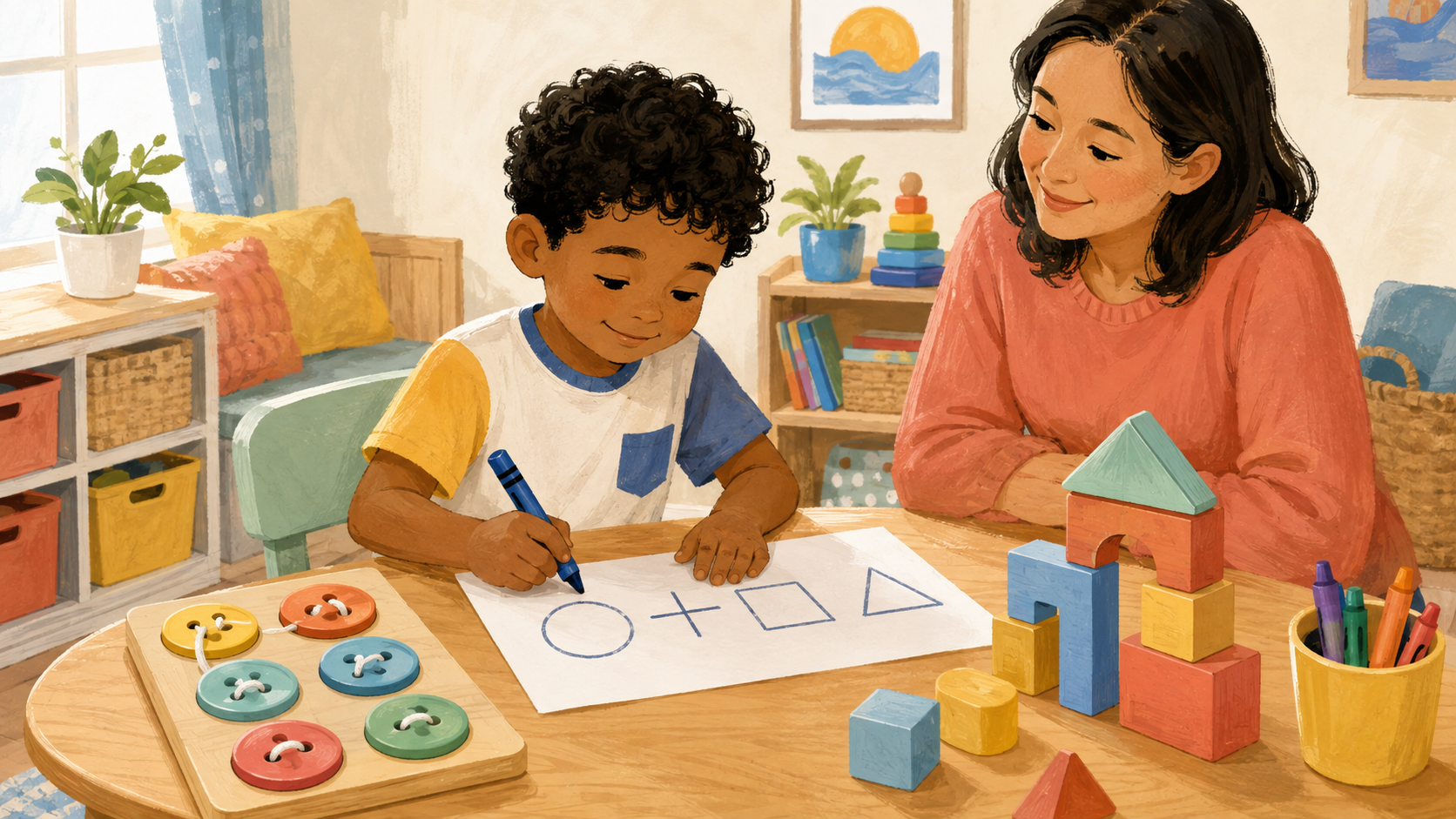
Fine motor development
Fine Motor Skills for 5-Year-Olds: Kindergarten-Ready Hands Through Play
A parent-friendly guide to hand skills that support kindergarten routines, drawing, cutting, dressing, and classroom participation.
Read article →When to ask for support
Consider talking with your child’s pediatrician or a pediatric occupational therapist when difficulty is persistent, causes pain or distress, leads to loss of skills, or regularly limits play, self-care, meals, or preschool participation.
Educational information only. Development varies, and this page does not diagnose a condition or replace an individualized evaluation.