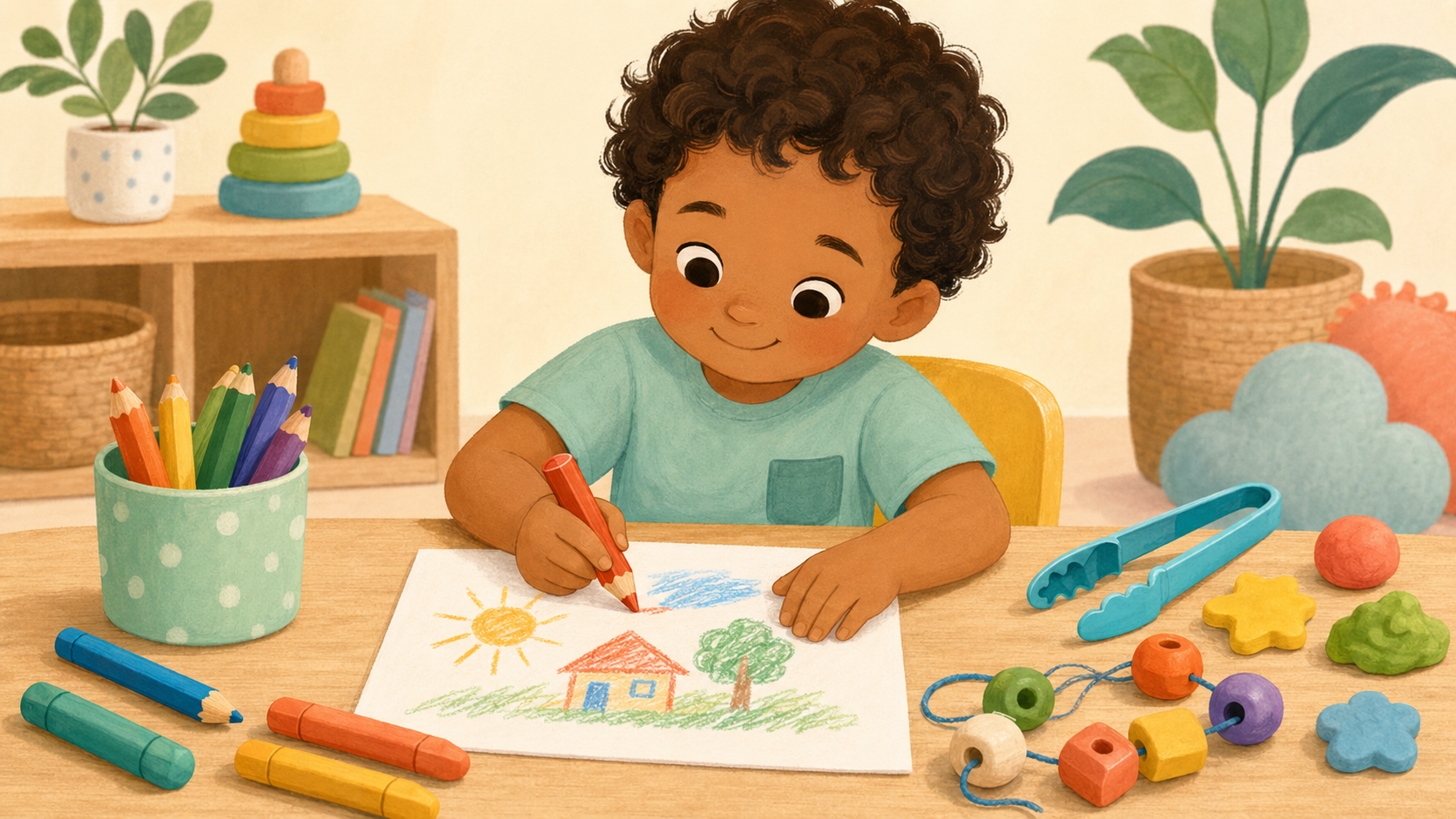
Correction is most useful when a grasp causes pain, fatigue, poor control, blocked vision, or avoidance—not simply because it looks different. Children develop at different rates, so observe how this skill affects comfort, safety, independence, and participation across real routines.
What parents should know
Correction is most useful when a grasp causes pain, fatigue, poor control, blocked vision, or avoidance—not simply because it looks different.
One behavior by itself does not identify a diagnosis. Look for patterns across time, settings, and meaningful daily activities.
What you may notice
These examples can help you observe the skill in everyday life. They are not a pass-or-fail checklist.
- Hand pain or frequent shaking out
- Paper tears from excessive pressure
- Child cannot see the pencil tip
- Drawing is avoided or quickly abandoned
Ideas to try at home
Choose one manageable idea, keep the experience playful, and stop before the child becomes tired or distressed.
- Check seating and foot support first
- Offer a shorter drawing tool
- Model once instead of repeatedly repositioning
- Keep drawing playful and brief
Make the activity easier
- Use a stable, uncluttered setup
- Give one short direction at a time
- Model briefly, then wait
- Offer two safe choices
- Praise effort, communication, and participation
When to ask for support
Speak with your child’s pediatrician or a pediatric occupational therapist when the concern is persistent, causes pain, affects safety, or regularly limits play, self-care, eating, sleep, preschool participation, or family routines.
- Describe the exact activity that is difficult
- Share when and where it happens
- Note what helps and what makes it harder
- Mention any loss of a previously used skill
This article is for education and does not replace individualized medical or therapy advice. Stop any activity that causes pain or distress, and consult your child’s qualified provider when you have concerns.