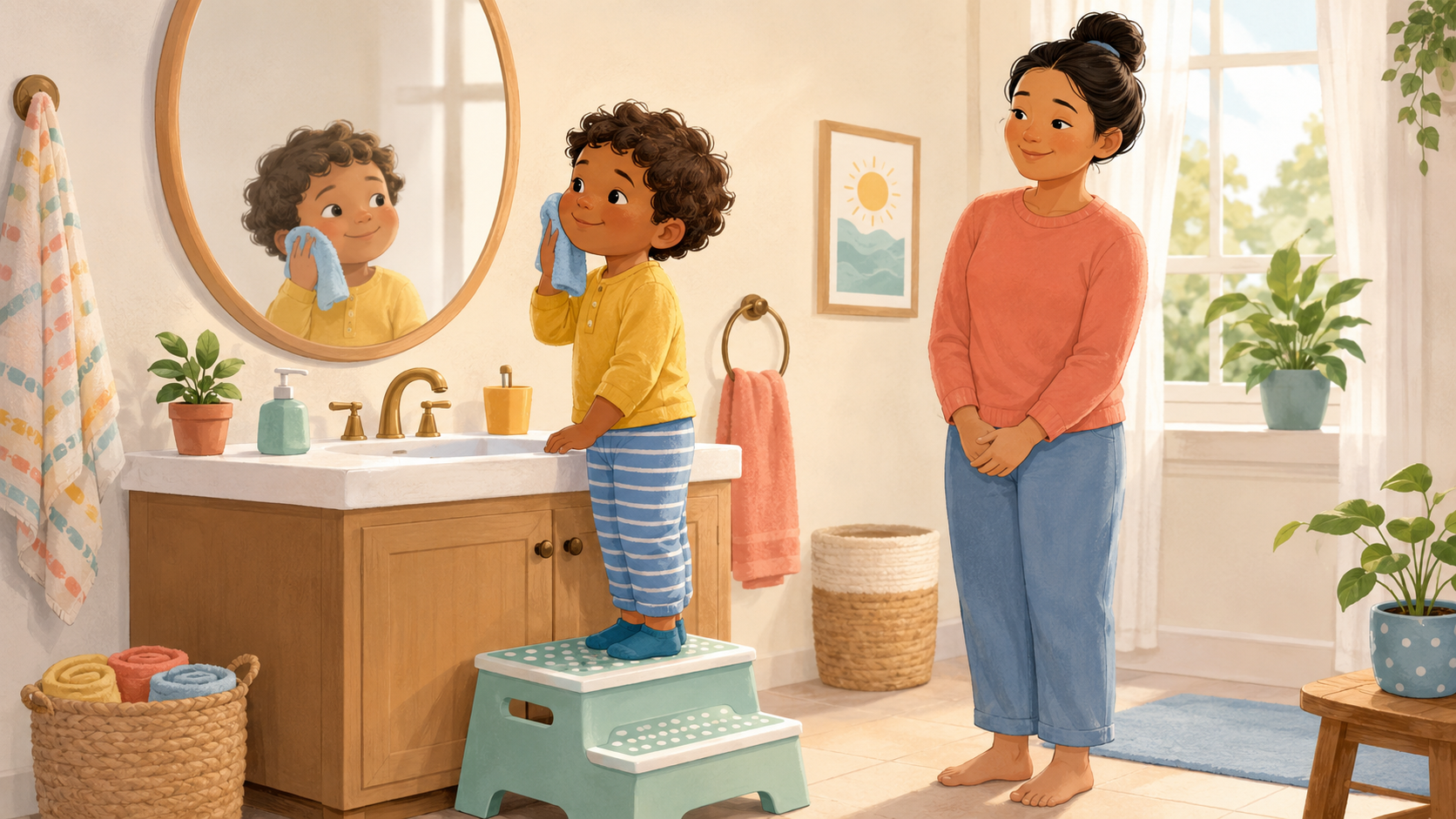
Washing the face looks simple, but it asks a preschooler to tolerate water near the eyes and nose, handle a wet cloth, use gentle pressure, remember several steps, and work safely at the sink. The goal is not a perfectly scrubbed face. It is a calm, repeatable routine that gives the child increasing control. Begin with a comfortable setup and teach one small part at a time.
Choose a simple, safe setup
Use a stable sink area with good lighting, a soft clean washcloth, a small towel, and lukewarm water. If your child cannot reach, use a wide nonslip step stool while an adult stays within arm’s reach.
Place the cloth and towel in the same spots each time. Roll up sleeves and keep the floor dry so the child can focus on the routine rather than balancing or managing wet clothing.
- Soft child-sized washcloth
- Lukewarm water
- Nonslip step stool if needed
- Clean towel within reach
- Adult close by throughout
Prepare for the feeling of water
Some children dislike unexpected wetness, dripping water, a cloth covering part of the face, or the sound of a running faucet. Let your child explore a dry cloth first, then a slightly damp cloth on the hands or arms before moving toward the face.
Tell the child before each touch and offer a choice: ‘Cheek or chin first?’ A predictable choice gives control without making the whole routine optional every time.
- Start with a dry cloth
- Add only a little water
- Use firm, gentle dabs instead of light tickling touches
- Let the child hold the cloth
- Keep a dry towel nearby
Teach a five-part routine
Use the same short words each time and demonstrate beside the child in a mirror. Move slowly and pause after every cue so the child can plan the next action.
- Wet — place the cloth under lukewarm water
- Squeeze — use two hands so it is damp, not dripping
- Wipe — forehead, cheeks, nose area, chin
- Rinse — rinse the cloth if needed
- Dry — pat the face with a clean towel
Use backward chaining for early success
Backward chaining means the adult completes the beginning and the child finishes the last step. At first, you might wet, squeeze, and wipe while the child pats the face dry. Next, let the child wipe the chin and dry. Gradually hand over more of the sequence.
Give only as much help as needed. You can point, model, or guide at the elbow before placing your hands over the child’s hands.
- Child dries the face
- Child wipes one easy area and dries
- Child wipes both cheeks and dries
- Child wets and squeezes the cloth with help
- Child completes the full routine with brief cues
Use a simple face map
Children may repeatedly wipe one spot and miss the rest. Teach a predictable route: forehead, one cheek, the other cheek, nose area, chin. A mirror can help the child see where the cloth is moving.
Use gentle pressure. Wipe around closed eyes with plain water only when needed, moving outward and never scrubbing. Keep soap, fragranced products, and medicated skin products out of the routine unless a qualified clinician has recommended them for your child.
- Forehead
- Left cheek
- Right cheek
- Around the nose and mouth
- Chin
- Pat dry
Practice the movements through play
Low-pressure play can teach squeezing, wiping, body awareness, and sequencing without turning every practice into a hygiene task.
- Wash a doll’s face with a small cloth
- Squeeze water from a sponge into a bowl
- Wipe washable marks from a mirror
- Name face parts during a song
- Copy gentle dabbing in front of a mirror
- Place picture cards in the order: wet, squeeze, wipe, dry
Build a predictable routine
Choose one consistent time, such as after breakfast or before bed, and keep the sequence brief. A simple picture strip can help: cloth, water, face, towel. Praise the specific step: ‘You squeezed with two hands’ or ‘You wiped both cheeks.’
If the child is tired or rushed, complete more of the routine together. Independence develops through supported repetition, not through pressure or withholding help.
- Use the same location and supplies
- Give one cue at a time
- Offer two acceptable choices
- Practice for one or two minutes
- End before the child is overwhelmed
Safety and when to seek support
Stay with young children at the sink. Keep the floor dry, secure the stool, and store medicines, cleaning products, razors, cosmetics, cords, and hot appliances out of reach. Never leave a child alone near a filled sink, tub, bucket, or other standing water. Use only products known to be safe for the child’s skin and avoid getting soap in the eyes or mouth.
Consider speaking with a pediatrician or pediatric occupational therapist if face washing regularly limits hygiene, dressing, preschool participation, sleep routines, or family life; if there is pain, persistent skin or eye irritation, loss of a skill, marked weakness, or intense distress with water or touch. An OT can consider sensory responses, motor planning, hand skills, sequencing, communication, and the bathroom setup.
This article is for education and does not replace individualized medical or therapy advice. Stop any activity that causes pain or distress, and consult your child’s qualified provider when you have concerns.