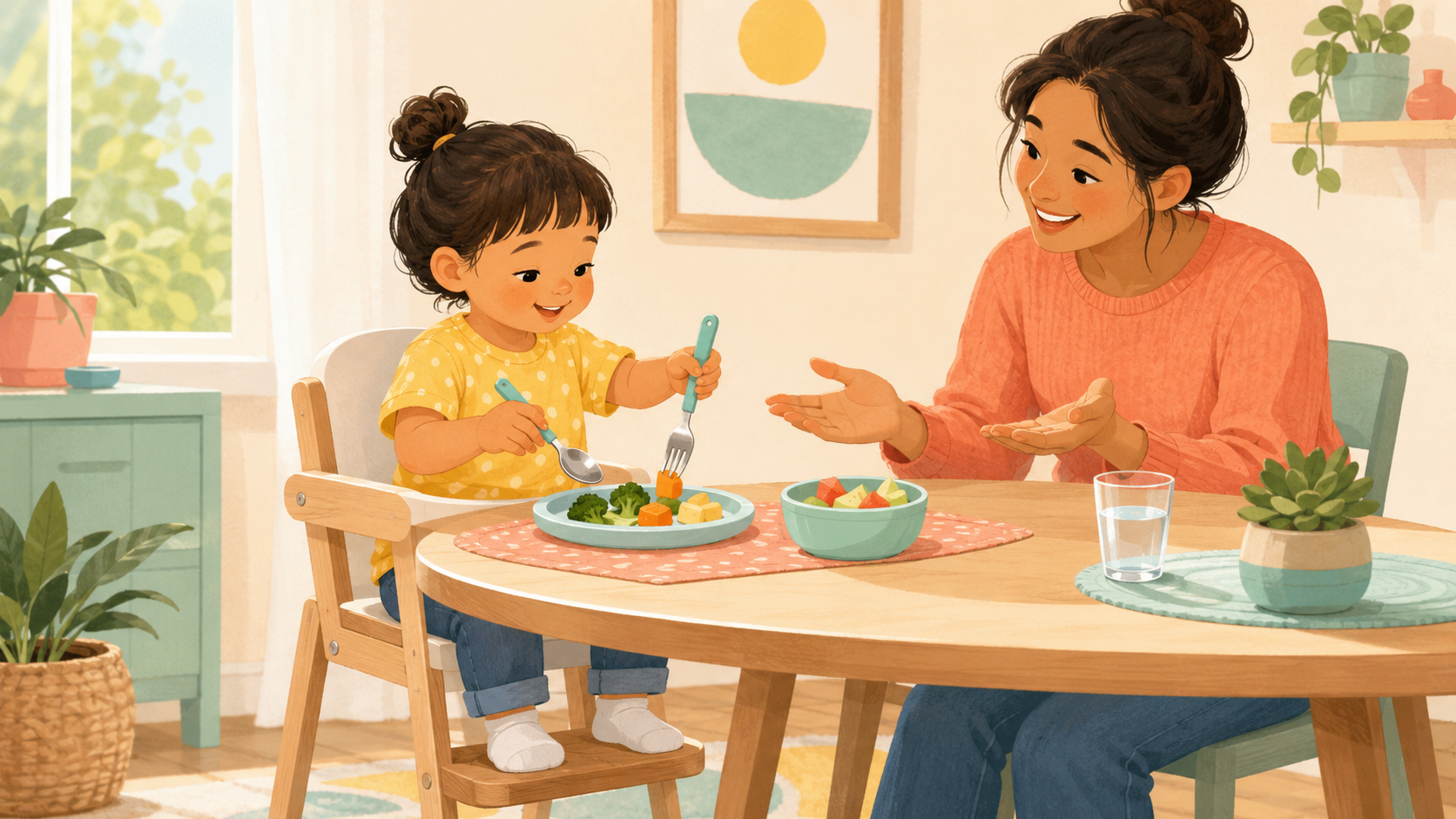
Using a fork and spoon asks a young child to combine posture, hand strength, wrist control, visual attention, and careful timing. The child must gather food, keep the utensil level, find the mouth, remove the bite, and begin again. Spills and dropped food are part of learning. A supportive setup and a few playful practices can make independence easier without turning meals into a performance.
Look for participation, not perfect technique
Utensil skills develop gradually. A child may use fingers for part of the meal, switch hands, turn the spoon upside down, or need help with some foods. These are common parts of learning. Progress may look like scooping one bite, bringing a loaded utensil to the mouth, or staying at the table long enough to try again.
Practice when your child is awake, calm, and not extremely hungry. Offer help without taking over, and end the lesson if frustration begins to replace participation.
Start with a stable mealtime position
A steady body gives the hands a better base for precise movement. Seat your child upright with hips and knees comfortably bent and feet supported by the floor, a footrest, or a sturdy box. Bring the table or tray close enough that the child does not need to lean far forward.
- Use a stable child-sized chair or supportive high chair
- Keep the bowl or plate near the middle of the body
- Place a non-slip mat under dishes that slide
- Sit beside or slightly in front of your child
- Begin with only a few bites on the plate
Choose tools and foods that make success easier
A short, lightweight utensil with a thick, easy-to-grip handle is often easier than a long adult utensil. Use a shallow bowl or a plate with a raised edge so food has a surface to push against. A suction base can help if the dish moves more than the child can manage.
- For spoon practice: thick yogurt, oatmeal, mashed foods, or another familiar cohesive food
- For fork practice: soft bite-sized pieces that stay on the tines
- Use only foods and textures your child already manages safely
- Avoid sharp metal points, damaged utensils, and breakable dishes
- Offer the child’s usual safe foods so the new challenge is the utensil, not the food
Teach the spoon in four small steps
Show the movement slowly and use the same brief words each time. Let the child do as much as possible before helping.
- Dip — place the spoon into the food
- Scoop — slide forward or toward the side of the bowl
- Level — keep the bowl of the spoon facing up
- Lips — bring it to the mouth and close the lips around the spoon
Teach the fork with soft targets
Begin with food that is soft enough to pierce but firm enough to stay on the fork. Stabilize the plate and demonstrate a gentle straight-down push. The child can then lift the fork and remove the bite with the lips.
- Start with one large, easy target
- Use the cue “poke, lift, lips”
- Pre-pierce the food slightly if the child needs an easier start
- Move from hand-over-hand help to a touch at the wrist, then to a gesture
- Praise the action: “You kept the fork steady”
Practice the movements away from meals
Play can build the same motor plan without hunger or mealtime pressure. Keep practice short and use materials that are safe for your child’s age and mouthing habits.
- Scoop large pom-poms or blocks between two bowls with a spoon
- Use a spoon to move water during supervised sink play
- Poke and lift pieces of playdough with a blunt child-safe fork
- Feed a toy animal pretend food with an empty utensil
- Carry one dry cereal piece on a spoon across the table
Use just enough help
Try a pause before helping. Then use a short verbal cue, point to the next step, or steady the bowl. If more support is needed, help at the forearm or wrist rather than moving the child’s whole hand through every bite. Reduce help as soon as the movement becomes easier.
Backward chaining can create quick success: the adult loads the utensil and the child completes the last step. Later, the adult only gathers the food near the edge, and eventually the child completes the whole sequence.
- Offer one utensil at a time at first
- Practice three to five bites, then let the meal continue normally
- Allow fingers alongside utensils
- Notice effort, control, and independence rather than neatness
- Use a damp cloth nearby without wiping the child after every small spill
Respect sensory needs and keep meals low-pressure
Some children dislike sticky hands, metal touching the teeth, mixed textures, or food near the lips. Change one feature at a time: try a silicone utensil, room-temperature food, a separate plate section, or a tiny amount on the utensil.
Do not force bites, hold the child’s hands down, scrape food from the face with the spoon, or require a set number of attempts. Offer a predictable opportunity, accept “all done,” and protect the child’s trust in mealtimes.
Safety and when to seek support
An adult should supervise every meal and practice. Match food size and texture to your child’s abilities, follow allergy and hygiene guidance, check food temperature, and keep utensils away from the eyes. Avoid hard, round, sticky, or other foods that are choking hazards unless they are prepared in an age-appropriate way. Know the difference between gagging and choking and learn child first aid from a qualified source.
Talk with your child’s pediatrician or a pediatric occupational therapist or feeding specialist if utensil difficulties interfere with eating enough, joining family or preschool meals, or developing self-care independence. Seek individualized help for frequent coughing or choking, breathing or color changes, wet or gurgly breathing or voice, pain, repeated vomiting, marked fatigue, poor growth, sudden loss of skills, or a very limited diet. Breathing difficulty or color change requires urgent medical attention.
This article is for education and does not replace individualized medical or therapy advice. Stop any activity that causes pain or distress, and consult your child’s qualified provider when you have concerns.