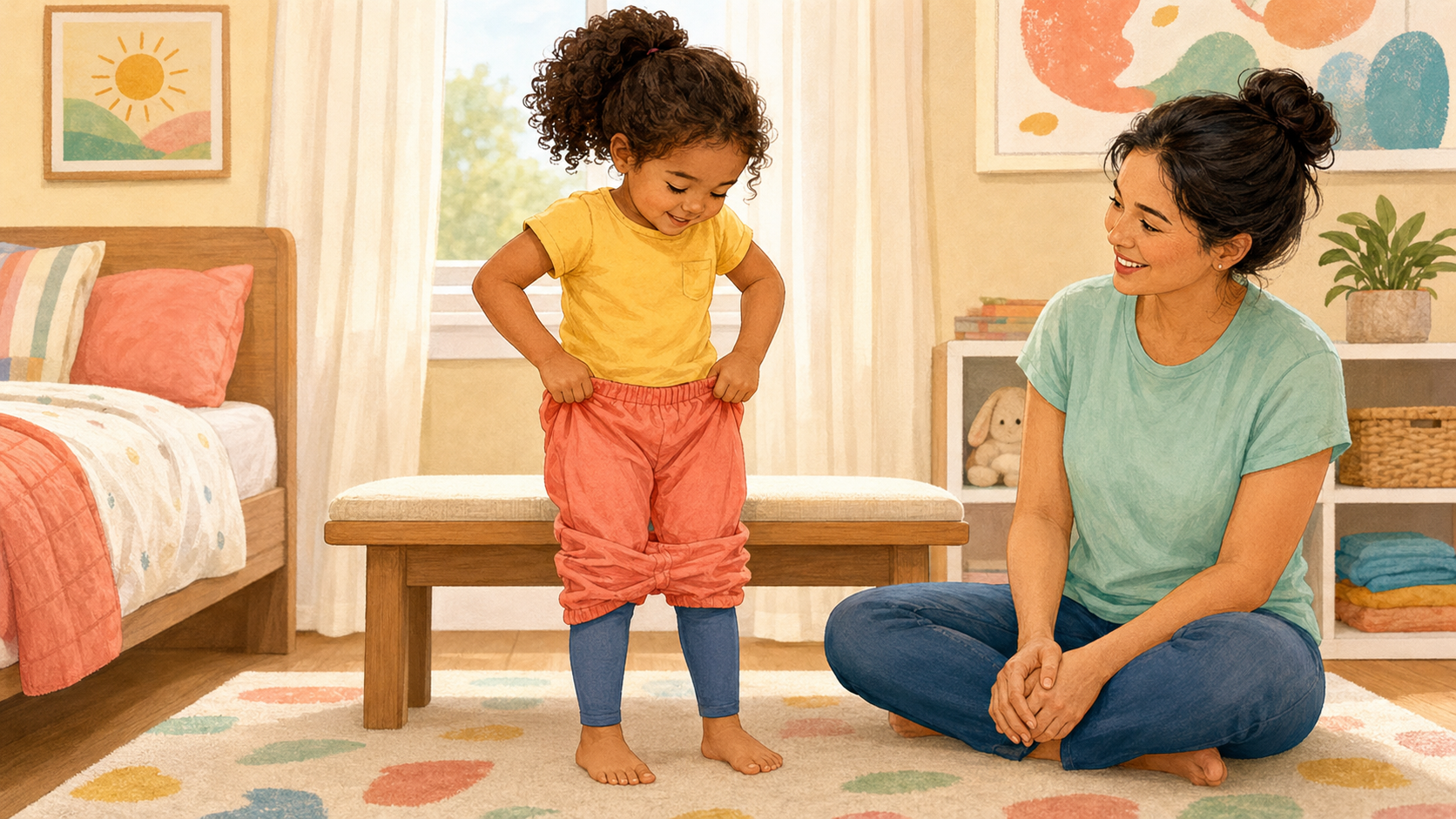
Pulling pants down and back up is a complex self-care task. A preschooler must balance, reach behind the body, find the waistband, use both hands, grade force, and remember the order—all while managing the sensory and emotional demands of dressing or toileting. Practice first with easy clothing and without time pressure, then carry the same short routine into daily life.
Choose clothing that makes learning easier
Begin with loose, lightweight pants or shorts with a wide elastic waistband. The waistband should stretch easily but stay securely at the waist. Practice over underwear or close-fitting leggings in a private, comfortable space.
Avoid tight jeans, belts, buttons, snaps, drawstrings, and stiff fabric until the basic pull-up and pull-down movement is familiar. Check that the clothing is the correct size and does not catch at the feet.
- Wide elastic waistband
- Soft, loose fabric
- Correct length and size
- No complicated fasteners
- Familiar underwear or leggings underneath
Create a stable and respectful setup
Practice beside a sturdy low bench, wall, or grab surface. Let the child sit to place both feet into the pant legs, then stand with feet slightly apart to move the waistband. Keep the floor dry and clear.
Protect privacy and use neutral language. Tell the child what will happen before offering physical help, and stop if the child says no, appears distressed, or has pain.
- Practice when there is no rush
- Use a private, warm space
- Keep feet flat and slightly apart
- Stand close enough to prevent a fall
- Ask before touching the child or clothing
Teach the waistband grip
Many children pull only from the front, leaving the back caught at the hips. Show the child how to place thumbs inside or hook fingers over the waistband on both sides. The hands can begin near the hips, where the waistband is easiest to reach.
Practice finding and stretching the waistband while the pants are on a table or over a stuffed animal before working on the body.
- Find the waistband
- One hand on each side
- Pull away slightly to make space
- Move both hands together
- Release when the waistband is in place
Teach pants down in small steps
Use the same brief sequence: hands to waistband, push below hips, sit, then move one foot out at a time if the clothing needs to come off. For toileting, the child usually needs to lower clothing only far enough to sit safely.
Backward chaining can create an early success: the adult lowers the waistband almost past the hips and the child finishes the last push. Gradually begin higher as the child learns the movement.
- Hands on sides
- Push past hips
- Sit before lifting a foot
- One foot, then the other
- Keep clothing off the floor when possible
Teach pants up with a four-part check
After the child places both feet in the openings while seated, have them stand with support nearby. Use short cues: front, sides, back, check. The child pulls the front, shifts hands to each side, reaches behind for the back, and then checks that the waistband is above the hips and the fabric is comfortable.
Backward chaining also works here. The adult brings the pants to the hips and the child completes the final pull and check. Gradually leave more of the task for the child.
- Front — pull the center up
- Sides — pull over both hips
- Back — reach and lift the waistband
- Check — smooth twists and trapped fabric
Build the supporting skills through play
Pants management uses balance, squatting, bilateral coordination, hand strength, body awareness, and motor planning. Short playful activities can prepare these skills without repeatedly undressing.
- Pull a large elastic band over a box
- Dress a doll or stuffed animal in loose shorts
- Play sit-to-stand from a low bench
- Reach for scarves tucked loosely at each hip
- Pull a stretchy pillowcase over a cushion
- Practice touching front, sides, and back during a movement song
Support sensory comfort and toileting routines
Some children notice tight waist pressure, scratchy seams, temperature changes, or the feeling of fabric bunching behind the body. Offer two comfortable clothing choices, remove irritating tags when safe, keep the room warm, and allow extra time.
For toileting, use the same short sequence every time and add a simple visual routine if helpful: pants down, sit, wipe with adult support as appropriate, pants up, flush, wash hands. Never use shame, punishment, or forced practice for accidents or delays.
- Use familiar soft clothing
- Warn before helping
- Keep instructions brief
- Practice dressing separately from urgent toilet trips
- Praise the completed step, not a ‘perfect’ result
Safety and when to seek support
Supervise practice, especially when the child is standing, stepping out of clothing, or near a toilet. Use a stable step stool only with direct adult supervision. Keep the bathroom floor dry, secure rugs, and avoid long drawstrings or loose cords. Never leave a young child alone near water, medications, cleaning products, or an unlocked bathroom hazard.
Consider speaking with a pediatrician or pediatric occupational therapist when clothing management regularly limits toileting, dressing, preschool participation, or family routines; when there is pain, significant weakness, unusual stiffness, frequent falls, strong one-sided use, loss of a skill, or intense sensory distress. An OT can consider posture, balance, reach, hand skills, sensory needs, motor planning, clothing, and the environment.
This article is for education and does not replace individualized medical or therapy advice. Stop any activity that causes pain or distress, and consult your child’s qualified provider when you have concerns.