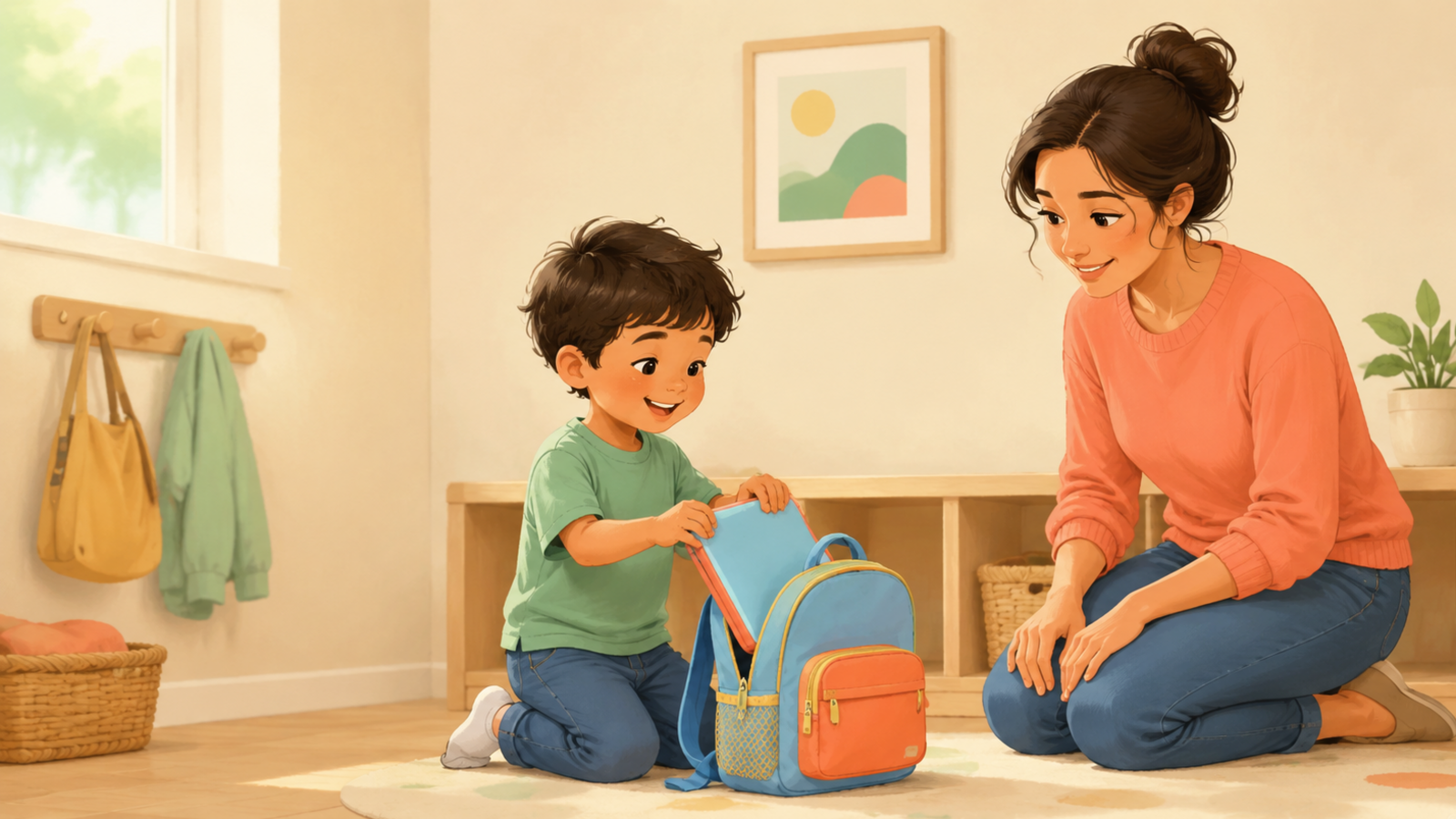
Packing and carrying a backpack looks simple, but it combines planning, remembering, opening fasteners, using both hands, reaching behind the body, and balancing while the load changes. For a preschooler, the goal is not to manage every school item alone. It is to participate in a short, predictable routine while an adult remains responsible for the bag’s fit, contents, and safety.
Choose a child-sized backpack that is easy to manage
Select a lightweight backpack that sits close to the child’s back and does not hang far below the waist. Two wide, adjustable shoulder straps distribute the load more evenly than one strap.
Choose a large zipper pull that little fingers can grasp. Keep straps adjusted so the bag is secure without pressing, rubbing, or restricting movement.
- Lightweight empty bag
- Two wide padded straps
- Simple main compartment
- Large easy zipper pull
- No long dangling cords or decorative loops
Create one predictable packing station
Use a low hook, bench, or clear floor space near the door. Keep the backpack, lunchbox, folder, and water bottle in the same places so the child does not have to search while learning the sequence.
A simple photo checklist can show the actual items for that day. Keep the list short and let an adult make the final decision about what belongs in the bag.
- Backpack on a low bench
- Two or three item pictures
- Empty space for packing
- Adult nearby for the final check
- A consistent finish spot by the door
Teach a simple pack-check-zip-wear sequence
Use the same brief words and demonstrate beside the child. Give one cue, then pause long enough for the child to plan the movement.
- Open — place the bag flat and unzip
- Pack — add one light item at a time
- Check — compare items with the pictures
- Zip — hold the bag with one hand and pull with the other
- Wear — sit, put one arm through, then the other
- Stand — stand only after both straps are on
Use backward chaining for an early success
Backward chaining means the adult completes most of the routine and the child finishes the last step. At first, pack and close the bag, then let the child place it on the hook or carry it to the door.
Next, leave the zipper partly open for the child to finish. Gradually add checking one item, packing one item, and putting on both straps.
- Child places the bag in its finish spot
- Child closes the last part of the zipper
- Child packs one familiar item
- Child checks one picture
- Child puts on both straps while seated
- Child completes the short routine with brief cues
Practice two-hand skills and reaching through play
Backpack routines use bilateral coordination, hand strength, shoulder movement, and body awareness. Practice these foundations when there is no pressure to leave the house.
- Open and close an empty zipper pouch
- Place soft blocks into a tote while one hand holds it open
- Pass a beanbag from one hand to the other behind the back
- Put a small empty backpack on a large stuffed animal
- Carry a light basket with two hands
- Match picture cards to pretend packing items
Teach safe two-strap carrying
Have the child sit on a stable bench, slide one arm through a strap, then the other, and stand after both straps are secure. Adjust the straps so the backpack stays close to the body and does not swing.
The adult should decide the load and inspect the bag every day. Preschool participation might mean carrying an empty bag, a folder, or one very light item while the adult carries heavier supplies.
- Use both shoulder straps
- Keep the load light and balanced
- Place heavier approved items closest to the back
- Remove the bag before climbing or active play
- Ask the child how the shoulders and back feel
Support sensory comfort and confidence
Some children dislike pressure on the shoulders, the sound of a zipper, a bottle moving inside, or the feeling of straps near the neck. Identify the specific discomfort and adjust one feature at a time.
Practice with an empty bag for a few seconds, then add one familiar light item. Let the child choose between two safe backpacks or select which item to pack first.
- Soft shirt under the straps
- Quiet practice before a busy morning
- Secure bottles so they do not roll
- Tuck away loose straps
- Praise a specific step: “You used both hands to zip”
Use the routine in preschool and community life
Once the child knows the sequence at home, use the same words at preschool, the library, or a grandparent’s home. Keep the number and location of items consistent when possible.
Invite the child to participate without making the backpack their sole responsibility. Adults still check identification, food safety, required forms, medication policies, and anything that could leak, break, or be unsafe.
- Pack one artwork folder
- Place a sealed empty cup in a side pocket
- Carry the bag from the door to the car with supervision
- Hang the bag on a child-height hook
- Unpack one familiar item on arrival
Safety and when to seek support
Stop immediately for pain, numbness, breathing changes, red pressure marks, repeated loss of balance, or distress. Keep straps away from the neck, remove the backpack before car-seat use, climbing, running, playground play, or sleep, and never let a child hang from or be lifted by the straps.
Consider speaking with a pediatrician or pediatric occupational therapist when backpack or dressing routines regularly limit preschool participation, the child consistently avoids one arm, has marked weakness or balance difficulty, loses a skill, or experiences strong sensory distress. An OT can consider fit, task demands, posture, coordination, sensory needs, and the environment.
This article is for education and does not replace individualized medical or therapy advice. Stop any activity that causes pain or distress, and consult your child’s qualified provider when you have concerns.