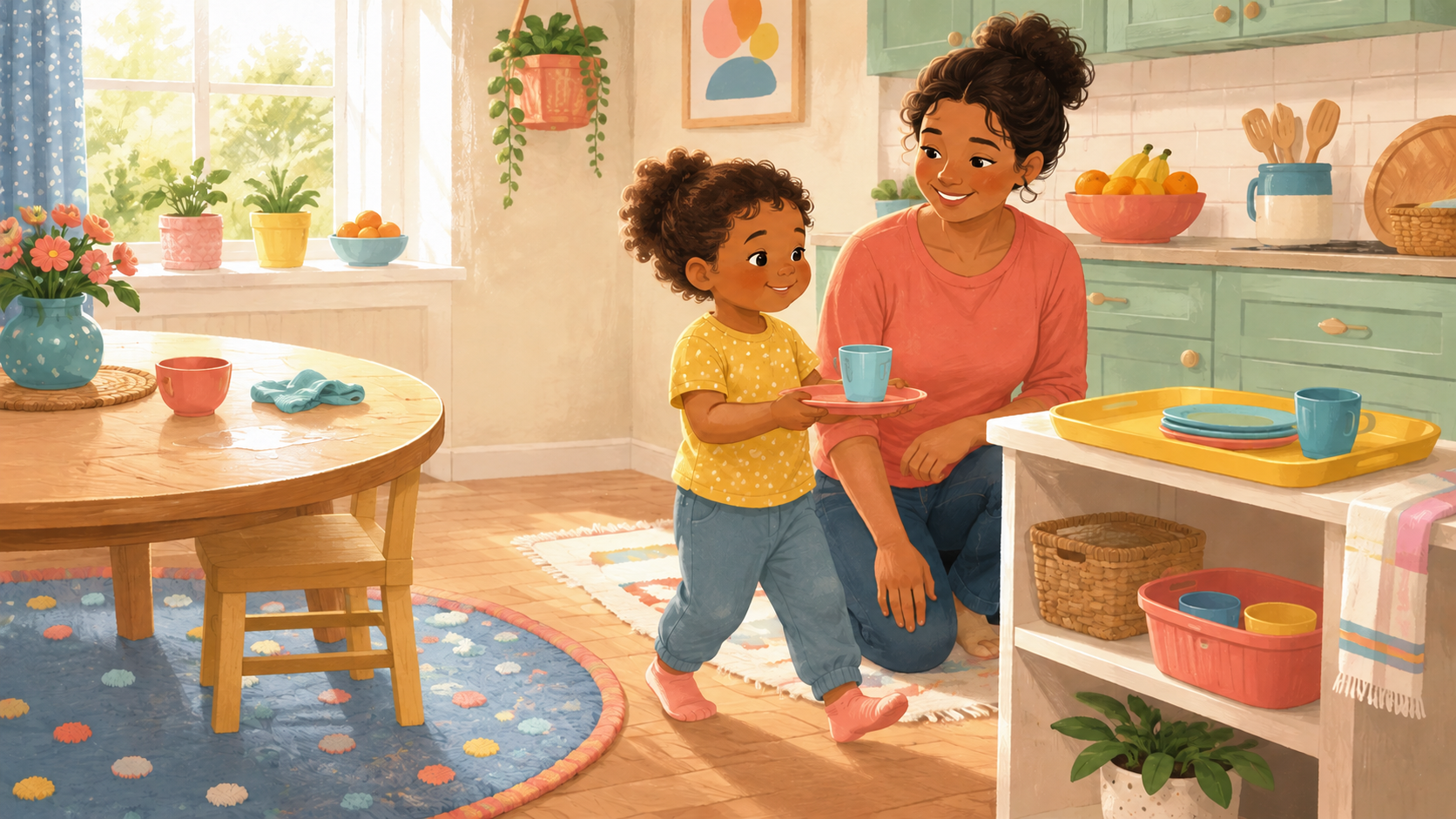
Clearing a place after a meal is a useful family routine, but it asks a preschooler to notice when eating is finished, handle dishes, carry items while walking, remember where things go, manage spills, and shift away from the table. The goal is not a spotless kitchen. It is safe participation in one short, predictable job while an adult remains responsible for hot, sharp, breakable, heavy, and unsafe items.
Choose one safe job and prepare the route
Begin with one light, unbreakable item such as an empty plastic cup, a small plate, or a napkin. Clear the walking path and choose one low, stable landing spot away from the stove, knives, appliances, and cleaning products.
An adult should decide what the child may carry after every meal. Food temperature, spills, dish material, and the child’s regulation can change from day to day.
- Light unbreakable dish
- Dry nonslip path
- Low counter, tray, or dish tub
- Adult within arm’s reach
- No hot, sharp, glass, ceramic, or heavy items
Teach a simple finish-carry-place-check sequence
Use the same brief words and demonstrate beside the child. Give one cue, then pause so the child can organize the movement.
- Finish — put the utensil down and show the adult
- Carry — use two hands and walk slowly
- Place — set the item on the marked spot
- Wipe — help with one small cool spill if appropriate
- Check — push the chair in with adult help and wash hands
Use backward chaining for an early success
Backward chaining means the adult completes most of the routine and the child finishes the last step. At first, carry the dish together and let the child place it on the tray. Next, let the child carry an empty cup for the final few steps.
Gradually increase distance or add one step only when the current step is calm and safe.
- Child places the item on the tray
- Child carries one empty item a short distance
- Child carries from table to landing spot
- Child wipes one small marked area
- Child completes the short sequence with a picture cue
Practice two-handed carrying without food
Carrying a dish uses bilateral coordination, grip, visual attention, balance, and motor planning. Practice outside mealtime with empty, lightweight materials so spills and hunger do not add pressure.
- Carry an empty plate with two hands
- Walk a short tape path with an empty cup
- Move a light tray from one table to another
- Deliver pretend dishes to a dish tub
- Carry a small basket of washcloths
- Stop and set the item down when an adult says ‘pause’
Teach a small wiping job
Show the child how to place one hand on a cool, stable table and use the other hand to move a damp cloth across a small area. Mark the area with your finger and use a simple route such as top to bottom or side to side.
The adult should prepare the cloth with plain water and handle disinfectants, sprays, hot surfaces, raw-food messes, broken items, and bodily fluids.
- Use a child-sized damp cloth
- Wipe one small cool area
- Squeeze only over a sink or bowl with help
- Put the cloth in a designated laundry spot
- Wash and dry hands afterward
Support sensory comfort and transitions
Some children dislike wet crumbs, food smells, dish sounds, a sticky cloth, or the sudden end of eating. Identify the specific discomfort and change one part of the routine rather than forcing contact.
Offer two safe choices: cup or napkin, carry or wipe, blue cloth or yellow cloth. Keep the job brief and predictable.
- Use a dry job before a wet job
- Provide a utensil or cloth so hands do not touch leftovers
- Reduce clattering by using a padded tray
- Give a one-minute finish warning
- Praise a specific action: ‘You carried with two hands’
Make the routine part of family life
Use the same landing spot after one predictable meal each day. A photo strip can show plate, tray, cloth, hands. Keep adult expectations flexible when the child is tired, hungry, ill, or dysregulated.
As the routine becomes easy, add one practical step at a time. Adults should still inspect the table, floor, and dishes and complete all kitchen safety tasks.
- Napkin to bin
- Empty cup to tray
- Unbreakable plate to dish tub
- Chair pushed in with help
- Hands washed after cleanup
Safety and when to seek support
Supervise closely. Keep the child away from hot food and liquids, knives, forks used unsafely, glass, ceramic, heavy cookware, electrical cords, open appliances, cleaning chemicals, and wet floors. Do not ask a child to scrape sharp bones, handle choking hazards, reach into a sink, or load a dishwasher.
Consider speaking with a pediatrician or pediatric occupational therapist when mealtime routines regularly limit family participation, the child has marked difficulty using both hands, frequently drops light objects, has balance concerns, or experiences strong distress with ordinary food textures, smells, or cleanup. An OT can consider motor skills, sensory needs, task demands, and the environment.
This article is for education and does not replace individualized medical or therapy advice. Stop any activity that causes pain or distress, and consult your child’s qualified provider when you have concerns.