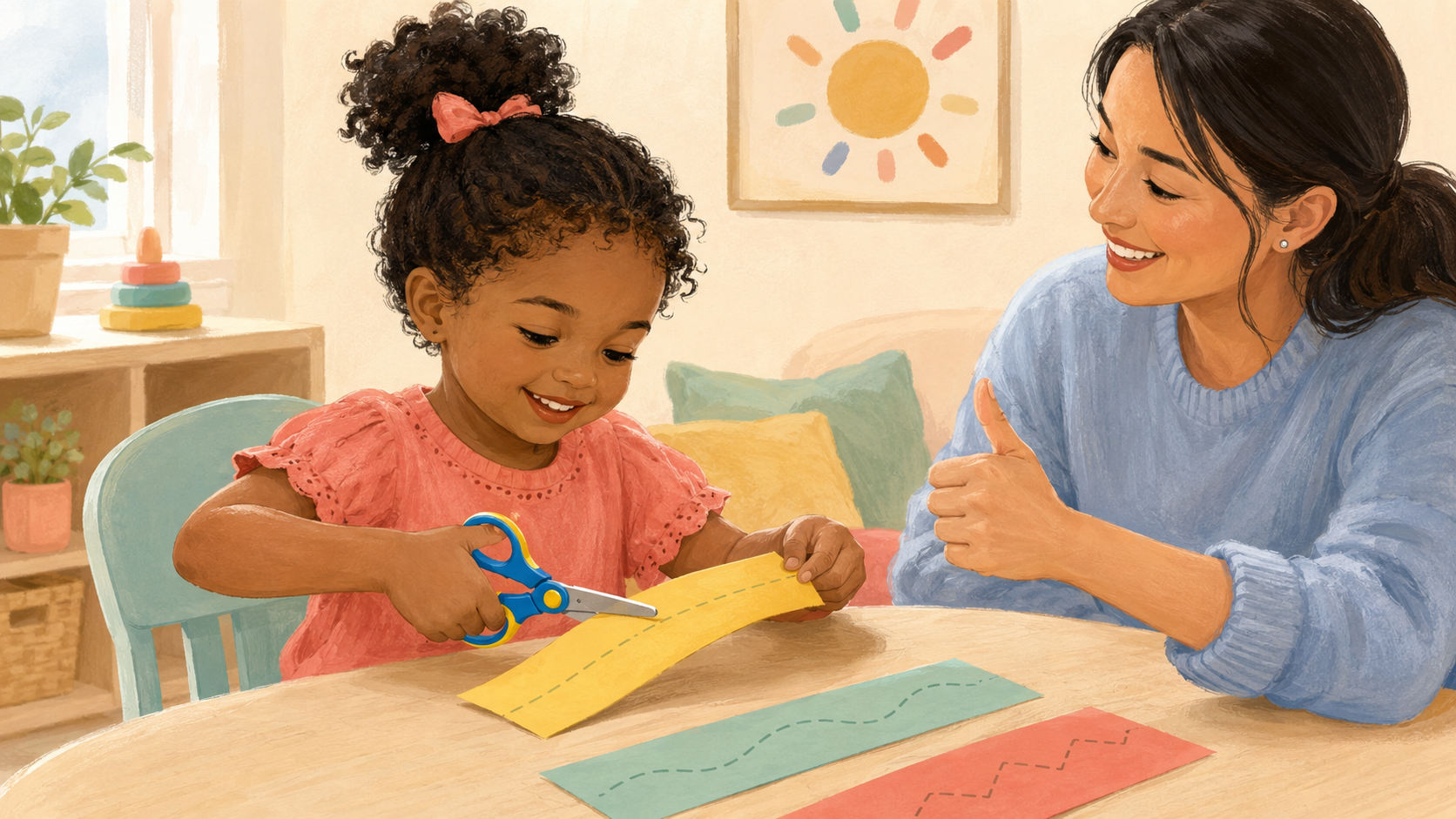
Scissor use is a two-handed skill: one hand opens and closes the scissors while the helper hand turns and steadies the paper. Children move through this sequence gradually, and safe participation matters more than reaching a step on an exact birthday.
Foundations before cutting
Before scissors, children benefit from opening and closing the hand, using two hands together, watching the hands, and sitting with the trunk and feet supported.
- Tearing paper
- Squeezing spray bottles or tongs
- Rolling and pinching dough
- Using one hand to hold while the other works
A flexible developmental sequence
Many children begin with single snips, then link snips forward, follow short straight lines, and later manage curves and simple shapes. Accuracy and endurance grow with practice.
- Early: open and close with help
- Next: single snips at an edge
- Then: cut forward on a wide path
- Later: turn paper for corners, curves, and shapes
Teach a safe setup
Seat the child at a stable table. Demonstrate thumbs pointing up, elbow near the body, and the helper hand holding the far side of the paper.
- Use blunt-tip child scissors
- Begin with short paper strips
- Keep hair, skin, clothing, and cords away
- Cut only paper or an adult-approved material
- Store scissors out of reach after practice
Make practice successful
Start with easy materials and one clear goal. Use bold paths, small pieces of paper, and short turns. Left-handed children may benefit from true left-handed scissors.
- Snip fringe for a paper lion
- Cut playdough snakes
- Follow a wide road
- Cut out simple shapes for a collage
When to ask for support
Talk with your child's pediatrician or a pediatric occupational therapist when hand skills consistently limit play, dressing, eating, preschool tasks, or family routines; when an activity causes pain; or when a child loses a skill they previously used.
- Describe the daily activity that is hard
- Notice fatigue, frustration, pain, or avoidance
- Share what helps and what makes the task harder
This article is for education and does not replace individualized medical or therapy advice. Stop any activity that causes pain or distress, and consult your child’s qualified provider when you have concerns.