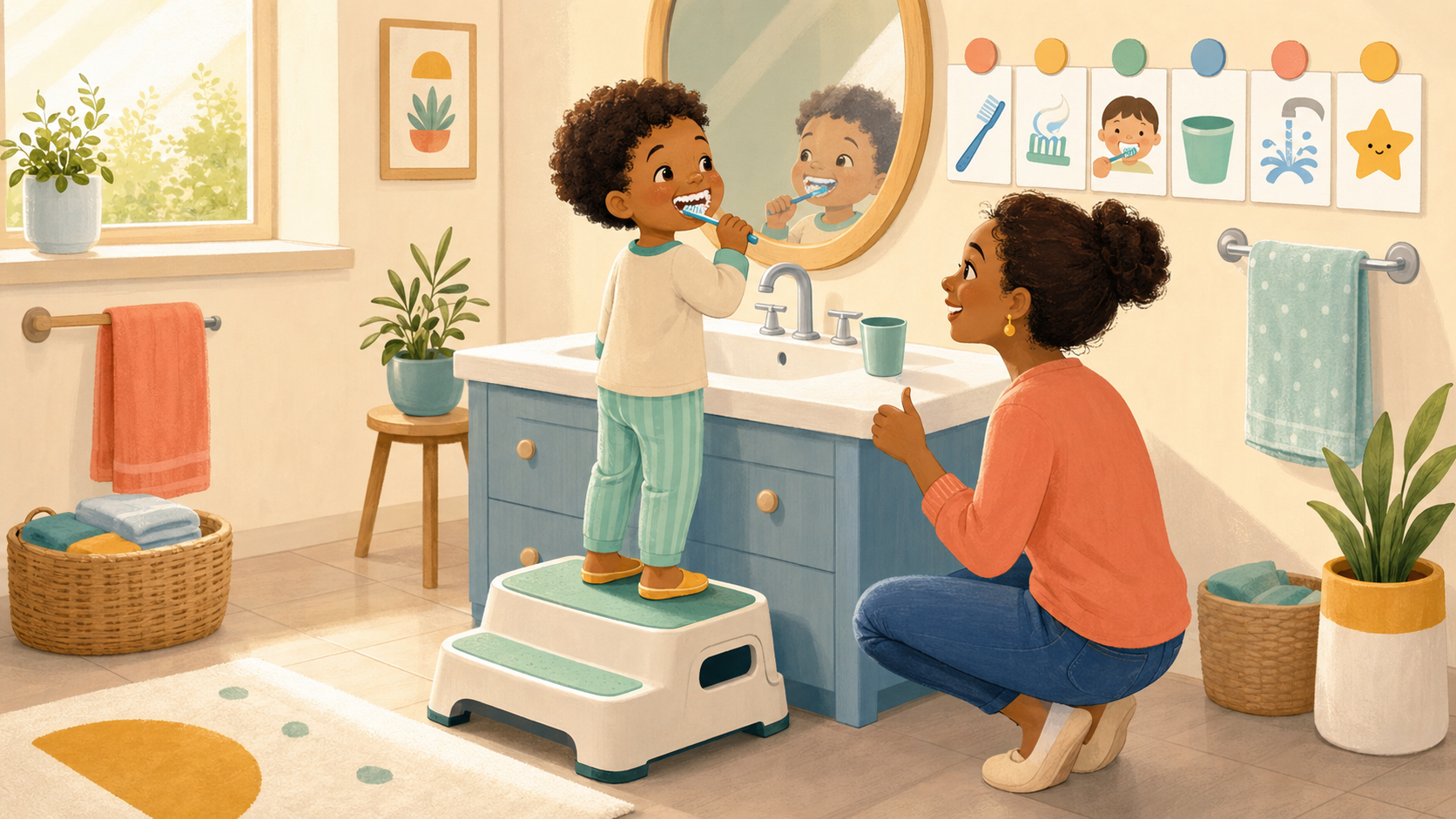
Toothbrushing looks simple, but a preschooler must tolerate strong sensations around the mouth, hold and aim a small tool, remember a sequence, reach every surface, manage toothpaste, and stay with the task. Independence grows in layers. Your child can participate more each day while an adult still completes the brushing needed to clean the teeth effectively.
Keep the health goal and the independence goal separate
The health goal is thorough brushing. The learning goal is helping your child participate in more steps. Preschoolers do not yet have the hand control, attention, or judgment to clean every tooth reliably, so an adult should perform or assist with the final brushing.
A child can build independence by choosing the toothbrush, opening the cap, adding water, brushing one section, spitting, rinsing the brush, or putting supplies away. Those real jobs matter even when an adult finishes the cleaning.
Create a safe, stable setup
Good balance frees the hands and mouth to work. Use a wide, stable step stool with a non-slip surface, or have the child sit while an adult assists. Keep supplies within the adult’s control but easy for the child to see and reach when invited.
- Keep the floor dry and clear
- Use a soft, child-sized toothbrush
- Store toothpaste and mouthwash out of unsupervised reach
- Place a small mirror at the child’s eye level if helpful
- Keep cords, razors, medicines, and cleaning products secured
Use the right amount of fluoride toothpaste
Current pediatric dental guidance recommends brushing twice daily with fluoride toothpaste once teeth appear. For children under age 3, an adult should use a tiny smear about the size of a grain of rice. For ages 3–6, use no more than a pea-sized amount.
The adult should place the toothpaste on the brush and supervise. Encourage the child to spit after brushing and avoid swallowing toothpaste. Follow your child’s dentist if they recommend a different plan based on individual needs.
Teach one short sequence
A predictable sequence reduces memory demands. Use the same words, pictures, or gestures each time. Keep the visual simple enough to follow while standing at the sink.
- Brush ready — adult adds toothpaste
- Outside — brush the cheek-side surfaces
- Inside — brush the tongue-side surfaces
- Tops — brush the chewing surfaces
- Front — use small gentle circles
- Tongue, spit, rinse the brush, all done
Make the hand movement easier
A thick handle can be easier to hold than a very narrow one. If needed, use a toothbrush made with a larger grip or add an appropriate commercial grip recommended by your child’s clinician. Let the child rest an elbow on the counter or keep the upper arm close to the body for stability.
Practice small circles on a toy mouth, laminated picture, or the outside of a clean cup. A mirror can help the child see where the brush is moving.
- Start with five slow circles in one easy area
- Use the cue “small circles, gentle hands”
- Divide the mouth into four simple sections
- Pause between sections
- Praise control rather than speed
Support sensory comfort without skipping care
Mint flavor, foam, water temperature, bristle pressure, bathroom noise, and touch near the lips can feel intense. Change one feature at a time so you can identify what helps. A mild-flavored fluoride toothpaste, room-temperature water, quieter location, or different soft brush may be easier.
Let the child explore the toothbrush on the hand or lips before entering the mouth. Offer a firm, predictable touch instead of quick unexpected strokes. Keep the routine calm and brief, but still complete necessary brushing.
- Give a warning before touching the mouth
- Let the child choose between two suitable toothbrushes
- Use the same song or visual timer each time
- Allow a short pause, then return to the next section
- Wipe foam with a soft cloth if the child dislikes wet skin
Practice the routine outside the rushed moment
Skill practice works best when the family is not already late or tired. During play, brush a doll’s teeth, sort picture cards into order, or point to sections of a pretend mouth. Then use the same language during the real routine.
Backward chaining can create success: the adult completes brushing, and the child does the final step of rinsing the brush and putting it away. Gradually give the child an earlier step while the adult continues to ensure effective cleaning.
- Practice opening and closing the toothpaste cap with an empty container
- Place a sticker beside each finished picture step
- Let the child hold a flashlight while the adult checks
- Count gentle circles together
- End with one predictable job such as placing the brush in its holder
Respond to resistance with fewer words and more predictability
If your child avoids brushing, notice when the difficulty starts: entering the bathroom, seeing toothpaste, opening the mouth, reaching back teeth, or stopping a preferred activity. That detail suggests what to adjust.
Use one calm direction and one small choice: “Teeth time. Blue brush or yellow brush?” A first-then cue can help: “First brush, then story.” The next activity can be a normal part of the routine, not a prize for tolerating distress.
- Give one consistent warning before brushing
- Prepare supplies before calling the child
- Use the same order every morning and evening
- Acknowledge feelings without removing the boundary
- Notice recovery: “That was hard, and you finished with help”
Safety and when to seek professional support
Supervise toothpaste and brushing, use gentle pressure, replace a frayed toothbrush, and never run or play with a toothbrush in the mouth. Do not use whitening products or mouthwash unless your child’s dentist recommends them. Seek prompt dental care for tooth pain, swelling, injury, bleeding that does not stop, or signs of infection.
Talk with a pediatric dentist if brushing is consistently painful, gums bleed often, cavities are suspected, bad breath persists despite care, or you are unsure about fluoride. Consider a pediatric occupational therapist when sensory or motor difficulties significantly interfere with oral care, dressing, eating, preschool, or other daily participation. Sudden loss of skills, trouble swallowing or breathing, or facial swelling requires timely medical or dental attention.
This article is for education and does not replace individualized medical or therapy advice. Stop any activity that causes pain or distress, and consult your child’s qualified provider when you have concerns.