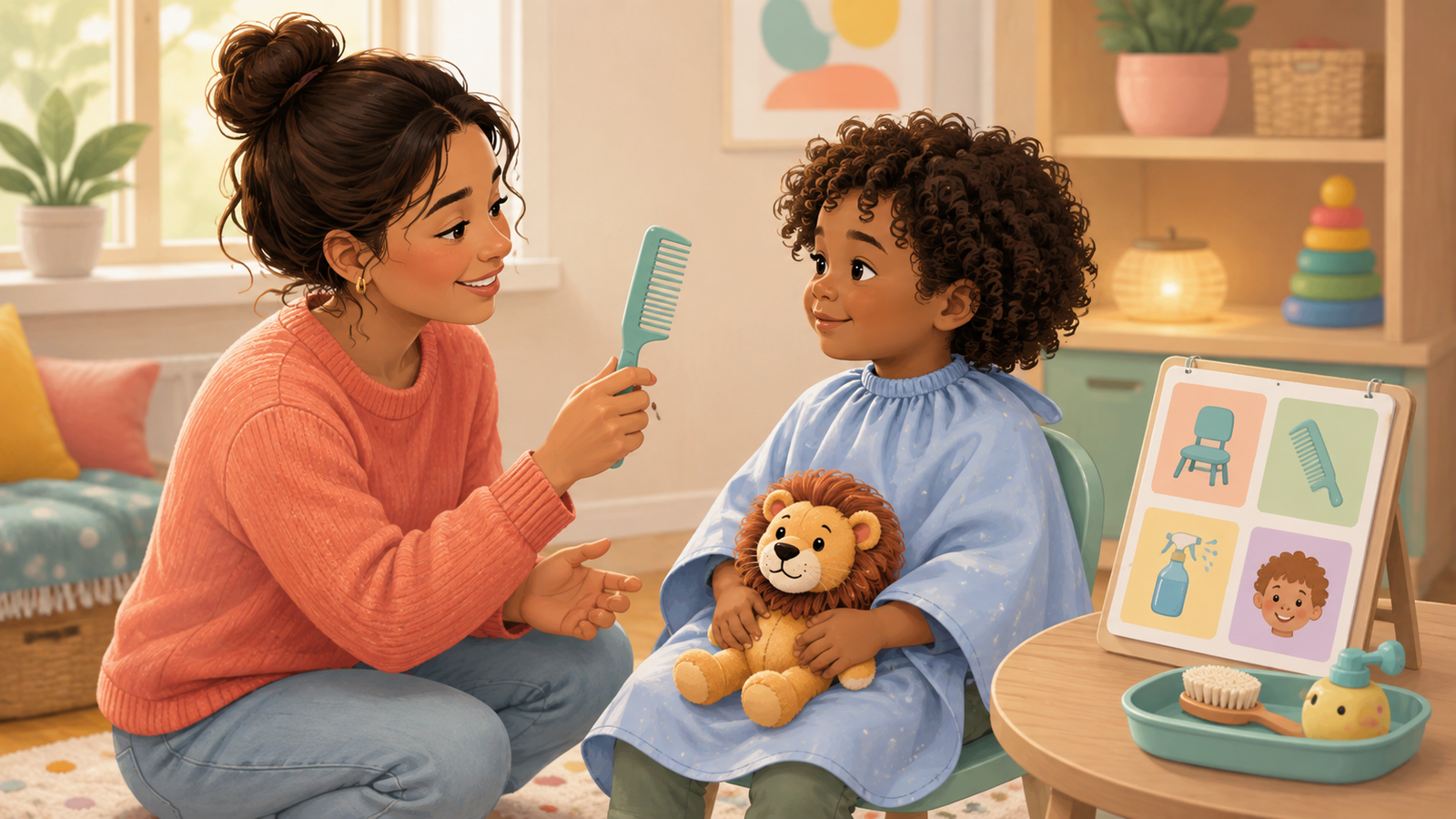
A haircut combines many sensations at once: unfamiliar sounds, light touch near the face and neck, falling hair, a cape, a new place, waiting, and the need to keep the head relatively still. A child who cries, pulls away, covers the ears, or refuses the chair is communicating that the experience feels difficult—not being naughty. Preparation can make the routine more predictable and help the child participate in small, safe steps.
Notice which part feels difficult
Observe before trying to solve everything at once. Some children tolerate combing but dislike the clipper sound. Others manage the sound but become upset when loose hair touches the skin, water sprays near the face, or an adult approaches from behind.
Write down what happens before, during, and after the difficult moment. This helps you choose a support that matches the actual need.
- Sound of clippers, dryer, or busy salon
- Touch around ears, neck, scalp, or face
- Cape pressure or trapped feeling
- Smell, bright lights, mirrors, and unfamiliar people
- Waiting, surprise, or difficulty staying still
- Loose hair on skin or clothing
Preview the routine with simple language
Use a short picture sequence or photos of the real location: arrive, say hello, sit, cape, comb, trim, brush off hair, all done. Review it when the child is calm, not only immediately before the appointment.
Keep the wording honest and brief. Instead of promising that nothing will feel uncomfortable, say, ‘You may hear a buzzing sound. You can ask for a pause.’
- Show five to eight clear steps
- Use the same words each time
- Mark a clear beginning and ending
- Add the preferred activity that comes afterward
- Practice pointing to ‘pause’ or ‘all done’
Practice safely without cutting hair
Rehearse pieces of the routine during play. Let a doll wear a towel cape, sit in a chair, and receive a pretend haircut with fingers or a toy comb. The child can be the stylist first.
Practice brief, predictable touch with safe everyday objects: a soft brush near the shoulders, a towel around the back, or a comb touching the hair for one second. Ask permission and stop when the child says or signals stop.
- Sit in the practice chair for five seconds
- Touch the cape before wearing it
- Comb one small section
- Listen to a recording at very low volume
- Practice looking down, forward, and to the side
- Finish with the same cleanup routine
Build tolerance to sound gradually
If sound is the main concern, begin far below the child's distress level. Listen to a short recording quietly from across the room while playing. Over several days, the child may choose a little more volume or move closer.
At the appointment, ask whether scissors can be used instead of clippers when appropriate, whether equipment can be turned on before approaching, or whether the child may wear comfortable hearing protection that does not interfere with safe cutting.
- Start with one or two seconds
- Pair the sound with a preferred calm activity
- Let the child control start and stop during practice
- Avoid surprise sounds near the ears
- Pause before distress becomes intense
Offer meaningful choices
Choice can reduce the feeling of being trapped, but too many decisions can be overwhelming. Offer two options that are both safe and realistic.
The child might choose the cape color, whether to sit independently or on a caregiver's lap if the salon permits, which side to begin with, a quiet video or book, and whether hair is brushed off with a towel or soft brush.
- Blue cape or yellow cape?
- Comb first or cape first?
- Book or quiet video?
- One short section, then pause
- Thumbs-up, word, picture, or hand signal for stop
Plan the environment and timing
Schedule a quieter appointment when the child is rested, fed, and not rushing into another demand. Tell the salon or barber about sensory needs before arriving and ask whether the same professional, a first appointment of the day, fewer tools, or a short visit is possible.
Bring only a few useful supports. Too many toys and instructions can add stimulation.
- Familiar comb or small comfort item
- Fresh shirt or zip hoodie for afterward
- Soft towel and unscented wipes if tolerated
- Visual sequence and stop card
- Preferred calm activity
- Extra time without a crowded waiting period
During the haircut, aim for participation—not perfection
Describe the next step just before it happens and use short concrete phrases: ‘Comb, then three snips, then pause.’ One adult should communicate so the child is not surrounded by competing voices.
A partial haircut may be a successful first visit. The goal is a safe experience that builds trust, not completing every planned detail at any cost.
- Keep the child's feet and body supported
- Use a visible timer only if it helps
- Brush loose hair away often
- Offer planned movement breaks
- Praise specific participation
- Stop for unsafe movement or escalating distress
Afterward, review what helped
Change clothes or remove loose hair promptly if that sensation is uncomfortable. Keep praise specific: ‘You showed us when you needed a pause,’ or ‘You held still while the stylist worked near your ear.’
Later, note which supports helped and which did not. Repeated short, respectful experiences usually teach more than one long, overwhelming appointment.
- Follow through with the planned preferred activity
- Avoid criticizing crying or refusal
- Save a photo of a successful step for next time
- Practice only the hardest part in tiny doses
- Share the updated plan with the next stylist
When to seek additional support
Consider discussing concerns with a pediatrician or pediatric occupational therapist when grooming distress regularly affects hair care, bathing, tooth brushing, dressing, sleep, school participation, or family routines. Seek medical guidance for scalp pain, sores, persistent itching, sudden sensitivity, hearing concerns, or loss of previously tolerated skills.
An occupational therapist can help identify the task, sensory, motor, communication, and environmental factors involved and build an individualized participation plan.
- Describe the child's response and triggers
- Share what has already been tried
- Explain how daily participation is affected
- Ask about medical, hearing, skin, or developmental factors when relevant
This article is for education and does not replace individualized medical or therapy advice. Stop any activity that causes pain or distress, and consult your child’s qualified provider when you have concerns.