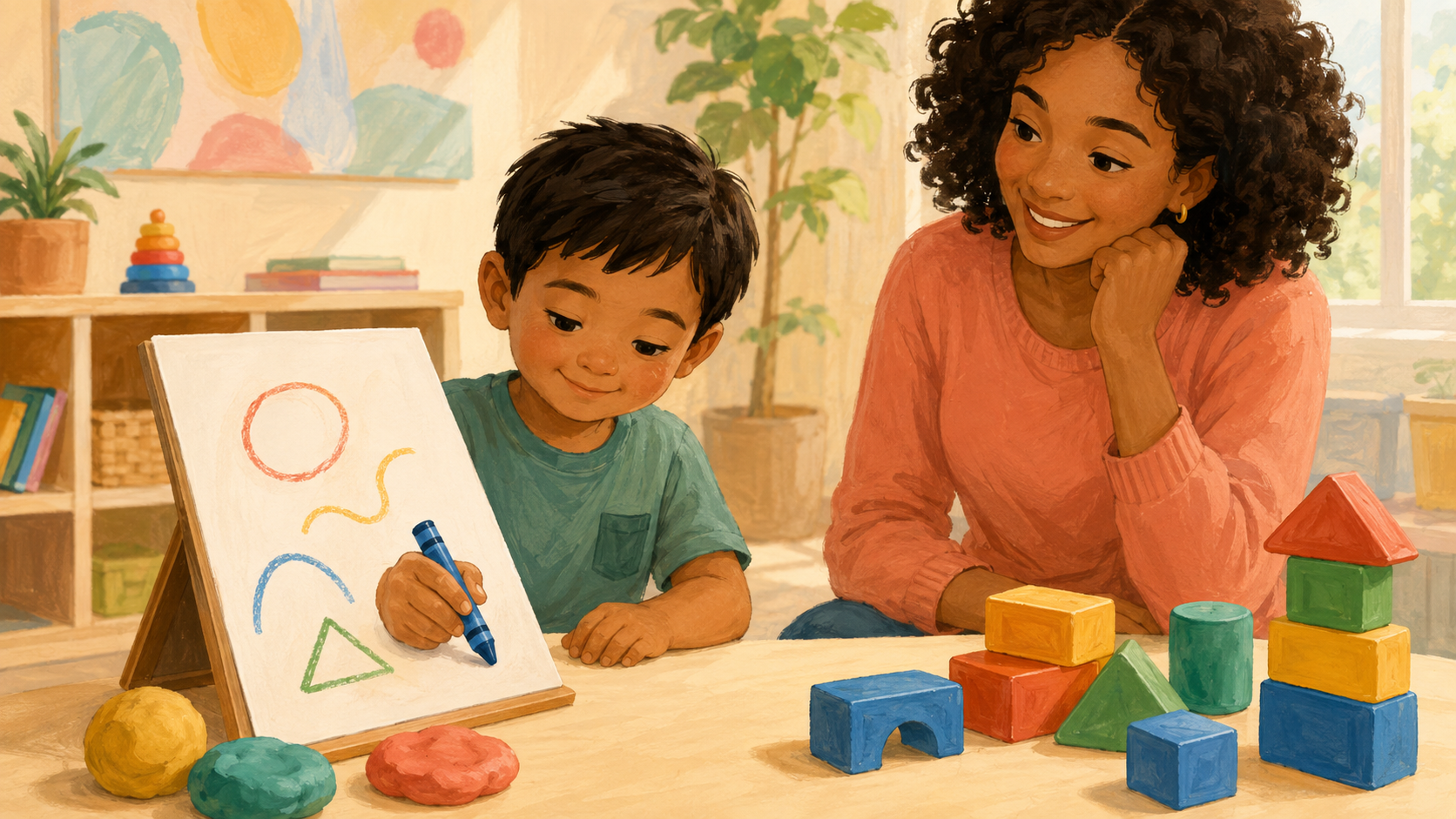
Young children often begin with a whole-hand grasp and gradually use more finger control as posture, shoulder stability, hand strength, and experience develop. A grasp can look unusual and still be functional if drawing is comfortable, controlled, and sustainable.
How grasp often changes
Toddlers commonly hold a crayon in the fist and move from the shoulder. Preschoolers gradually turn the hand downward and use more finger movement. Several mature grasps can support efficient writing.
- Whole-hand exploration
- Palm-down grasp with more control
- Finger-based grasp with a stable wrist
- A functional mature grasp that may be tripod, quadrupod, or another efficient pattern
What matters more than a perfect tripod
Ask whether the child can make intended marks, see the page, keep up with an age-appropriate task, and finish without pain or excessive fatigue.
- Comfort
- Control
- Readable marks
- Reasonable pressure
- Endurance for a short age-appropriate task
Play that supports pencil control
Use short, enjoyable drawing experiences rather than worksheets alone. A vertical surface can encourage wrist position and shoulder stability.
- Draw roads, faces, and simple shapes
- Use short crayons or chalk
- Paint with water on a fence
- Trace paths with a finger before drawing
- Build hand strength with dough and construction toys
When not to correct the grasp
Do not repeatedly reposition fingers when the child is comfortable and successful. Constant correction can reduce confidence and attention to the actual idea being drawn.
- Offer an easier tool
- Improve seating and paper position
- Model briefly
- Let the child experiment
- Keep practice short
When to ask for support
Talk with your child's pediatrician or a pediatric occupational therapist when hand skills consistently limit play, dressing, eating, preschool tasks, or family routines; when an activity causes pain; or when a child loses a skill they previously used.
- Describe the daily activity that is hard
- Notice fatigue, frustration, pain, or avoidance
- Share what helps and what makes the task harder
This article is for education and does not replace individualized medical or therapy advice. Stop any activity that causes pain or distress, and consult your child’s qualified provider when you have concerns.