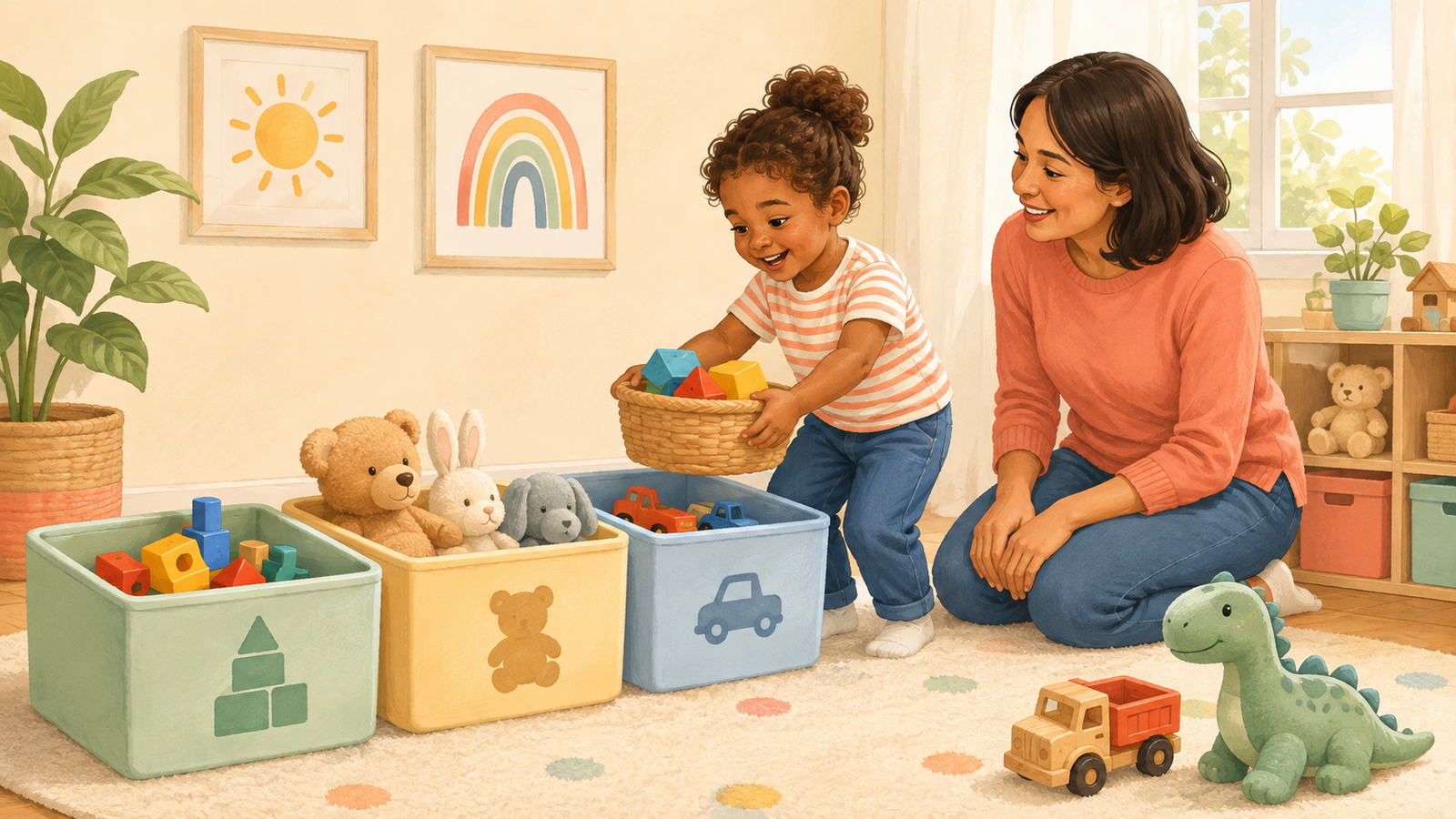
Putting toys away is more than following a direction. A preschooler must stop a preferred activity, notice what belongs together, remember where items go, carry objects safely, and stay with a multi-step task. Instead of expecting a whole-room cleanup, teach one small, predictable routine and gradually give the child more responsibility.
Set up the room so success is visible
Use a small number of low, open containers that the child can reach without climbing. Give each toy group one clear home and keep pathways free.
Place a photo or simple picture of the actual toys on the front of each bin. Picture cues reduce the language and memory demands of cleanup.
- Blocks in one bin
- Cars in one basket
- Pretend food in one container
- Books upright on a low shelf
- One clear spot for stuffed animals
Begin with a calm transition cue
Give a brief warning before play ends: “Two more minutes, then toys away.” A visual timer, cleanup song, or consistent phrase can make the change more predictable.
Move close, get to the child’s level, and give one short direction. Avoid calling instructions repeatedly from across the room.
- First toys away, then snack
- Choose one last toy
- Show the finished-bin picture
- Use the same cleanup cue each day
- Allow a few seconds to process
Teach one simple sequence
Model the routine beside the child and use the same few words each time. Point to the picture cue, then pause so the child can plan the action.
- Stop — finish the last turn
- Look — find the matching bin
- Pick up — choose one or two toys
- Carry — use two hands for larger items
- Drop — place toys gently inside
- Check — look for one more item
Use shared cleanup and graded help
Start as a team: “You take the cars; I’ll take the blocks.” If needed, hand the child one item while pointing to its bin. Gradually reduce help as the routine becomes familiar.
Offer the least help that works: a gesture, a choice between two bins, holding the container steady, or doing the first item together.
- Adult models one item
- Child carries one item
- Child clears one small area
- Child sorts one toy group
- Child completes two groups with a reminder
- Child checks the play area independently
Build sorting and two-handed skills through play
Cleanup practices visual matching, reaching, squatting, carrying, bilateral coordination, and motor planning. Short games can strengthen these skills when there is no pressure to end play.
- Sort large blocks by bin color
- Carry a small basket with two hands
- Match toy photos to containers
- Race the song, not another child
- Use tongs for large soft pom-poms with close supervision
- Deliver pretend packages to picture-labeled shelves
Support attention and sensory regulation
Some children are overwhelmed by a busy floor, a loud cleanup song, or the sudden end of play. Reduce visual clutter, turn music down, and begin with a tiny area.
A brief heavy-work job may help before cleanup: push a toy bin, carry a few books with two hands, or move couch cushions with an adult. Stop if the child becomes more dysregulated.
- Clear one square of floor
- Use quiet voice and minimal words
- Offer a choice of toy group
- Alternate two cleanup jobs with one movement break
- Praise a specific action: “You matched every car”
Make the routine useful in real life
Practice at one predictable time, such as before snack or bedtime, and keep the expectation consistent. Include the child in resetting materials after crafts, bath play, or outdoor play.
When the child can manage one space, teach the same structure in another room or preschool setting: cue, match, carry, place, and check.
- One-minute cleanup after a short activity
- Books back before choosing a new book
- Puzzle pieces counted into the box
- Art tools returned with an adult
- Shoes placed in their marked spot
Safety and when to seek support
Anchor tall furniture, keep heavy bins on the floor, and never allow climbing on shelves. Containers should be light, stable, and free of sharp edges, long cords, or lids that can trap fingers. Adults should handle broken toys, batteries, magnets, medication, cleaning products, and other hazards.
Consider speaking with a pediatrician or pediatric occupational therapist when transitions or cleanup regularly cause severe distress, prevent participation at home or preschool, or when the child has marked difficulty following familiar one-step directions, sorting everyday objects, carrying toys safely, coordinating both hands, or recovering after play ends. An OT can consider task demands, communication, motor skills, sensory needs, and the environment.
This article is for education and does not replace individualized medical or therapy advice. Stop any activity that causes pain or distress, and consult your child’s qualified provider when you have concerns.